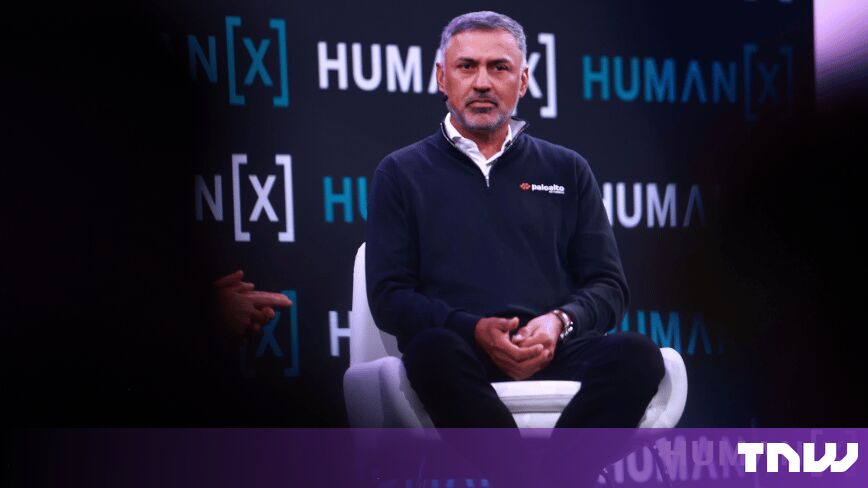
Palo Alto Networks chief executive Nikesh Arora says it is “unrealistic” to slow down AI development, because “not everybody is going to pace themselves”. He made the comments on CNBC’s “The Tech Download” podcast, recorded on Tuesday, CNBC’s Arjun Kharpal reported.
Arora also told CNBC it was “highly unlikely” that AI has a 10% chance of wiping out humanity. An Anthropic researcher had put forward that figure earlier this month, CNBC reported.
“I think it is a small probability, which is extremely small, and it’s our job to make sure we build in the guardrails, the safety and security required, so these models are used for the right thing,” Arora told CNBC.
From ‘ninja move’ to ‘unrealistic’
Earlier this month, Anthropic’s Dario Amodei wrote that the industry must slow the pace at which AI models improve. OpenAI’s Sam Altman, Elon Musk and Google DeepMind’s Demis Hassabis backed the call, according to CNBC.
Arora first answered on X, where he described the slowdown call as a “NINJA MOVE”. He told CNBC he thought the AI firms wanted sympathy from regulators and a free pass on liability.
He now says the pacing itself will not hold. Some developers will jump the gun, he said, so nobody should try to stop the frontier labs, which he called the most responsible. Companies should hold back any product they do not trust to be safe, he added.
His view is close to that of Nvidia’s Jensen Huang, CNBC noted. Huang has said developers should test their products and hold them back until they are ready.
Arora also doubted that the US and China could agree on AI safety soon. US politicians and executives do not yet agree among themselves on what they want, he said. The US has proposed AI incident alerts between the two countries.
On stage at HumanX
Arora also spoke on Tuesday at HumanX in Amsterdam, in a session with Forbes senior editor Iain Martin. The cost of intelligence is heading towards zero, even though compute stays expensive, he said. Attackers will soon have the same AI capabilities as defenders, or more, he added.
Palo Alto pointed Anthropic’s Mythos model at its own code, and it found thousands of vulnerabilities, Arora said, though with false positives. The same day, the company launched AI security testing built on Mythos and OpenAI’s GPT-5.6-Cyber.
Arora said he has made himself Palo Alto’s chief AI officer. He meets senior technical leaders twice a week to get all 21,000 employees using AI well, he said.