The extreme variant comes with 50 percent more shared memory, wider codec support and better video capture.
Now that most of the major smartphone releases are done for the year, Qualcomm is preparing for the next generation of handsets with its upcoming flagship mobile chip and this time it will be available in two versions: the Snapdragon 8 Elite Gen 6 and Snapdragon 8 Elite Extreme Gen 6.
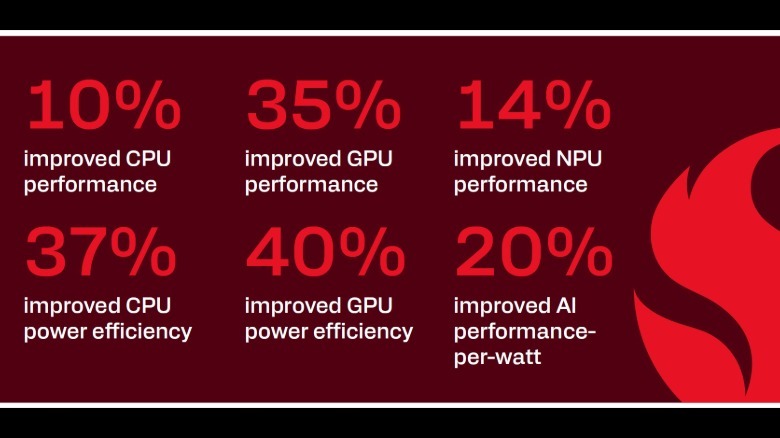
Based on a 2nm process node, the Snapdragon 8 Elite Gen 6 features an eight-core Oryon CPU composed of two prime cores with clockspeeds of up to 5GHz. The chip also has 16MB of what Qualcomm is calling Flex Cache, which the company says allows the processor to dynamically allocate the cache pool to improve single-threaded performance. Elsewhere, the chip features an Adreno GPU that's 35 percent faster than the previous generation while also providing faster rendering speeds in games. Meanwhile, the Snapdragon 8 Elite Gen 6's NPU is 14 percent faster and offers 20 percent better performance-per-watt for machine learning-based tasks.
When it comes to camera features, Qualcomm says the chip's new Spectra image signal processor (ISP) natively supports 8K video capture at up to 30 fps. Photography has also gotten a bump, as the chip can handle single image capture at up to 320-megapixels or triple cameras at up to 64MP with "zero shutter lag." Qualcomm also says its Elite Color Engine will bring more cinematic color science to videos and support for real-time 3D look up tables. Additionally, the company's Intelligent Pixel Control tech allows the camera to better understand the context of a shot, so it can more accurately respond and adjust camera settings to deliver optimal results. As for its connectivity, as you'd expect from a new SoC, the Snapdragon 8 Elite Gen 6's X105 5G modem offers a range of 5G communications including sub-6Ghz and mmWave, along with integrated support for ultra wideband connectivity, Bluetooth 6 and Wi-Fi 8.
Finally, while the extreme version of the Snapdragon 8 Elite Gen 6 is based on the same underlying architecture, it has a few extra features, including that ability to run AI models with more than 30 billion parameters, support for both the APV and VVC video codecs, 18MB of high performance memory and better video recording that tops out at 8K at 60fps (or slow-motion at 4K at up to 240 fps). Gamers will also get an added benefit from Qualcomm's new Matrix Cores in its Adreno GPU, which offers AI-powered super resolution and frame generation for boosting graphics quality and framerates.
So far, it remains to be seen how many next-gen phones will be powered by the Snapdragon 8 Elite Gen 6 and it's important to remember that even though the chip may support a specific tool or feature, it's ultimately up to the device makers to implement them on retail products. That said, Motorola has already committed to using the SD8 Gen 6 in its upcoming Signature 27 phone. And with Qualcomm's previous gen flagship chip holding the performance crown among Android handsets, this new offering looks like it will be the go-to processor for next year's premium mobile devices.