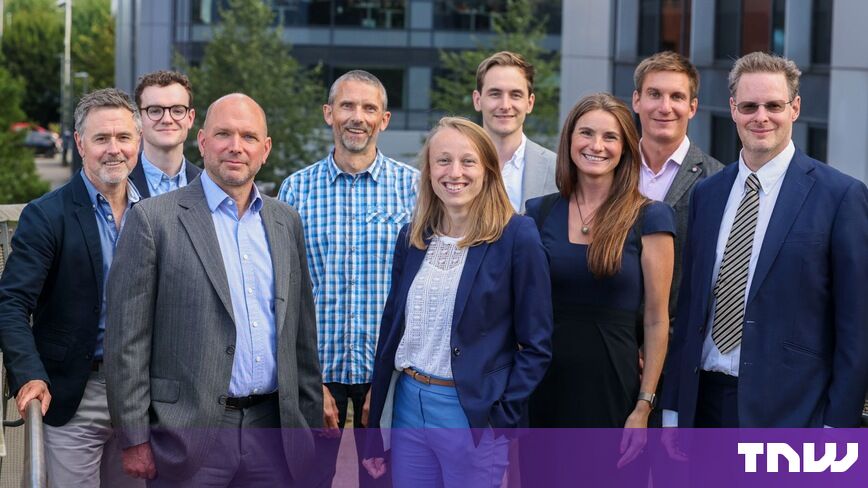
Reclinker, a startup that turns demolition waste back into cement, has raised £10m in a Series A round. It will use the money to move from trials to full commercial production in Cardiff. The company said on Monday that its process cuts cement’s emissions in half, at the same cost as conventional cement.
Clean Growth Fund and AP Ventures co-led the round. The Development Bank of Wales and Kibo Invest joined, along with existing investors Zero Carbon Capital and Cambridge Enterprise. Chief executive Bill Yost said the round was oversubscribed.
“This oversubscribed round sends a strong signal that UK investors are serious about decarbonisation,” Yost said.
Cement without a kiln
Cement causes about 7% of global CO₂ emissions, roughly three times as much as aviation, according to Reclinker. Most of it comes from making clinker, cement’s key ingredient. Kilns heat limestone, which releases CO₂ from the rock and from the fossil fuels that fire the kilns.
Researchers at the University of Cambridge developed Reclinker’s process and described it in a 2024 paper in Nature. It recovers old cement paste from demolished buildings. That paste then goes into the electric arc furnaces that already recycle scrap steel, where it turns back into clinker.
The furnace makes recycled steel and new cement at the same time. The process needs no kiln, no quarried limestone and no fossil-fuel heat. Reclinker expects a 50% cut in emissions at first, and more as the technology scales. TNW has not independently verified these figures.
Other heavy industries are also recycling their own waste into new material. Porsche has built a battery cell with a recycled cathode, made from its own old packs.
From trials to sales
Reclinker has made thousands of tonnes of its product at 7 Steel UK’s plant in Cardiff. It has also secured its first commercial sales. It targets a gap in supply. Concrete makers have long used blast-furnace slag for low-carbon cement blends. That slag is running out as steelmakers move away from blast furnaces.
“By investing alongside specialist climate technology investors, we’re helping Reclinker establish and grow its presence here,” said Gareth Mayhead of the Development Bank of Wales.
Through the Innovate UK Advance Market Commitment, large concrete users have said they plan to use more low-carbon materials. They aim to do so over the next five years. Beyond Cardiff, the money will help Reclinker take its process to other electric arc furnace sites in Europe and the US.
Construction technology has drawn large rounds this autumn. SoftBank invested $225m in autonomous construction firm ASI in September, a month after Gravis Robotics raised a $200m Series A led by SoftBank.
“Cement is one of the most challenging sectors to decarbonise, with emissions deeply embedded in both process chemistry and energy use,” said Stephen Price, investment partner at Clean Growth Fund.