AI is far from a perfect resource. But it seems to hallucinate less than Kennedy.
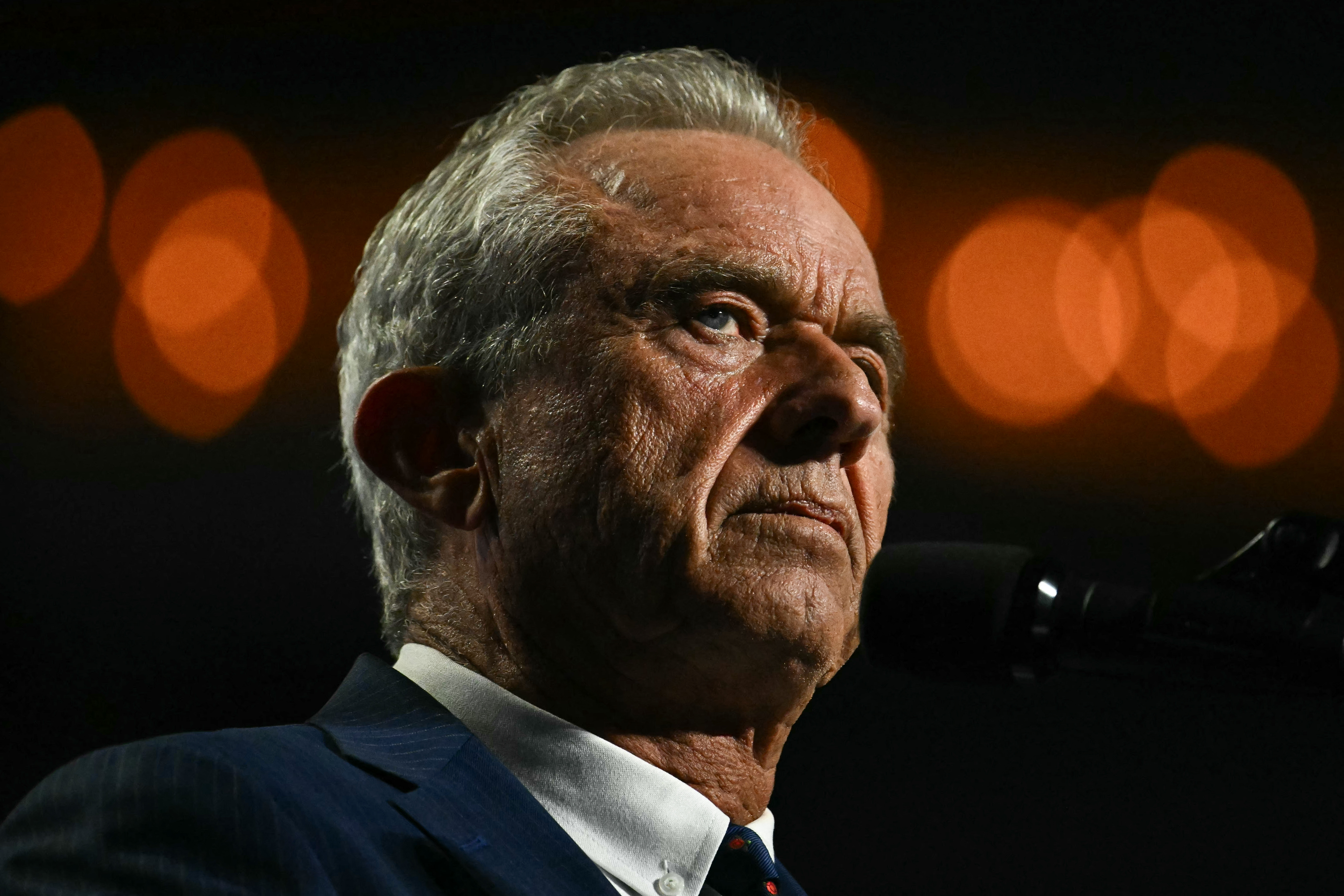
At a Make America Healthy Again event Tuesday, anti-vaccine Health Secretary Robert F. Kennedy opened a “fireside chat” with Vice President JD Vance on the topic of artificial intelligence. While MAHA generally coalesces around things like healthy lifestyles and mistrust of drugmakers, Kennedy quickly turned to extolling the potential of artificial intelligence, surprising Vance, who said he was expecting to discuss “weight loss and acid, not AI.”
Kennedy boasted that the Trump administration is “making it easy for every American to use AI,” which he claimed would free us from the “medical tyranny” of doctors and health experts. He suggested Americans should start using AI to get second opinions about medical recommendations, saying AI is “better informed than any doctor in the country.” He also suggested that the technology would confirm his misinformation about vaccines and contrarian views on public health guidance.
“We’re never, ever again going to be able to be dominated by public officials who tell us trust the experts, because every American will be able to check their own medical advice,” Kennedy said.
Kennedy, who has no medical, scientific, or public health experience, then laid out specific examples in which he suggested AI would contradict health and medical experts and vindicate his own views:
“If somebody tells you masks work, trust the experts, AI may tell you otherwise. If somebody tells you social distancing works, trust the experts, AI may correct that. And if somebody tells you that a vaccine will prevent transmission and infection—oh, you need to take it to protect your grandmother—AI may say it actually doesn’t do that”
AI contradict or “correct” experts, but does it actually? We checked—the answer was nope.
When we asked Google’s Gemini: “Do masks work to prevent spread of infectious diseases?”
The AI chatbot responded (including its emphasis): “Yes, masks work to reduce the spread of respiratory infectious diseases, operating primarily as physical barriers to outgoing and incoming infectious particles. Their real-world effectiveness depends heavily on mask quality, fit, and population-level adherence.”
ChatGPT offered a similar answer, responding: “Yes. Masks can reduce the spread of some infectious diseases, particularly respiratory infections transmitted through droplets and aerosols.”
Doctors and experts >>> AI
Chatbots provided similar affirmative answers to the question of whether social distancing works at preventing infectious diseases. “Yes, social distancing is an effective public health measure for reducing the transmission of infectious diseases, particularly respiratory pathogens,” Gemini responded.
For the question, “Can vaccines prevent transmission and infection?” they provided almost identical results again.
“Yes,” ChatGPT responded. “Vaccines can prevent both infection and transmission, but the degree of protection varies by vaccine and disease.”
“Yes,” Gemini echoed, “vaccines can prevent both infection and transmission, but how effectively they do so depends on the specific vaccine and pathogen.”
The answers are in line with the opinion of experts, including the caveats, knocking back Kennedy’s suggestion that AI would immediately play into his dangerous views. Still, they don’t back up Kennedy’s claim that they’re “better informed” than actual doctors. There are plenty of examples and data indicating that AI cannot be trusted over expert clinicians with health guidance—and can be dangerous when it is.
Kennedy acknowledged that AI has “some downsides.” But he also quoted OpenAI CEO Sam Altman as saying, “It would be malpractice for a doctor to make a diagnosis or to make a prescription without at least checking AI.”
Kennedy’s unexpected praise for AI makes more sense in the context of this specific MAHA event, which was held at the swanky Waldorf Astoria in Washington, DC. It was sponsored, in part, by AI companies OpenAI and Anthropic. Contrary to MAHA’s previous mistrust of industry and opposition to corporate capture, other sponsors for the MAHA summit included Walmart and Grail, which The New York Times pointed out has an application for a cancer screening blood test pending at the Food and Drug Administration.
Bloomberg Law reported that sponsorship packages for the summit were being sold for up to $300,000, which included a guaranteed speaker slot, input into the panel makeup, and a private group dinner with Kennedy and Mehmet Oz, head of the Centers for Medicare & Medicaid Services.
The agenda included executives from huge health insurance companies, UnitedHealth and Elevance. There were also drugmakers, a panel on psychedelics, and an executive from Hims & Hers, a direct-to-consumer telehealth company.
The nature of the event has many MAHA leaders feeling betrayed. Robert Malone, a fringe scientist and previous Kennedy ally, blasted the event in a newsletter. “The incestuous nature of MAHA is becoming harder to ignore, and the conflicts of interest seem to multiply by the day,” Malone wrote. “MAHA was supposed to expose the revolving door between money, industry and government, not build its own.”