The RugOne Xsnap 7 Pro is a curious mash-up that combines two products into one, and doesn’t make a total mess of that attempt. However, the action camera isn’t a replacement for a GoPro, even if it might be remarkably useful.
Why you can trust TechRadar We spend hours testing every product or service we review, so you can be sure you're buying the best. Find out more about how we test.
Launched at the Berlin IFA this year, the RugOne Xsnap 7 Pro fuses two well-known products into something genuinely new.
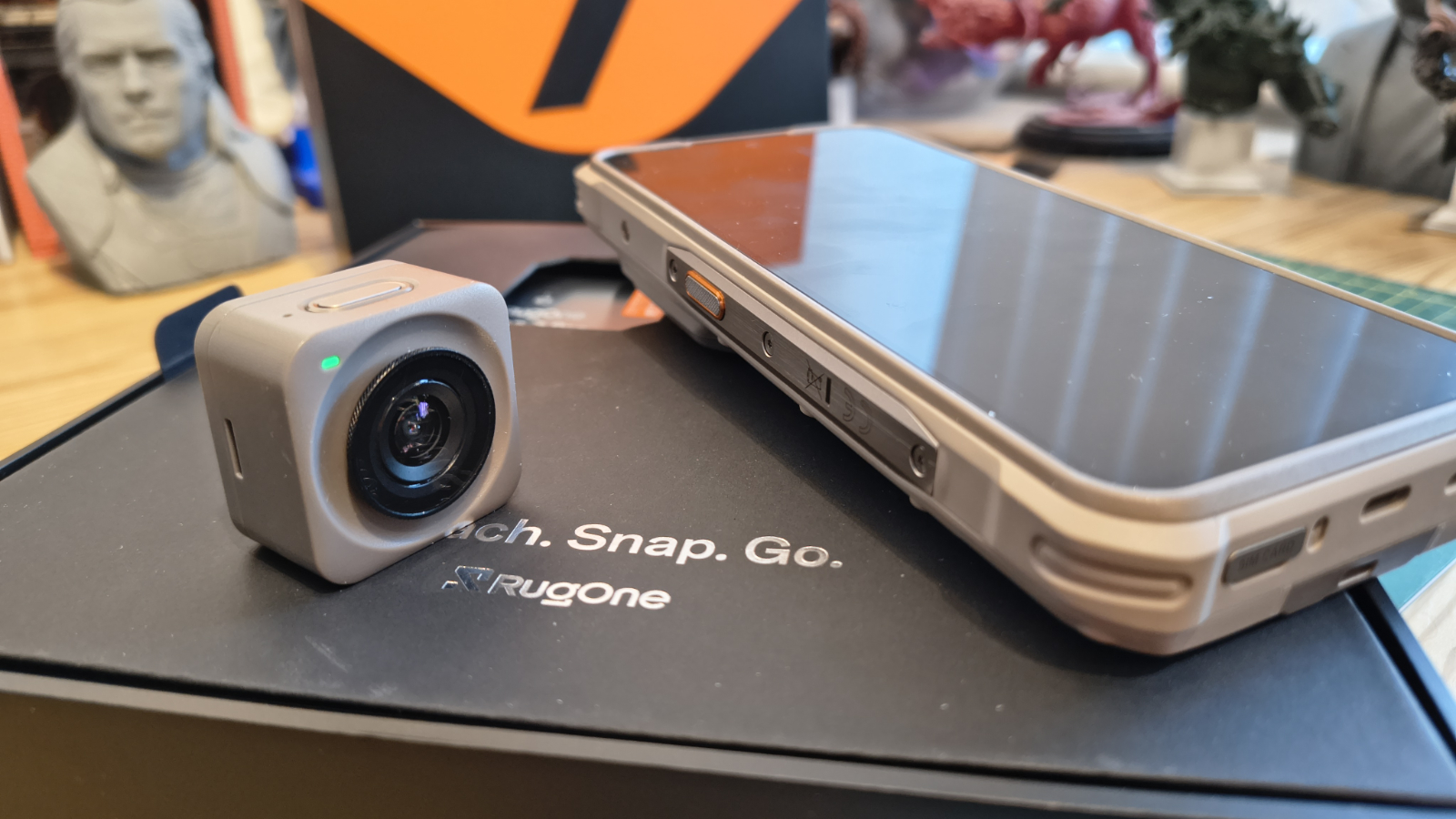
In this case, those elements are the rugged Android smartphone and the small action camera. In this design, the two can be separated, giving you a rugged phone that can spawn an action camera, the Xsnap Go, whenever you need one.
But ignoring that aspect for a moment, what does the Xsnap 7 Pro offer for those who just need a rugged Android phone? As rugged designs go, this one doesn’t have a massive battery, but it does have a decent processor in the Dimensity 9400, and with 12GB of RAM and 512GB of storage, the specifications are at the higher end of this scale.
Also, even if you don’t use the detachable camera, the built-in cameras are decent and capable of good results. But the party trick is the tiny square camera that can be removed from its slot in the back of the phone, which doubles as a charger, and then remotely controlled to capture images and video.
It connects via the platform's WiFi hotspot, and all captures are stored in the 64GB of internal camera storage before later transfer to the phone. The maximum video resolution is 2.7 K, but it supports anti-shake and the option to flatten the barrel distortion the fisheye lens creates.
This camera isn’t a direct competitor to any camera GoPro recently made, the DJI Osmo Nano, or Insta360 Go Ultra. However, it’s included in the price, and it could be useful for anyone who needs to be in a location where using the camera built into the phone isn’t convenient.
This design probably isn’t the best rugged phone, since the action camera slightly compromises it, but if you need a solid, powerful phone with a detachable camera, this is it.
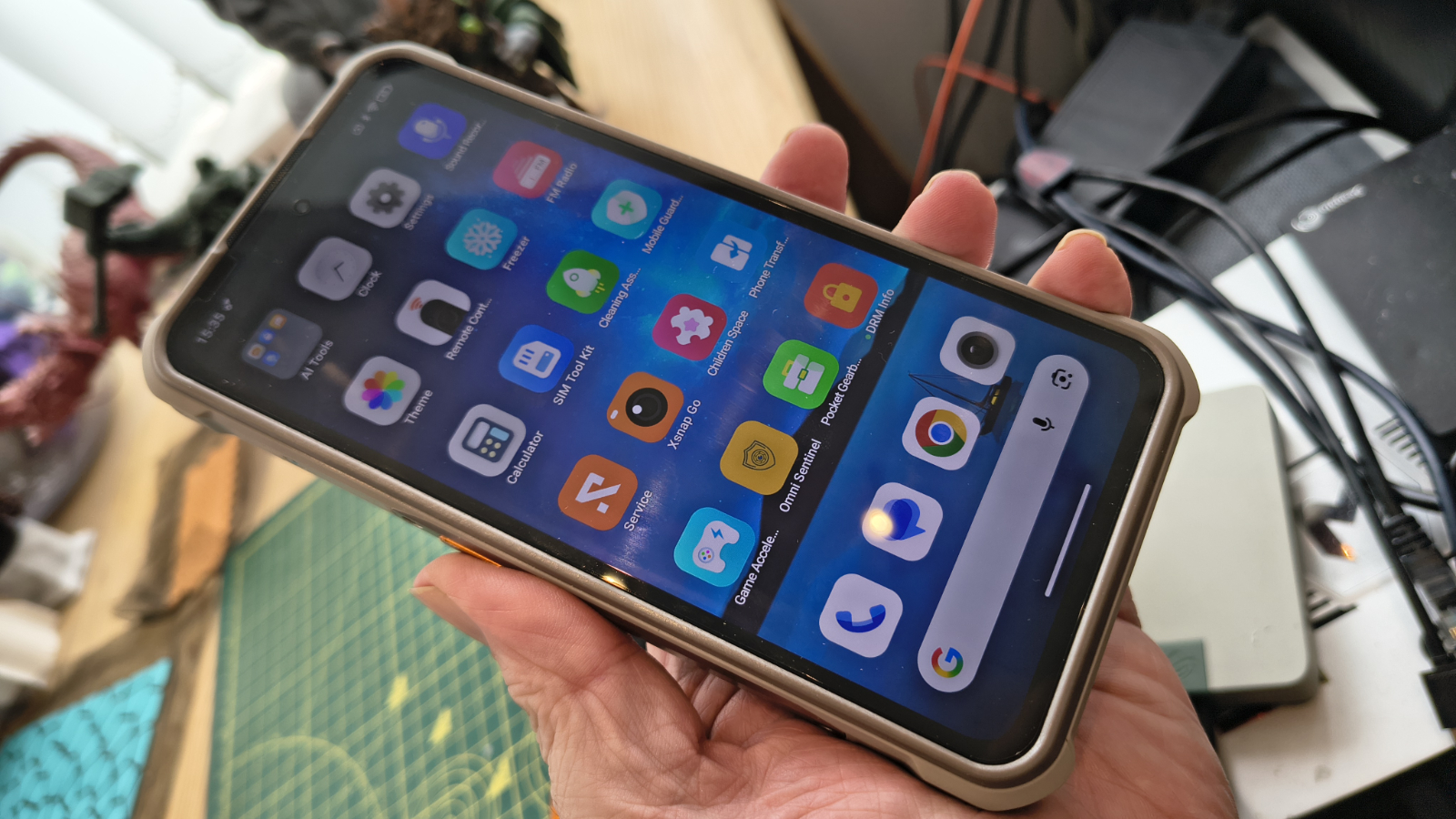
RugOne Xsnap 7 Pro: price and availability
- How much does it cost? $999
- When is it out? Available now
- Where can you get it? Launched on Kickstarter on the 7th of September 2026
I don’t follow why so many Chinese device makers do this, but RugOne initially launched this phone on Kickstarter. The supposed purpose of that platform is to get funding for a concept to turn it into a finished product, but since I had the review hardware almost before the Kickstarter launched, it appears to be entirely a marketing exercise.
When the Kickstarter opened for pledges on 7 September 2026 with an early bird price of $899 (€799), Wider retail availability is planned for October 2026, at $999 in the United States and €1,099.99 across Europe.
As with any Kickstarter campaign, backers are funding a pledge rather than making a conventional purchase. Delivery estimates, warranty terms and final specifications can all shift between a campaign page and a shipped product, and this is worth stating plainly in the published review rather than leaving it as an implication.
That said, the phone and camera do exist, but I can’t give you more definitive timescales or pricing, which isn’t helpful.
If the phone alone was $999 at launch, I’d be inclined to think it was overpriced. But with the camera included, that’s a whole different calculation based on what you think the camera is worth.
A DJI Osmo Nano Standard Combo (64GB) is roughly $390 with 64GB onboard, but that’s a camera that’s capable of 4K at 60fps and a 200-minute battery life.
If I optimistically value the Xsnap Go camera at half that value, then $800 still seems a little steep for the phone. But there is some convenience in having the camera housed in the phone and charged from it.
Sadly, I don’t recall seeing any other products with this arrangement, so the choice is either this, a phone, or a phone-and-action-camera combo.
- Value score: 3.5/5
|
MediaTek Dimensity 8400 (MT6899Z/ZA), octa-core up to 3.25GHz |
|
|
12GB |
|
|
512GB UFS 4.0 |
|
|
6.67-inch AMOLED |
|
|
1220 x 2712 (1.5K), 120Hz, 445ppi, 1700 nits peak |
|
|
2x Nano SIM + eSIM (two of three can be used) |
|
|
477g |
|
|
172.5 x 83.4 x 28mm |
|
|
IP68 IP69K dust/water resistant (up to 2m for 30 minutes), MIL-STD-810H Certification |
|
|
Rear cameras: |
50MP Main Camera + 64 MP Night Vision Camera |
|
Front camera: |
32MP |
|
Detachable camera: |
2.7K@30fps, 1440p@30fps, 1080p@30fps, 64GB storage |
|
5G. WiFi 6E, Bluetooth 5.4 |
|
|
3.5mm audio jack for headphones |
|
|
9,200mAh (Max 45W wired, 50W wireless, 10W reverse) |
|
- Curious structure
- Lots of accessories
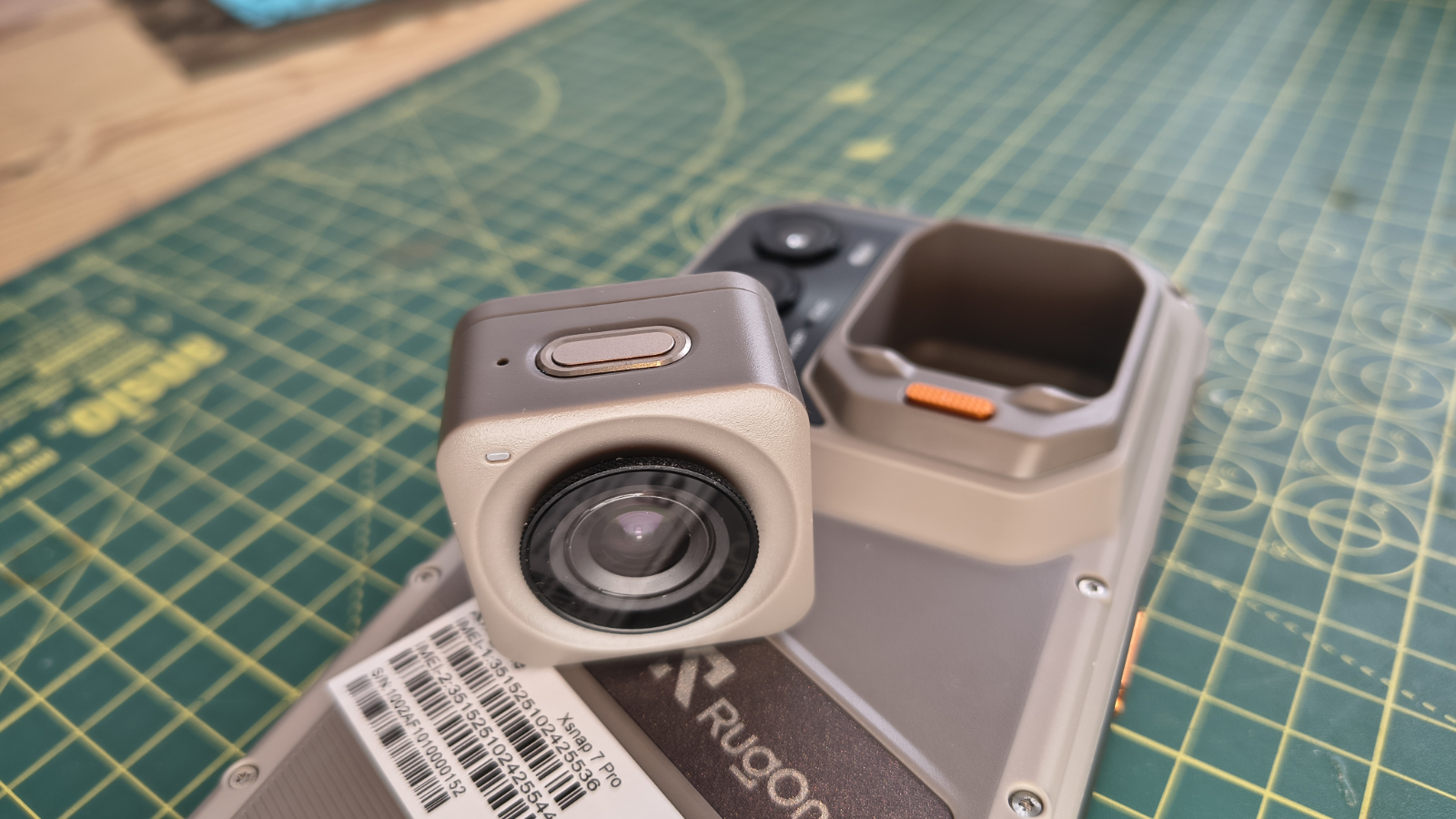
There is something about the Xsnap 7 Pro that smacks of the kind of exercises students do when they're aiming to become industrial designers. In that, taking two disparate devices and fusing them into one can be an interesting challenge.
The problem the people behind this phone didn’t solve was how to house a camera that’s 25mm deep without making it implausibly thick at one end.
We’re all used to the camera cluster being raised to provide extra depth for the optics and sensors, but this design takes that a whole extra level.
Curiously, RugOne quotes the thickness as 19.1mm, but I measured it, and 28mm seems more accurate. The upshot is that it goes in a pocket more easily upside down, but getting past the camera bulge might be difficult unless you have huge pockets.
Removing the camera doesn’t make it any thinner.
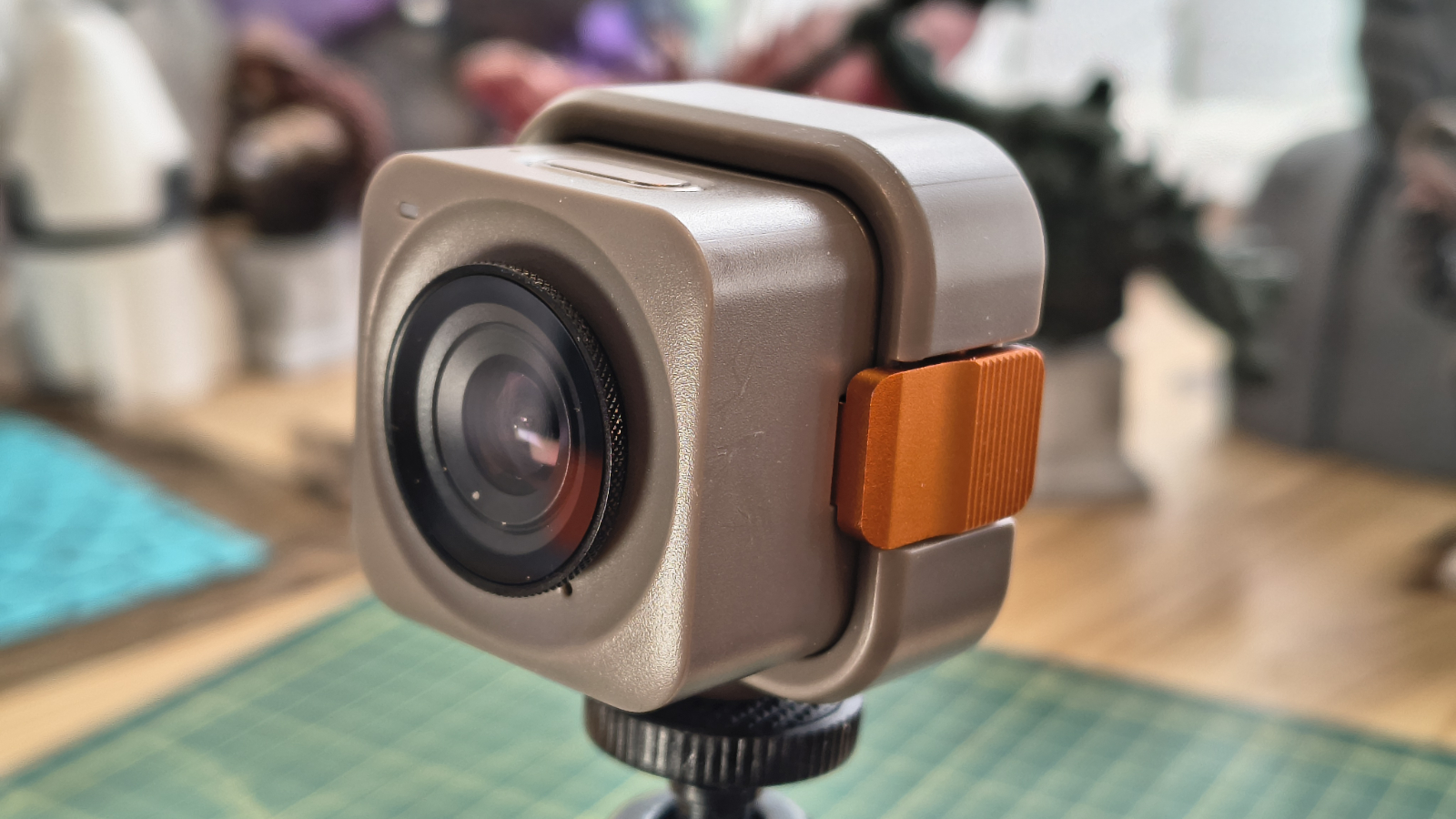
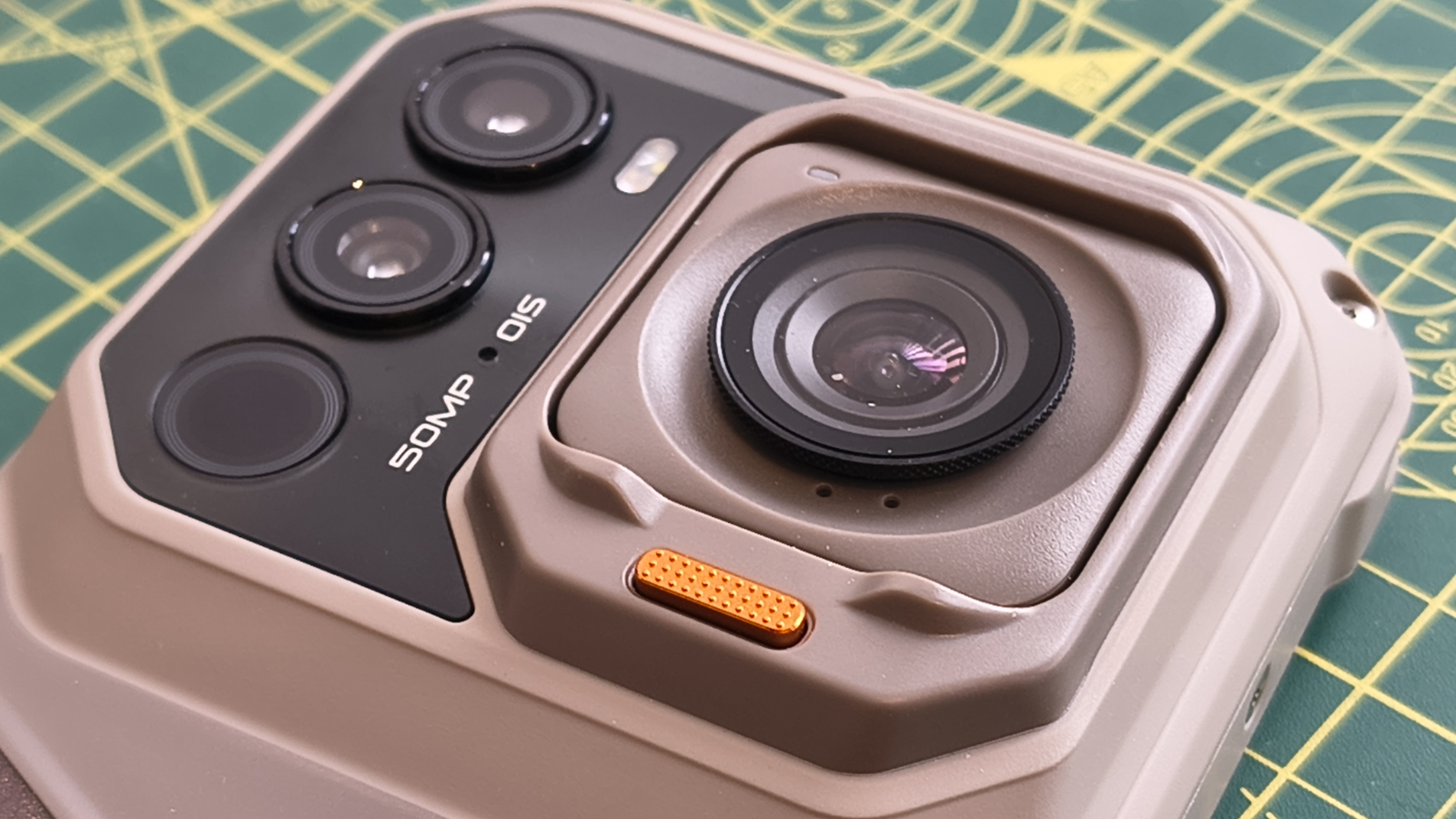
The mechanism for detaching the Xsnap Go camera is straightforward yet quite annoying. To release the camera, press the button below it and then, gripping the edge of the lens cover, pull it out. I’m making this sound simpler than it is, because the camera is held in place not only by the latch the button operates but also by magnets. If you loosen your grip at all when removing it, the camera will shoot back into its home in an instant.
The magnets are there because the rear of the camera has contact pads that connect it to the phone for charging, and for them to work, they need to be flush with the opposing pins on the bottom of the recess.
Putting it back in is much easier, as once the magnets grab, it automatically locates.
The space the removable camera occupies forces the rear integrated camera sensors to the left, where they are vertically stacked.
Away from that area, the back is entirely flat and has a backlit RugOne logo running across it that is called the Aura Pulse, which can be set to animate for an incoming call or a notification. Unfortunately, the LEDs behind it are too dim to be useful, as I had a hard time telling whether it was working even in a dimly lit room.
Potentially more useful, the flat part of the underside does support wireless charging. However, because a significant amount of weight is in the raised area, I couldn’t balance it on my Ugreen charger without it toppling over.
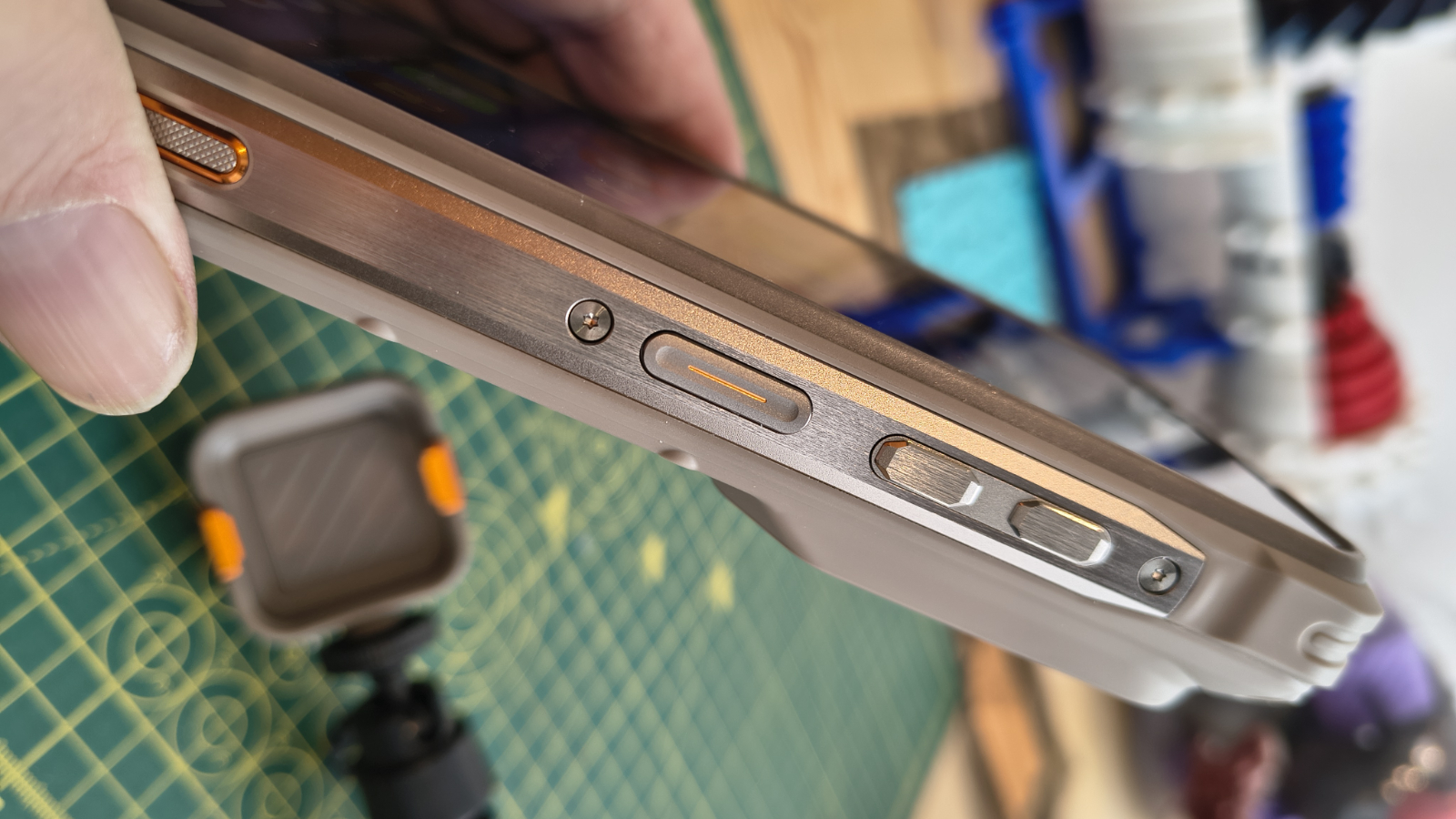
Most of the rest of this design uses the standard playbook for rugged phones, with the power and volume rockers on the right, along with one custom button and another customisable button on the left intended for Walkie-talkie use. The SIM card slot is next to the USB-C port, and the phone is IP68 rated for water resistance even if that port doesn’t have a rubber plug.
The only notable feature at the top end is an IR blaster, which lets the Xsnap 7 Pro act as a remote control if you need it.
The 6.67in AMOLED panel runs at 1220 x 2712, which RugOne markets as 1.5K, with a 120Hz refresh rate and a claimed 1700 nits of peak brightness. Corning Gorilla Glass Victus sits on top, a sensible choice for a phone that will spend time in pockets, tool bags and glove boxes.
On paper, this puts the Xsnap 7 Pro's screen ahead of many rugged phones, which often settle for lower resolution or dimmer panels to save cost. Brightness claims from any manufacturer are difficult to counter, but this one is one of the brighter ones I’ve tested when measured directly under daylight conditions against other devices.
One thing I liked about this exceptionally bright and colourful display is that it has an under-screen fingerprint sensor, which makes it much easier to use for left-handers.
Overall, from the outside, this looks like a dozen ruggedised designs Ulefone (RugOne) has made, except for the swelling needed to accommodate the removable camera. I’d be more critical of those design choices if I could imagine a way of including it without it creating the ergonomic compromises it plainly created. But I can’t think of how this might have been better, so it is what it is.
Design score: 3.5/5
- UFS 4.0 storage
- USB 3.2 Gen 1 port
- 9300mAh battery
The underlying platform used here is the MediaTek Dimensity 8400, an octa-core chip built on Arm Cortex-A725 cores and paired with an Arm Mali-G720 MC7 GPU. It is a genuinely modern mid-to-upper-tier platform, backed here by 12GB of RAM and 512GB of UFS 4.0 storage, with the option to borrow further RAM from storage through Android's virtual memory feature.
If you see claims of 24GB of RAM, that’s marketing people getting overly excited about that feature and trying to claim virtual memory is real RAM.
For me, the important takeaway is the UFS 4.0 storage. One of the things I noticed almost immediately about this device is how quickly it downloads and installs applications. Read and write speeds are a major factor in that speed, along with the processing power of the Dimensity 8400.
Another unexpected feature RugOne included is that the USB-C port isn’t the same as what most phone makers include. While it has the physical housing of a modern USB-C port, most phones only have it wired to the USB 2.0 standard, capping the file transfer speed at around 40Mb/s.
On this device, the port is actually wired as USB 3.2 Gen 1, which enables much faster file delivery. This is only possible because the UFS 4.0 storage can keep pace, something that a phone with UFS 2.2 or 3.0 storage wouldn’t be able to offer.
A 9,300mAh cell is a reasonable capacity for any phone, rugged or otherwise, and RugOne claims up to seven days of typical use. That’s probably a significant oversell, since my testing suggests that a couple of days can eat through that capacity if the battery use isn’t managed.
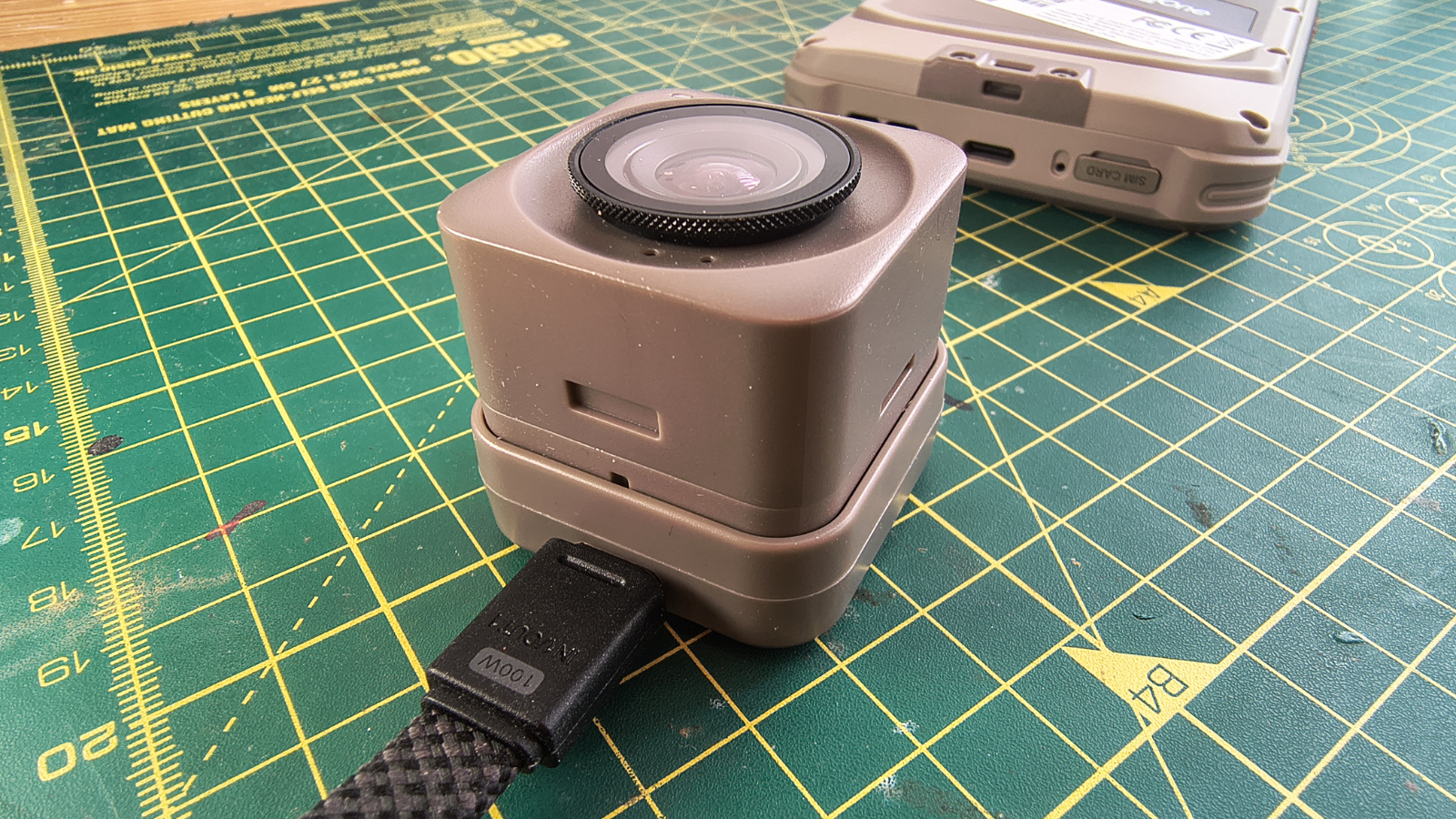
Charging is handled over 45W wired PD or 50W wireless, with 10W reverse wireless charging thrown in for topping up earbuds or accessories. However, one additional draw on the battery power is the action camera. If you use the camera, once returned to the phone, it immediately starts to charge from the battery until its internal battery is fully charged.
Therefore, if you run low on power, I’d recommend not re-docking the camera.
Docked back onto the phone, RugOne claims up to 20 full recharges of the module from the phone's battery, extending total shooting time to a claimed 800 minutes across a full charge cycle of the handset.
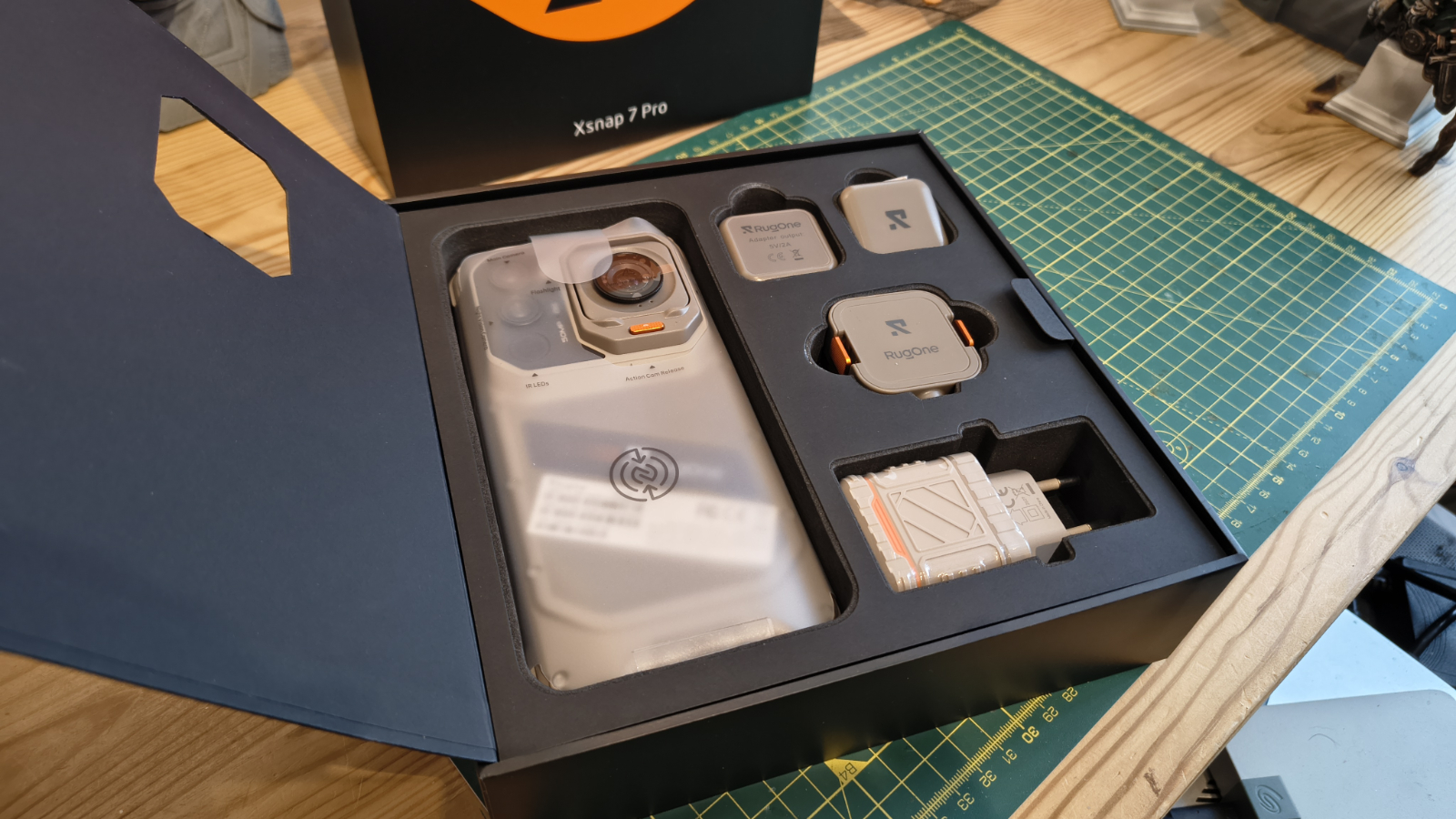
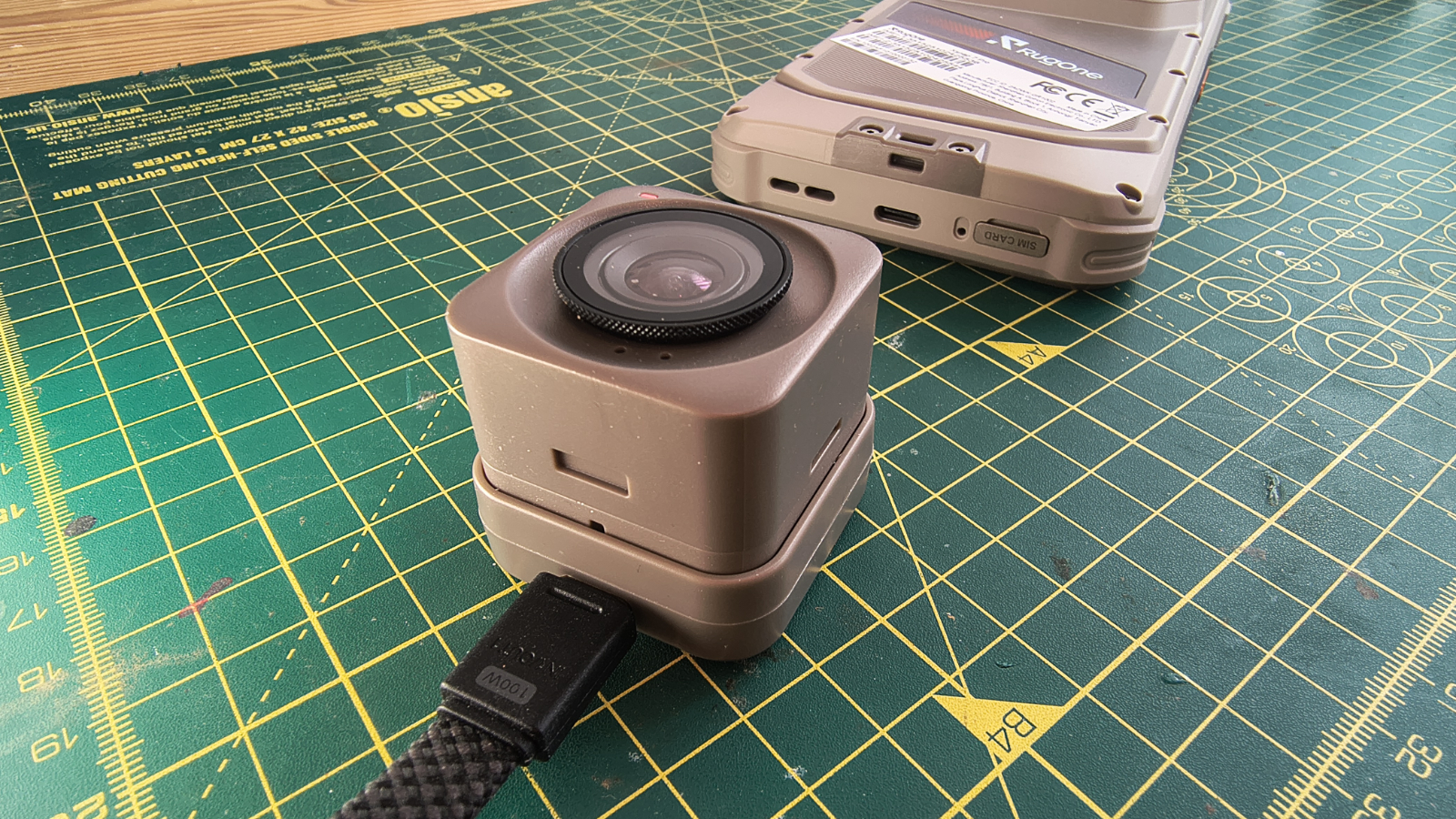
The kit includes an independent charger for the camera, so you can keep it fully charged with a power pack.
- Hardware score: 4/5
- 50MP and 64MP on the rear
- 32MP on the front
- Detachable Xsnap Go action cam
- Four cameras in total
The RugOne Xsnap 7 Pro has four cameras:
Rear cameras: 50MP Samsung GN9, 64MP OmniVision OV64B Night vision
Front camera: 32MP GalaxyCore GC32E1
Detachable camera: OmniVision 5MP OV-OS05A10
The primary camera on the Xsnap 7 Pro is the classic Samsung GN9 sensor, a 50MP OIS design with an f/1.88 aperture and 84° FOV optics. If this were the only sensor on this phone, it would be reasonable, since it’s a solid design that can take great pictures, especially in good lighting conditions.
In my examples, I accidentally left HDR mode on, so the colours are excessively punchy, but it will take better, more colour-balanced images if you leave it off. The GN9’s weakness is that it has no zoom optics, so you're limited to basic digital zoom.
The other weakness of most Samsung primary sensors is that they tend to get grainy when the light level drops. Thankfully, if you want sharp images in complete darkness, then the 64MP OmniVision OV64B is a great option. And, as long as the subject is within the IR illumination, it will be captured precisely.
The 32MP Samsung GC32E1, f/2.45 sensor is probably overkill for a FaceTime camera, but it's in so many phones these days that it's almost becoming a de facto standard.
But none of these cameras is why you would consider this phone, so let’s get to the detachable Xsnap Go action module, which uses the OV-OS05A10 sensor, a 133° FOV, f/2.4, 14mm equivalent.
Before we get into the details of this device, I want to talk about some of the mechanics of using this device, and how it doesn’t always work the way you might want it to.
For starters, you don’t use this camera through the camera app; instead, it uses its own dedicated Xsnap Go app, which will only talk to the detachable camera if certain phone settings are configured.
One requirement is a WiFi hotspot, so you can’t use it while the camera is active and also be logged into a local WiFi access point. You also need to remember to disable this when you are done, as the app won’t disable it when it exits.
With all settings configured, a link to the camera is established, whether the module is mounted on the phone or detached from it.
Which begs the question: how far can the phone and camera still talk? Not very far. I estimated the limit at about 30 ft if any structure is involved, and maybe 50 ft outdoors. One issue I ran into is that if the phone and camera disconnect while recording, the app can't easily re-establish the connection, and at least once I had to reboot the phone to get them to talk again.
You can use the camera's single button to take photos or record video without the app, but you won't know if it's run out of internal storage without the phone connected.
Via the app, you can select basic video recording, slow motion, time-lapse, interval photo and single still image capture. The 5MP sensor's best resolution is 2.7K, while the Samsung sensor on the phone offers 4K. The camera has 64GB of storage that isn't expandable, and you must instruct the device via the app to copy the captures to the phone's storage.
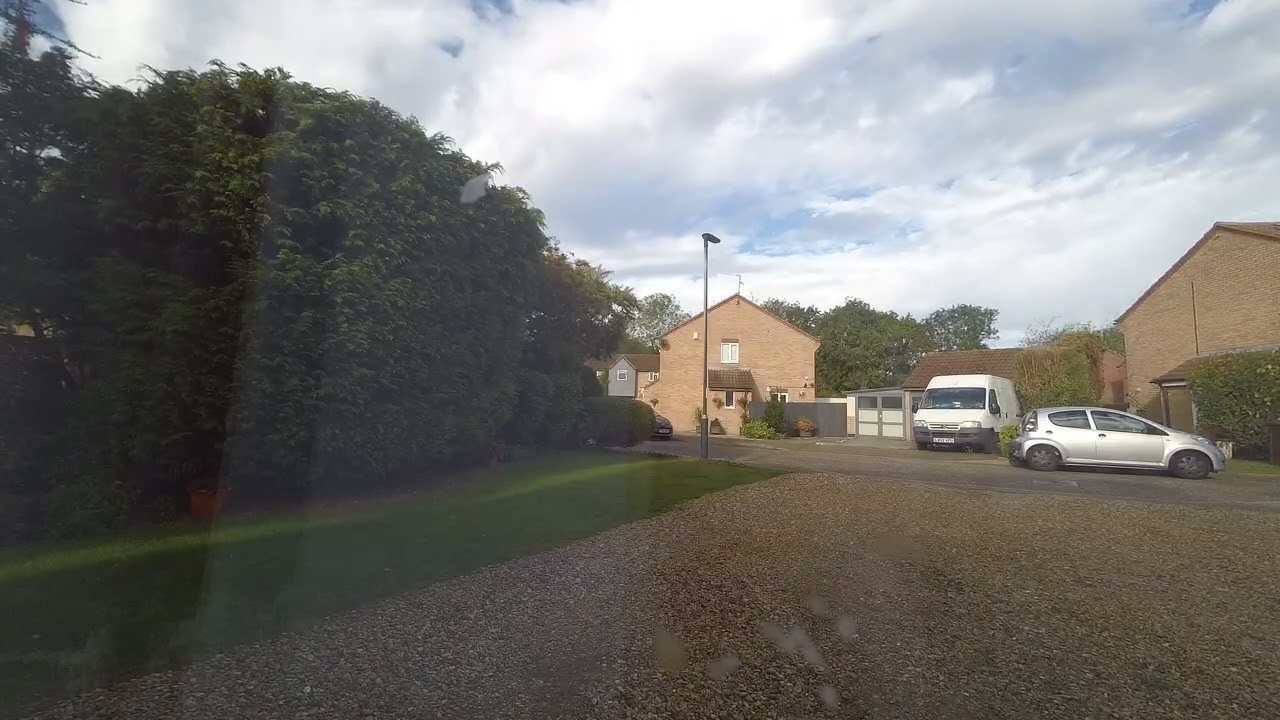
It offers various motion and distortion compensation options, and you can manually tweak exposure settings or use HDR. It’s clearly not up to the primary sensor's capabilities, but you can detach it and place it away from the phone for another perspective.
That could be incredibly useful for someone working, for example, on a vehicle engine who needs to be behind the steering wheel but still see what’s happening in the engine bay.
In my testing, I did some motion-compensated video and time-lapse, and the results were decent. The only issue I noticed, and some dedicated action cameras suffer with this too, is that if the exposure changes during a time-lapse, the camera can’t adjust for the new lighting conditions.
The run time of my time-lapse was 40 minutes and 30 seconds, half a minute more than RugOne claims for the battery life on the detachable camera. This runtime might have been longer if RugOne made better-considered accessories. The phone includes a small charging dock and a tripod mount accessory for the detachable camera.
Had these been one item, and not two, a power bank might have been able to keep the camera running for longer recordings. Unfortunately, they are separate and not designed to work together, as the camera can only be attached to one of them.
That said, the detachable camera is something unique about this design, and even with some notable limitations, it can be extremely useful.
- Camera score: 4/5
|
12GB/512GB |
12GB/1TB |
||
|
477g |
414.3g |
||
|
9200 |
10000 |
||
|
1396 |
1239 |
||
|
4789 |
3525 |
||
|
7678 |
7196 |
||
|
8513 |
8171 |
||
|
3.0 Score |
16075 |
15219 |
|
|
23h 33m (17%) |
22h 37m (19%) |
||
|
28 |
42 |
||
|
14225 |
18554 |
||
|
11068 |
8748 |
||
|
3DMark |
|||
|
Slingshot Ex. OGL |
|||
|
Slingshot Ex. Vulkan |
|||
|
7958 |
|||
|
1305 |
953 |
The Xsnap 7 Pro has a few good things, and one that isn’t so encouraging.
For comparison, I’ve used the Oukitel WP500 Ultra, a premium design that uses the slightly less impressive Dimensity 9300, and not the 9400 that the Xsnap 7 Pro sports.
Overall, in most tests, the Dimensity 9400 provides about another 10% of performance, and the ARM Mali-G720 MC7 is also a significant uplift.
It’s annoying that 3DMark is mostly overpowered by both these platforms, but the Nomad Lite test shows how the ARM Mali-G720 MC7 delivers when combined with the UFS 4.0 storage.
And that would be the whole story, if it wasn’t for the battery test.
Is the downside of the UFS 4.0 storage that it consumes more power? It certainly doesn’t seem that way, because with slightly less battery, the Xsnap 7 Pro lasted even longer than the WP500 Ultra.
I believe a contributing factor is the OLED display on this phone. My methodology for the battery benchmark is to reduce screen brightness to about 120 nits. And the OLED is so much brighter than a typical VA panel that its brightness setting is around 20%, not 40% or more.
What’s harder to tell is whether having the detachable camera connected and charging from the phone also has a significant impact. It’s nice that you can recharge the camera without needing the charging base, but does that come with a catch? Maybe, but you can always remove the camera from the phone and charge it separately.
- Performance score: 4/5
I have mixed feelings about this design for a few reasons. But before we get to the caveats, I need to call out the lovely build quality that RugOne-branded hardware is rocking, which is generally excellent. This phone feels exceptionally well made and able to take more than a few light knocks. That makes it suitable for anyone who works outdoors or in harsh environments.
The base platform is also elegantly powerful, making the experience responsive and useful in a wide range of situations. If you occasionally game or use VR, this phone has enough power to do it smoothly.
The standard camera installation is workmanlike and can deliver good results. However, the detachable Xsnap Go camera isn’t quite at the same level, and you need to configure it optimally to get the best results. If 2.7K resolution video and a 40-minute battery life are enough for your needs, this could be the phone for you, but it doesn’t embarrass any dedicated action cameras currently on the market.
If you work alone but need to be in two places at once to observe events, this solution might work for you, as long as you can work with the limited camera runtime.
The camera's caveat is that it makes the phone harder to pocket, and it could drain the internal battery when you don’t want it moving to the camera.
But minor points aside, this is still a unique offering that some professions might find invaluable.
Should I buy a RugOne Xsnap 7 Pro?
|
Kickstarter launch, but the specifications weren’t going to make this a cheap phone |
3.5/5 |
|
|
Including the camera has made this phone an odd shape |
3.5/5 |
|
|
Powerful SoC and UFS 4.4 storage combine well |
4/5 |
|
|
4/5 |
||
|
4/5 |
||
|
A unique offering, but it might cost more than a phone and an older GoPro |
4/5 |
Buy it if...
Don't buy it if...
Mark is an expert on 3D printers, drones and phones. He also covers storage, including SSDs, NAS drives and portable hard drives. He started writing in 1986 and has contributed to MicroMart, PC Format, 3D World, among others.