Russian bloggers warn Russia’s hyper-centralized digital economy is vulnerable.
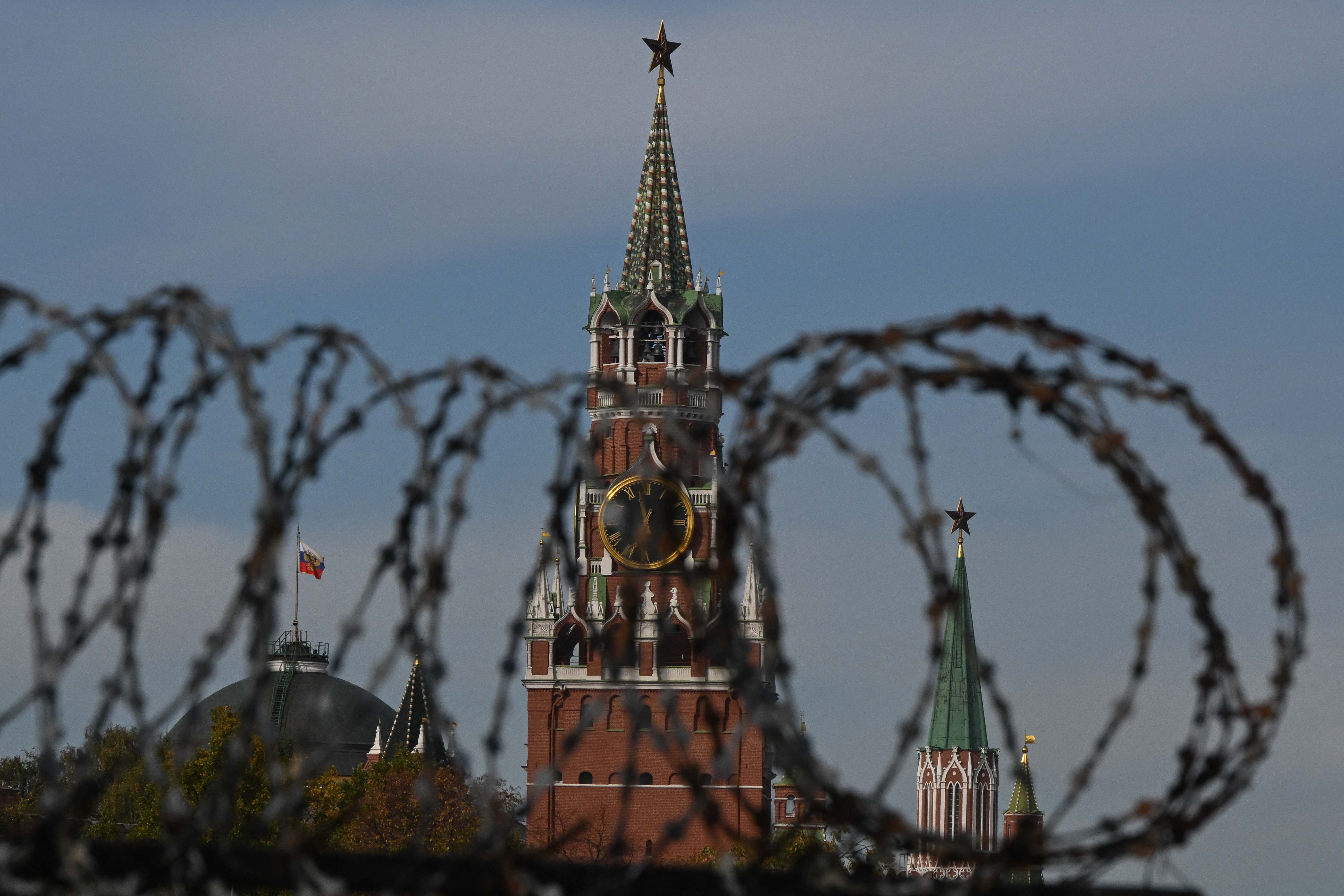
When Russia began attacking Ukrainian data centers and telecommunication infrastructure, it apparently failed to prepare for possible retaliation. Now Russia’s digital services are facing widespread outages after Ukrainian drone strikes knocked out three of the largest data centers owned by Russian tech giant Yandex within several days.
Pro-Kremlin bloggers are warning that Russia’s centralized digital economy could collapse because the country is not prepared for the “data center war” it started, according to posts translated by the pseudonymous independent researcher ChrisO_wiki. The Russian commentators also suggested that Ukraine’s decentralized digital services could prove more resilient than Russia’s system if the countries continue trading such blows.
Russia initially launched a drone strike campaign targeting Ukrainian data centers and mobile phone networks in late September. The attacks temporarily disrupted Internet and cell phone service for up to 100,000 households in the Ukrainian capital of Kyiv and came as part of a broader long-range strike campaign that has involved Russian missiles and jet-powered drones hitting Ukraine’s power grid infrastructure, transportation hubs, and even residential apartment building blocks.
But Ukraine soon began striking back at data centers owned by the Russian company Yandex, also known as “Russia’s Google,” in what Ukrainian President Volodymyr Zelenskyy has described as a “symmetrical response.”
The first Ukrainian drone attack damaged a data center in the Sasovo region southeast of Moscow on October 8, which houses two of the three supercomputers that Yandex has used to train its YandexGPT AI model.
It was not immediately clear how much damage may have occurred to the supercomputers, which are based on Nvidia A100 GPU chips. The Chervonenkis supercomputer has a computing performance rated at 29.42 petaflops and ranks at 101 on the Top 500 List of supercomputers, while the Lyapunov supercomputer is rated at 20.03 petaflops and ranks at 161.
A second Ukrainian drone strike knocked out another Yandex data center in the Kaluga region southwest of Moscow on October 9. This is one of the largest data centers in Russia, with a maximum 63-megawatt capacity.
A third Ukrainian drone strike then forced Yandex to suspend operations at its data center in Vladimir, east of Moscow, on October 11, according to BBC News. This facility houses the third of Yandex’s three supercomputers, Galushkin, which ranked 134 on the Top 500 list and is rated at 20.64 petaflops of computing performance.
Russia’s vulnerable digital economy
More importantly for Russian society, the damage to Yandex’s data centers has reportedly caused interruptions or outages to popular Russian payment apps and digital banking services, email, e-commerce platforms, video streaming services, ride-hailing and food delivery apps, and navigation and map services. Yandex’s search engine also accounts for about 70 percent of the market share in Russia.
The disruptions are even more widespread, because the data center damage also impacts Yandex’s cloud computing service, which counts some of Russia’s largest companies as customers, according to The Moscow Times, an independent newspaper. These include large grocery and fast-food chains as well as a household appliance retailer.
The Russian milblogger writing under the name Ratio Militaris warned that Yandex’s hypercentralized digital ecosystem had become a wartime weakness for Russia, in a post translated by ChrisO_wiki:
Yandex and the digital ecosystem it created that had long been one of Russia’s advantages compared to even Western countries, has proven to be a weak link—including, and even primarily, due to hyper-centralization—both at the market level, where Yandex had become a powerful monopolist, and at the level of specific infrastructure solutions, where the entire power of the information giant was concentrated in a few (the exact number is no secret, but perhaps inappropriate to specify) large nodes—those aforementioned data centers.
Russian companies like Yandex will also have a hard time establishing infrastructure backup systems outside of Russia to provide additional wartime resiliency. That is partly because of the “Sovereign Internet Law” passed by the Russian parliament and signed into law by President Vladimir Putin in 2019, according to Russian milblogger Artjockey, whose writing was translated by ChrisO_wiki.
In its pursuit of a “sovereign Internet,” the government has effectively blocked Russian companies from using infrastructure even in friendly nations, while “unfriendly” countries have blocked access via sanctions anyway… it is virtually impossible to replicate Russian IT infrastructure in places like Belarus or Kazakhstan—though, in any case, the necessary capacity simply isn’t there. China might have the capacity, but that would require legislative changes to allow key services and registries to be moved there.
By comparison, Ukraine has a much more decentralized digital ecosystem consisting of smaller data centers. It has also taken steps to build out backup infrastructure, including moving some equipment and networks underground or outside the country.
Western tech giants like Microsoft and Amazon have also provided free cloud services to help Ukraine migrate crucial government services to other parts of Europe, enabling many essential Ukrainian digital services to keep going despite Russia’s sustained missile and drone attacks. Amazon Web Services alone is hosting more than 15 petabytes of data from over 60 Ukrainian government organizations, along with data from Ukraine’s largest private energy company, DTEK.
Meanwhile, Russians may be waiting up to six months until Yandex can replace damaged data center equipment, according to an unnamed IT expert interviewed by Russian newspaper Kommersant. A lengthy timeline for repairs may not be so surprising when considering Amazon’s own experience after Iranian drone strikes knocked out multiple data centers in Bahrain and the United Arab Emirates earlier this year.