Samsung goes to town on tracking biometrics, yet again. Antioxidant levels, hydration tracking and body composition scanning are here, on top of deeper sleep and workout tracking. Loud noise detection is new for Samsung's wearables, too, a feature that's been on Apple's Watch series for a few years.
Some new features are hidden away inside the Watch Ultra 2 (or more often than not, your companion Samsung smartphone), but they're aimed at better synthesizing all this data into a more palatable, understandable form. For example, a new feature called Heart Health Score attempts to distill multiple tracked metrics into a single number, combining sleep, stress and activity and connecting it to body composition data.
It's a clear example of how many wearable features and settings get buried, and how easy they are to miss. To see your score, you have to open the Heart health tile on your watch, scroll down and tap "Show on phone" to launch its own Health app on your paired device. I wish this (like many other metrics) could just be displayed on the Watch Ultra 2 itself.
We've already tested out the new hydration tracking during exercise, which seems aimed at more intensive, lengthier workouts than I usually do. It could be a useful addition for hardcore athletes, but for the rest of us who work out in the gym or train for a half-marathon at most, hydration isn't a major issue. One quick aside: The Galaxy Watch Ultra 2 automatically detects workouts and walks well, flagging sessions more consistently than my Apple Watch Ultra 3.
Once again, we tested the antioxidant tracking, which requires you to take off the Watch Ultra 2 and press your thumb firmly against the sensors on the rear of the device. For a week, I tried to lean into the healthy eating habits Samsung says will increase my antioxidant levels. It's a lot of common-sense suggestions: Eliminate added sugars, avoid ultra-processed snacks and meals, increase raw veggies and fruits. Interestingly, Samsung's app suggests leaning into moist-heat cooking — like steaming, instead of grilling or roasting.
While we saw antioxidant testing in last year's Samsung wearables, the Watch Ultra 2 adds two features: trend charts and daily history logs. My antioxidant levels increased towards the upper limit of low, but never quite graduated to the middle rating. I'm not sure it's a particularly notable way to track healthier eating, but it kept me honest in my food choices for a few weeks.
Sleep tracking has been upgraded, although the new software finally landed months after the Watch Ultra 2 initially went on sale. There are some genuine improvements here, including a faster setup. The watch now requires only three days of sleep data from the past two weeks, instead of the seven days previous Galaxy Watches needed.
Despite its stellar battery life, the Galaxy Watch suffers from the fact that most of us recharge our smartwatches overnight — or prefer not to sleep with a slab of tech attached to our wrist. Folks who charge their watch overnight can't gather sleep data, so needing fewer days of data makes it easier to get on board with sleep tracking.
There's also a sleep coaching 'pet', based on an initial setup survey and your first few nights of sleep pattern data. This offers sleep advice and habit suggestions, setting up a 4- to 8-week coaching program that adjusts dynamically based on the sleep you eventually get.
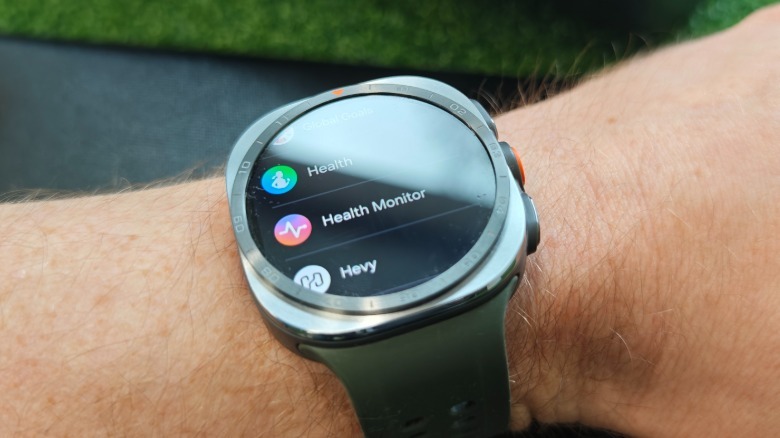
Samsung has offered snore detection on its wearables for years, which still requires your phone nearby to record audio and it's harrowing to listen back to. With the Watch Ultra 2, Samsung upgraded sleep apnea detection and folded it into its Health Monitor app. It requires two nights' sleep, with the watch worn tightly and higher up the wrist. It'll then let you know if you show signs of sleep apnea, which can be a genuine health threat.
The watch monitors biometric readings throughout the night, including blood oxygen levels, heart rate variability and your physical movement. It tracks signs of moderate-to-severe obstructive sleep apnea (OSA) and analyzes breathing disruptions per hour. It's not a clinical diagnosis, but it could be worth getting an expert opinion if the watch detects high levels of sleep interruption. If you're not using a Galaxy phone with this watch, unfortunately, you won't be able to use several features, including this sleep apnoea test. Other features unavailable include the ECG, which checks for signs of atrial fibrillation, and the blood pressure monitor.