Research suggests listening more while talking less. Killing aimless meetings can help, too.
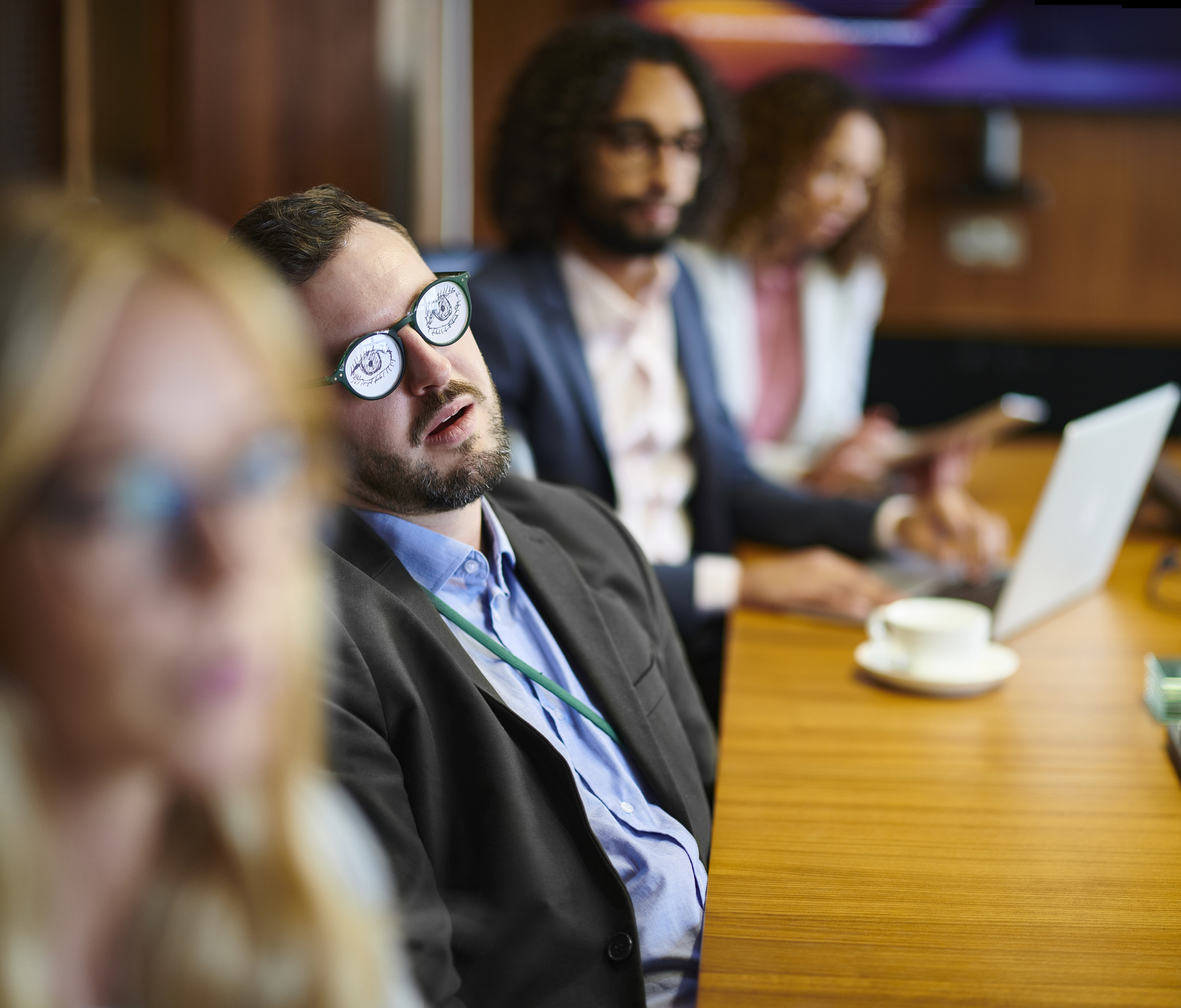
Close to 1 billion meetings take place each day around the world. CEOs spend nearly three-quarters of their workdays in meetings. Planning for and spearheading meetings eats up the lion’s share of managers’ time. In much of the industrialized world, meetings are both the metronomes and menaces of people’s working lives.
Given the enormous time spent in workplace meetings, do we know what they accomplish or how to make them as worthwhile as possible? For decades, the answer was… not really. Meetings weren’t a particularly accessible subject of study. But that has changed. Once a tiny niche area, “meeting science” is a growing specialization among organizational and social psychologists. The field is accelerating as archived virtual meetings provide vast swaths of data. And it is providing a fascinating window into human behavior.
Meeting to talk helps fulfill basic human needs to connect, communicate, and cooperate. People have long come together—in caves, fields, market squares, and town halls—to get something done, share ideas, get on the same page, or just to remark on the weather. But meeting scientists define their subject as gatherings of people “with some goal or structure to the event,” says organizational psychologist Liana Kreamer of the Florida Institute of Technology, who coauthored a review of over three decades of meeting science in the 2026 .
As a graduate student, Kreamer was interested in studying teamwork, leadership, and work relationships. During her doctorate work with meeting scientist Steven Rogelberg, she realized that meetings would be a fine venue for studying all of that and more. “You can use a meeting as a stage to study anything you want,” she says. After all, at their core “meetings are a fundamental aspect of how we organize and interact as social beings,” Kreamer and coauthors Rogelberg and Jon Gray, both of the University of North Carolina in Charlotte, wrote in the 2026 article.
To tap meetings for study, researchers typically use two approaches. The first is a classic survey in which researchers retroactively ask people about their real or simulated meeting experiences and analyze the responses. The second method is to analyze specific behaviors and trends extracted from audio and video recordings of meetings. Such precise content is “where the music is,” says industrial and organizational psychologist Nale Lehmann-Willenbrock, director of the Center for Better Work at the University of Hamburg, Germany.
In one experiment, Lehmann-Willenbrock and colleagues extracted data from video-recorded meetings to study how leader communication affects team interaction during decision-making. The researchers found that respectful, attentive inquiry by meeting leaders enhanced team performance, in contrast to when leaders asked questions but didn’t attentively listen to responses.
Leading with listening
As with many meeting science studies, their findings about what improves meetings’ effectiveness often seem obvious, but meeting researchers note that meetings often stray far from these ideals.
Such research also consistently reveals the importance of active listening, says Lehmann-Willenbrock: not just passive acknowledgement by the listener but actively providing thoughtful feedback. In virtual meetings, because “we’ve all learned to mute ourselves if we’re not talking, very often, active listening is killed completely.”
The balance of listening and speaking also can influence how well a meeting goes. Meeting leaders and participants may retain very different views of whether a meeting was successful, notes Lehmann-Willenbrock. “Often, leaders talk the most, which is also why they often think their meetings are pretty good,” she says. Kreamer also emphasizes that it’s important that meeting leaders lead but not dominate the discussion. Leaders should monitor the proportion of time they are speaking to allow for inclusion of many voices.
Research supports a checklist of additional things that leaders can do before, during, and after a meeting to make it a success, says Lehmann-Willenbrock. To set the stage, leaders should choose appropriate rooms, refreshments, and lighting, invite only those who need to be there, plan to start and end on time, prepare an agenda, set and communicate clear goals, and allow time for pre-meeting conversation.
Socializing first, especially in virtual meetings, is beneficial, Lehmann-Willenbrock says. Her research has shown that “for more introverted participants and more quiet participants, this warmup phase is really helpful because it helps them make more active contributions inside the meeting.”
Indeed, her studies on face-to-face meetings have shown that pre-meeting small talk predicts meeting effectiveness, particularly for more introverted participants. But pre-meeting talk is rare in virtual meetings; she says leaders should consider establishing a norm of arriving early or using the first few minutes for an informal check-in.
Engaging attendees
Facilitators can increase the likelihood of a successful meeting by making sure all opinions are heard. Kreamer recommends a technique called silent brainstorming to get all participants, even shy and reluctant ones, to engage in idea generation. It involves creating a shared virtual space, such as a chat or online document, to which all participants contribute simultaneously. Kreamer points to a 2009 study that found this approach (some researchers call it “brainwriting”) was more effective than traditional free-for-all spoken brainstorming in meetings.
Kreamer uses this technique when she and her students are dreaming up research ideas in class. “We can all see each other working,” she says, and the quieter students don’t worry about interrupting or having to verbally express their suggestions. After 10 minutes, she reviews the ideas with the group.
Zofia Walters, a doctoral student in industrial organizational psychology working with Kreamer, has been studying another aspect of meeting inclusiveness: the needs of neurodiverse participants. Her studies provide evidence that while practices like minimizing distractions, documenting instructions, using shared calendars, and building regular check-ins into meetings likely benefit all employees, they may be especially helpful for people with ADHD.
In a survey of 147 employees from a variety of workplaces, Walters asked participants about their most recent virtual meeting: how effective it was, how fatigued they felt afterward and their emotional state. Participants also reported how much time they spent multitasking during the meeting, such as by answering emails, and how long their camera was on. They also shared whether they had an ADHD diagnosis, either formal or informal (based on self-assessment).
In findings yet to be published, Walters reported that individuals with ADHD were more likely to report feeling more meeting fatigue, especially when the camera was on for extended periods, than non-ADHD peers. They also reported poorer emotional states. Her findings also suggest that multitasking during meetings may help ADHD attendees manage boredom or hyperactivity.
Effective meeting practices don’t end when the meeting ends. After a meeting, leaders can ensure it was time well spent by communicating action items to participants, taking concrete steps to implement the ideas and tasks generated in the meeting, and assessing employee engagement, meeting satisfaction, and meeting effectiveness, Lehmann-Willenbrock and colleagues concluded in a 2018 paper in .
The downsides—and upsides
Does all this time spent in meetings take a toll on workers? The evidence seems to suggest so. Research has found that employees anticipate feeling worse and being less productive when their day is jam-packed with meetings, especially when they are working on complex tasks.
Meetings are sometimes seen as the default way to get things done, but often, people don’t specify what they want to achieve from them, says cognitive scientist Ava Scott of the University of Copenhagen. This, she says, “makes a lot of meetings feel very purposeless.”
Recurring meetings tend to be the most aimless, Scott’s research on Microsoft employees has found; one participant described the content of these successive meets as dreamlike in their similarity to one another. If there’s no clear goal, you don’t know why you’re meeting, and everyone’s very busy, it probably indicates that taking up people’s time with a meeting isn’t ideal, says Scott. Kreamer notes that some companies, such as Shopify, have cut all recurring meetings.
Nevertheless, a 2026 study of more than 9,000 workers in Norway found that while meetings are both common and costly, their benefits may make them worth enduring. The research, led by economist David Deming at Harvard University and based on data collected by Norwegian survey company Norstat, found that meeting intensity is positively associated with subsequent wage growth and on-the-job learning. One possible explanation for the finding is that these meetings may offer the chance to interact with more senior colleagues and so enable the transmission of key knowledge.
The important caveat is that the study, published by the National Bureau of Economic Research, was correlational, so it can’t establish a causal relationship between the number of meetings attended and wage increases; it does further suggest that although the cost of meetings is particularly high for high-wage companies, the benefits may be even higher. That leads the authors to conclude: “Meetings are the broccoli of work—widely disliked, but probably good for us anyway.”
Strategies for success
Humor can help make a meeting successful—as long as it’s authentic, supportive, or positive rather than demeaning. Used appropriately, humor can spur new ideas and enhance team performance. This is most likely to work when meeting participants are well-acquainted, Lehmann-Willenbrock reported after analyzing videos of meetings at two German companies. People have to know each other well enough to feel safe making a joke, she says.
But not everyone is comfortable using humor in meetings, says science educator and comedian Vita Stout, now at Sierra College in Rocklin, California. The former bat researcher attended the International Congress for Bat Research in Austin, Texas, in 2022, and took notes on the jokes being used in meeting talks—transcribing exact quotes, their timing, and audience response. Stout’s research, coauthored with bat scientists and published in the Proceedings of Biological , argued that when well-timed and used appropriately, humor in scientific meetings can be a tool for connection and community-building. But joke-telling was more prominent among meeting participants with privilege and power, with older, well-established male scientists making jokes more frequently than early career researchers and scientists from underrepresented groups.
As in comedy, timing is also key when planning meetings. Scheduling should consider the human circadian rhythm and avoid meeting during the after-lunch energy dip. Lehmann-Willenbrock admits ruefully that her own academic environment often doesn’t obey that rule. “A lot of our committee meetings are scheduled when people are at their most tired,” she says, or digesting lunch.
It’s also important to be mindful of people’s work and family obligations in meeting scheduling. “I have two small kids,” she says, “and I always get really angry when a meeting gets called that’s about something… diversity- or inclusion-related, and then it’s scheduled at 5 pm.”
Some research suggests there are cultural differences in basic expectations for meetings. In a survey of 1,432 workers from six countries, for example, Lehmann-Willenbrock and collaborators measured how frustrated, irritated, and upset individuals became in imagined scenarios in which leaders or other participants showed up five, 10, or 15 minutes late to meetings. Respondents from the United States and the Netherlands were especially perturbed by a late leader and a high degree of lateness. People from China and Chile weren’t so frustrated by the same situations.
There are very few cross-cultural studies like this in the world of meeting science, says Kreamer. “We have these best practices of meetings that we’ve learned over the past 30 years,” she says, but the bulk of studies have come out of Europe or North America. That’s a deficit she’d like to see addressed to see whether the same rules for optimal meeting success apply. As soon as those results are out, we’ll have to call another meeting.
Knowable Magazine, 2026. DOI: 10.1146/knowable-101426-2
This story originally appeared in Knowable Magazine.