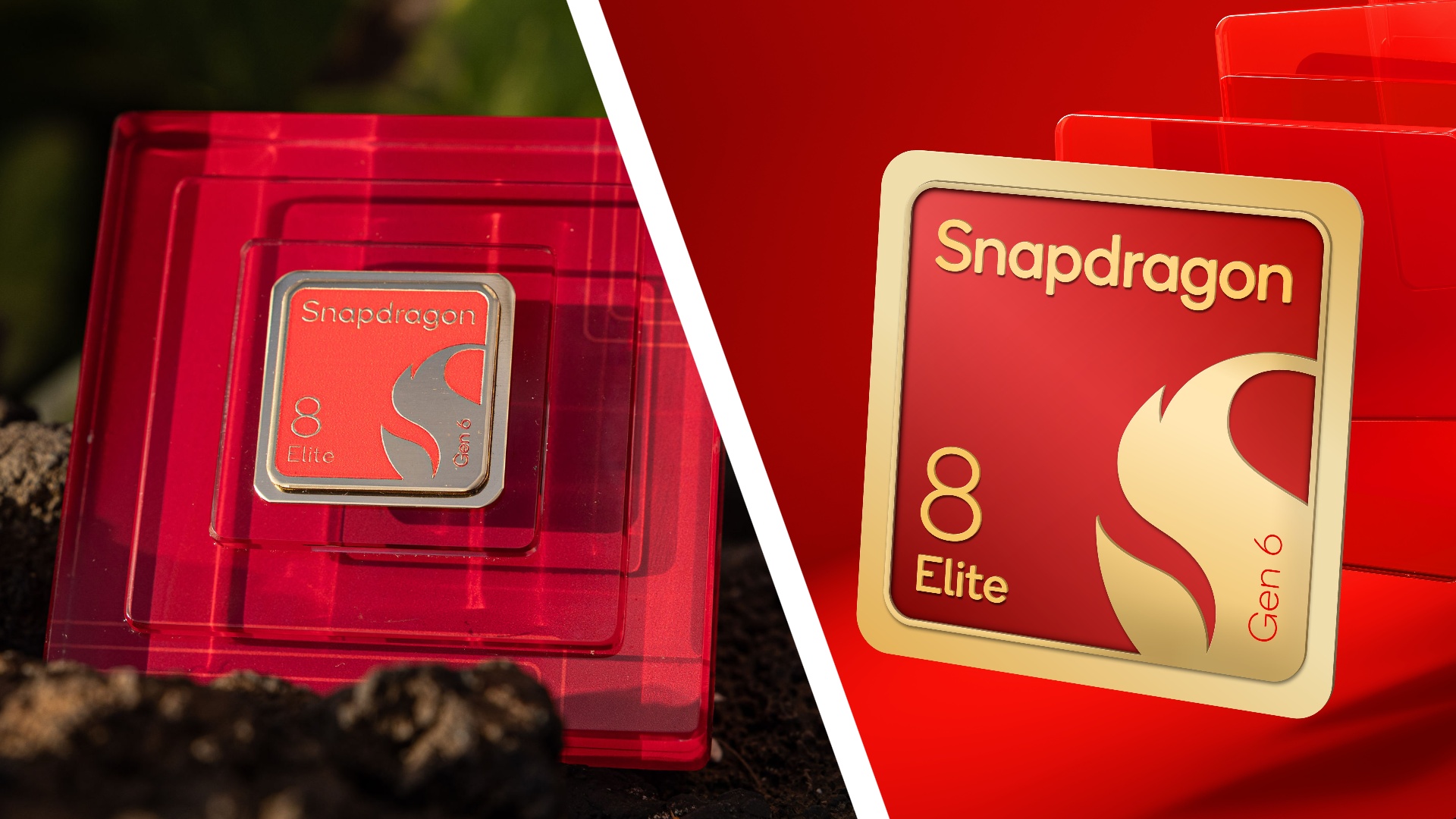
Qualcomm has announced not one, but two new flagship mobile chipsets at its annual Snapdragon Summit: the Snapdragon 8 Elite Gen 6, and the Snapdragon 8 Elite Extreme Gen 6.
Succeeding last year’s Snapdragon 8 Elite Gen 5, both chipsets have been designed to reduce reliance on RAM (no prizes for guessing why), and each will unlock advanced gaming and agentic AI capabilities for the next generation of flagship Android phones (including, we presume, the Samsung Galaxy S27 Ultra). But how, and why, do they differ?
I attended the Snapdragon Summit in Hawaii to speak to Qualcomm's team about the Snapdragon 8 Elite Gen 6 and 8 Elite Extreme Gen 6. Here’s why the American silicon giant is launching two flagship chipsets this year — and why one of them is shipping with the ‘Extreme’ moniker.
Why are they different?

As Lekha Motiwala, Senior Director of Product Management at Qualcomm, told me: “Some OEMs [Original Equipment Manufacturers] are trying to reach the pinnacle of technology, while others are trying to reach broader audiences. We want to give choice and flexibility to the OEMs.
“The 8 Elite Gen 6 is the next generation to the 8 Elite Gen 5. The 8 Elite Extreme Gen 6 is positioned above it as the top tier, to enable newer experiences like ultra[-level] gaming, professional video codec support, etc. — on the 8 Elite Extreme Gen 6, we are going beyond what we traditionally do [with our flagship chipsets], hence the tiering this year.”
“Snapdragon 8 Elite Gen 6 delivers generational improvements across all key experiences, and is designed to power the core flagship tier,” added Ellie Fortin, Senior PR spokesperson at Qualcomm.
“The Snapdragon 8 Elite Extreme Gen 6 sits above Snapdragon 8 Elite Gen 6 as our top-tier Elite platform, showcasing leadership in AI, gaming, and advanced platform technologies, and is designed to power the best, most aspirational devices. The Snapdragon 8 Elite Extreme Gen 6 includes everything in the Snapdragon 8 Elite Gen 6, plus additional capabilities and advanced AI features. They’re both on 2nm TSMC.”
How are they different?

As for what Qualcomm means by ‘everything’ in the above statement, let’s get technical. Both chipsets feature the newest version of the company’s Oryon CPU, comprising two prime cores up to 5GHz (that’s a world-first) and six performance cores up to 4GHz. This CPU also packs a 16MB Oryon Flex Cache, which Qualcomm says will allow mobile agents to run demanding workloads without slowing down.
Qualcomm’s re-tooled Hexagon NPU [neural processing unit] features a new Hexagon Element Accelerator that should speed up how quickly AI prompts are processed by your phone — regardless of which new chipset it’s running — while the NPU in the 8 Elite Extreme Gen 6 gets 50% more Large Shared Memory than the equivalent NPU in the Snapdragon 8 Elite Gen 5.
Still with me? As for the new Adreno graphics unit, Qualcomm says it represents the “biggest generational leap yet,” and will deliver substantial gains in graphics performance and power efficiency for phones equipped with either the 8 Elite Gen 6 or 8 Elite Extreme Gen 6. But the latter pulls further away from its sibling with something called Adreno Neural Fusion — a dedicated gaming rendering technology that uses AI to deliver enhanced graphics and longer play sessions in compatible titles like , , and .

Couple that with three AI-dedicated GPU cores, and the 8 Elite Extreme Gen 6 looks set to make the next best gaming phones more capable than ever: “We’re introducing Adreno Matrix cores, which are exclusive to the 8 Elite Extreme Gen 6,” Motiwala explained to me. “They support the running of AI workloads within the graphics pipeline itself. Rendering becomes smarter, [you’ll get] super resolution, frame generation — many of these features can now be run within the graphics pipeline rather than moving to the NPU and other [parts of the chipset]. So now you’ll have much lower latency and much lower power consumption.”
And finally, both new chipsets feature the Qualcomm Spectra ISP for improved digital stabilization, color processing, and motion detection, but only phones equipped with the 8 Elite Extreme Gen 6 will support — or rather have the capability to support — Advanced Professional Video (APV) codecs and 8K 60fps video capture.
Initial impressions
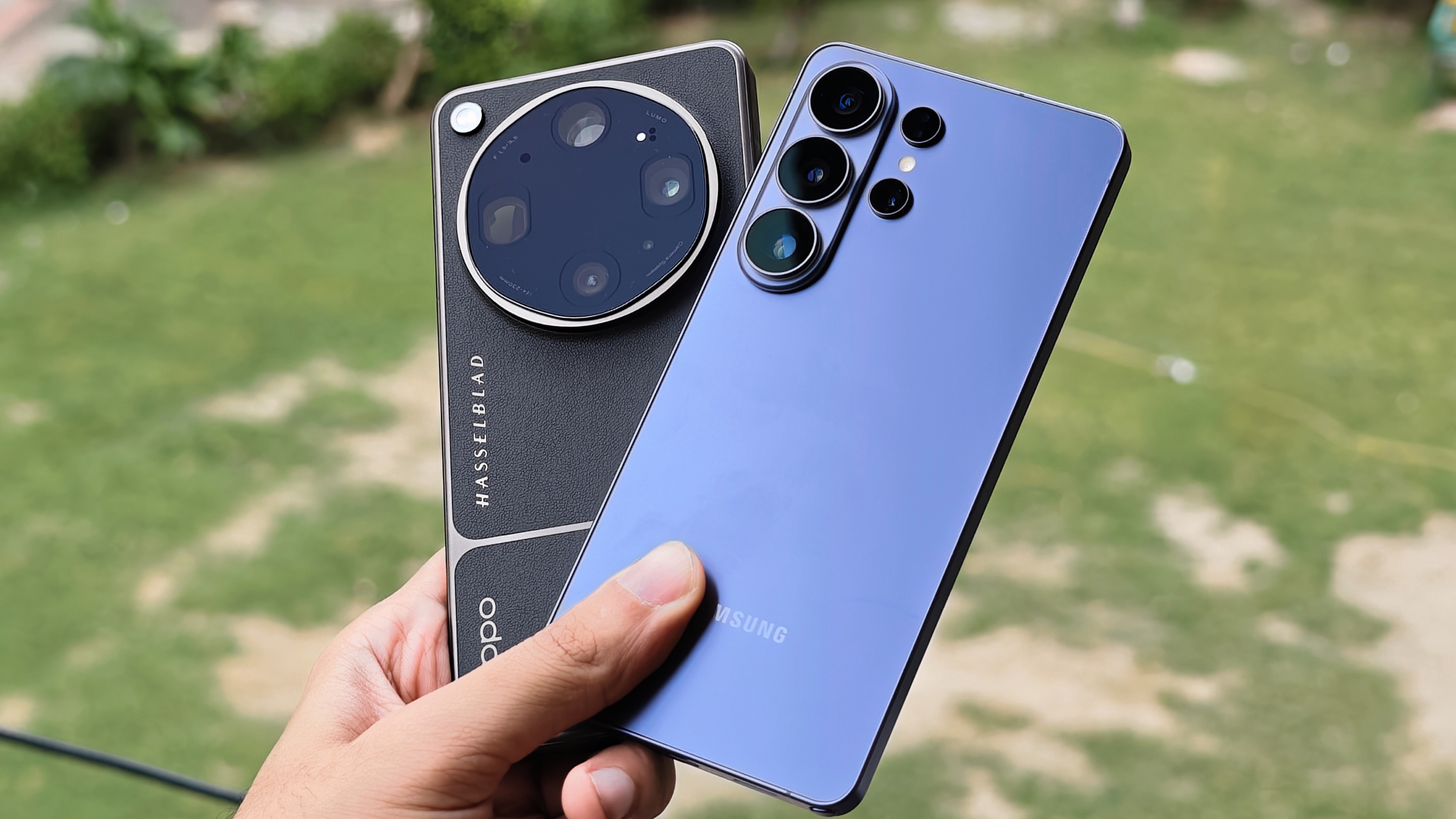
In other words, the Snapdragon 8 Elite Extreme Gen 6 is likely to be the chipset of choice for Android phone manufacturers hoping to claim that their upcoming flagships offer the very best in AI features, performance efficiency, and image processing. But it remains to be seen whether the likes of Samsung, Xiaomi, and Oppo can actually make use of all this extra power.
In truth, even the current-gen Snapdragon 8 Elite Gen 5 provides more than enough juice for 99% of smartphone tasks, and so that’s almost certainly going to be true of the 8 Elite Extreme Gen 6 (the clue is in the name) and indeed the lower-spec 8 Elite Gen 6, both of which are objectively more powerful than last’s year’s flagship chipset.
The key takeaway here is that Qualcomm is aware of the memory constraints affecting the technology industry, and has clearly worked hard to bring AI processing closer to the chipset with this year’s Snapdragon lineup. This should mean that, even if upcoming Android flagships arrive with lower RAM capacities than their predecessors (see the Google Pixel 11 Pro), their ability to process AI tasks won’t be negatively affected — if we take Qualcomm’s word for it, it’ll actually be improved.
Basically, it’s about doing more with less. Or maybe more with more, but not as much ‘more’ as we might’ve expected pre-RAM crisis.
Which phones could be supported?

Beyond the new Motorola Signature 27, which is the first phone to be announced with the Snapdragon 8 Elite Extreme Gen 6, we don’t have any official information about which phones will use either chipset just yet. But here’s a list of whose respective predecessors use the Snapdragon 8 Elite Gen 5 and could therefore ship with Qualcomm’s latest slice of Snapdragon silicon:

And of course you can also for news, reviews, unboxings in video form, and get regular updates from us on too.
Axel is TechRadar's Phones Editor, reporting on everything from the latest Apple developments to newest AI breakthroughs as part of the site's Mobile Computing vertical. Having previously written for publications including Esquire and FourFourTwo, Axel is well-versed in the applications of technology beyond the desktop, and his coverage extends from general reporting and analysis to in-depth interviews and opinion.
Axel studied for a degree in English Literature at the University of Warwick before joining TechRadar in 2020, where he earned an NCTJ qualification as part of the company’s inaugural digital training scheme.