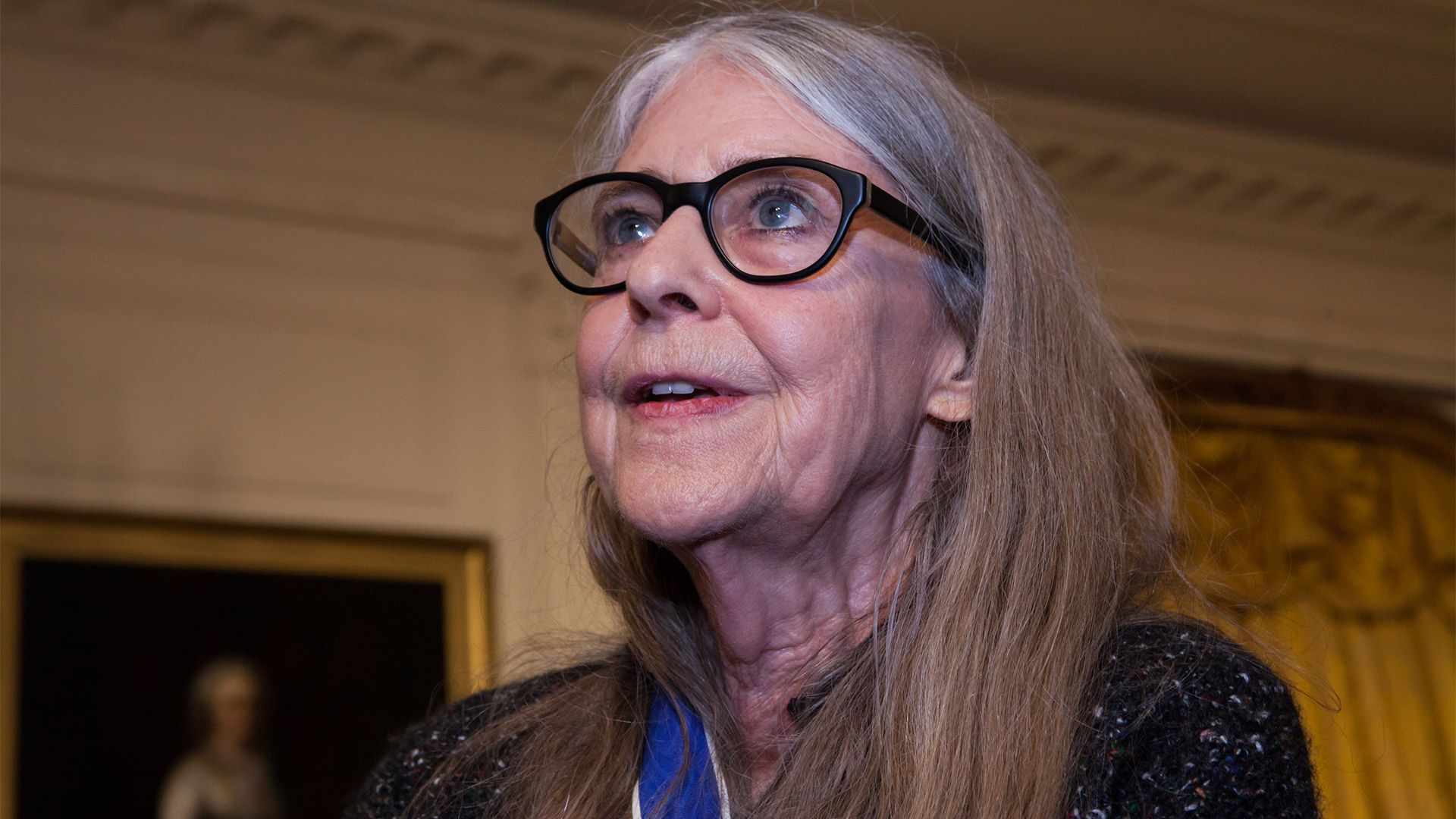
Hamilton is perhaps most remembered for her work coding Apollo 11 to the moon, made famous in part by a photo of her standing next to a print out of the code she created.
Her legacy, however, extends far beyond that role. Anyone who has ever called themselves a software engineer owes that job title to Hamilton.
In 2017, she told Spanish newspaper “I fought to bring the software legitimacy so that it – and those building it – would be given its due respect, and thus I began to use the term 'software engineering' to distinguish it from hardware and other kinds of engineering, yet treat each type of engineering as part of the overall systems engineering process."
“When I first started using this phrase, it was considered to be quite amusing. It was an ongoing joke for a long time. They liked to kid me about my radical ideas. Software eventually and necessarily gained the same respect as any other discipline,” she said.
Hamilton also pioneered defensive programming, a development practice of creating software that can anticipate or fix errors on its own.
Speaking to in 2016 about the spark that ignited her interest in software reliability, she said: "When the computer crashed during the execution of your program, lights would start flashing, bells would start ringing and developers and computer operators would come running to find out whose program was doing something bad to the system. I didn’t want it to be mine!"
Sign up today and you will receive a free copy of our Future Focus 2026 report - the leading resource for IT decision-maker insight on priorities and investment areas in AI, security and more.
A prime example of this in action occurred during the Apollo 11 mission, when the computer in the lunar landing module, Eagle, experienced a 1202 error, indicating there was a fault in the hardware switch.
This fault led to the system becoming overloaded and there was a possibility that, with just three minutes to go until touch down, it wouldn’t be able to handle the landing procedure.
The software Hamilton and her team had developed, however, was able to prioritize mission critical tasks and shut down any unnecessary background tasks, leading to a successful landing.
An early tech entrepreneur
Hamilton was also an early computing entrepreneur, leading an MIT spinout after the Apollo missions were wound up and founding two tech startups.
Her final endeavor was Hamilton Technologies, which she founded “to provide products and services to modernise the planning, system engineering, and software development process in order to maximise reliability, lower cost, and accelerate time to market”.
It’s perhaps best known for developing the systems modelling language and methodology Universal Systems Language. Designed for engineering complex software systems, it too is built on Hamilton’s philosophy of defensive programming and priorities error prevention.
Universal Systems Language may not be as common as other coding languages due to its specificity but it’s still in production today, more than 30 years after its initial creation.
Hamilton’s legacy will be felt by the technology community everywhere.
Olivier de Weck, the Apollo Program professor and interim head of the MIT Department Aeronautics and Astronautics, told "To say Margaret Hamilton was a pioneer -- to say she was ahead of her time -- would be a dramatic understatement. She was a software engineer at a time when that field was in its infancy, and she not only developed advanced code herself but also led a team in using that nascent technology to develop one of the most complex systems humanity had ever achieved."
"[She] has been an inspiration to generations of computer scientists and engineers. Hers was a career dedicated to preventing errors and what she called 'handling the unknown,'" he added. "She personified leadership by example, and established a practice of software engineering based on problem-solving and systems engineering that we all benefit from."