“We have had significant constructive engagement with the FAA.”
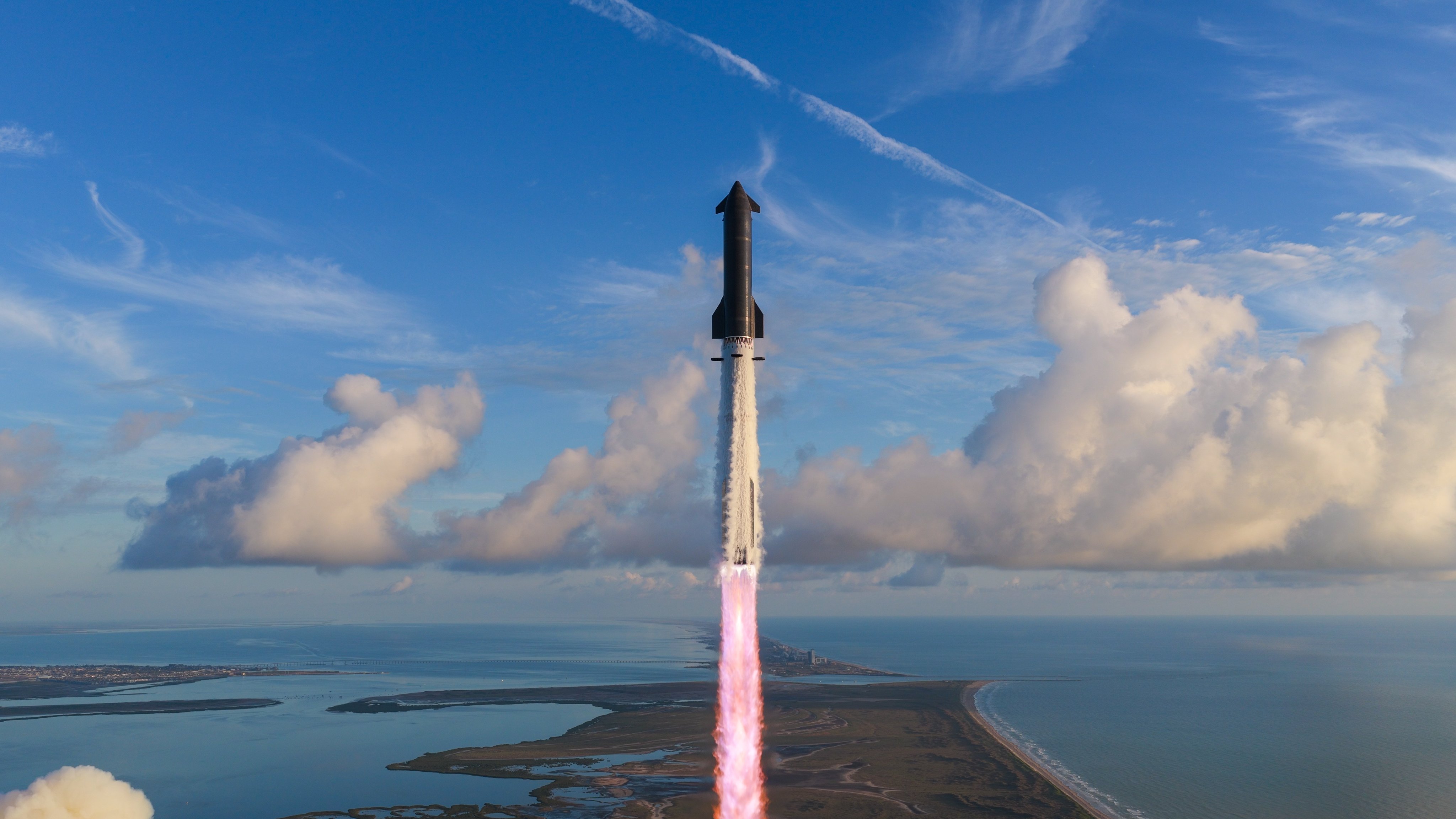
In its current iteration, SpaceX is largely a data company seeking to provide enormous amounts of compute for artificial intelligence. During an earnings call on Tuesday afternoon, company officials spent much of their time discussing ambitious plans to roll out up to 10 GW of compute in 2027—on the ground.
Gone are the days of aspirational talk about sending humans to Mars and settling the red planet. Now it is almost all about artificial intelligence and the data needed to support its expansion. However, the company’s long-term ambitions to provide data services from space, initially with the Starlink Internet constellation and eventually through the “Starmind” data center constellation, still rely on an actual rocket.
That would be the Starship vehicle, and during the earnings call, SpaceX founder Elon Musk and the company’s president and chief operating officer, Gwynne Shotwell, provided new performance targets for the vehicle.
It has been a little more than three weeks since the 14th test flight of the massive rocket, which largely went well despite some issues with the Raptor rocket engine. SpaceX has gleaned enough data from that test, Musk said, to attempt a catch of both the Super Heavy first stage of the rocket and the Starship upper stage on the next flight.
Musk said he believes success is “more likely than not” for these attempts, but he added the company is hardware rich if there are failures. Both catches would happen at the company’s launch site in South Texas, Starbase. SpaceX is currently targeting November for this 15th test flight.
Landing over land
One of the big hurdles is regulatory, as the Starship vehicle must return to the launch site over land, including northern Mexico.
“We have had significant constructive engagement with the FAA, and we expect the license for our Flight 15 to include return to launch site and tower catch for both stages,” Shotwell said.
As for what comes after this test flight, Shotwell said SpaceX would attempt to refly a Starship upper stage “early” next year. The company will also seek to complete a long-delayed refueling test of Starship early in 2027. This Starship-to-Starship refueling demonstration is an important milestone for SpaceX and NASA to prove the viability of Starship being refueled in low-Earth orbit for lunar missions.
Refueling on this scale has never been done before, and the company needs to get data on the efficiency of such transfers and the rate of boil-off of liquid oxygen and methane in space. This data will refine projections for how many launches are needed to support a Starship landing on the Moon for NASA as part of the Artemis Program.
For SpaceX, the near-term priority is reaching a high flight cadence for Starship and pushing the boundaries of vehicle reuse to enable it.
A weekly cadence?
Musk, who often offers hyper-optimistic timeframes, said he expects Starship to reach a “weekly” flight cadence during the first half of 2027 and to launch twice weekly during the second half of the year. The key will be how much Starship can be reused.
“The rate at which we launch Starship will increase dramatically as we solve rapid and complete reusability,” Musk said. “At first there will be a little bit of refurbishment that’s needed between each flight, and we’ll iron out the need for any refurbishment such that you can immediately land the rocket and launch it again, just like an airplane.”
That’s the vision, at least. Achieving complete reusability with an orbital rocket has never been done before, so SpaceX’s engineering team will undoubtedly face some significant hurdles. Over time, however, they are likely to get close to the vision of launching, landing, and reflying rockets.
SpaceX will largely focus on its own payloads in 2027 with the Starship rocket. Shotwell said the company would continue launching Starlink V3 satellites, the second generation of “mobile” satellites that deliver direct-to-cell connectivity, as well as Starmind data center prototypes, next year. During the earnings call, neither Musk nor Shotwell addressed, nor were asked by financial analysts, about the controversial throttling of Starlink capabilities for Ukraine in its war with Russia.