Hawking: His Life and Work Graham Farmelo John Murray (2026)
Stephen Hawking: A life in science
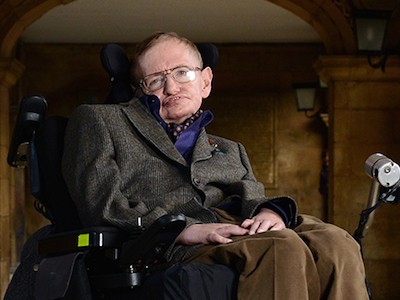
Stephen Hawking was an extraordinary person. The mathematical physicist who transformed our theories of gravity, black holes and the Universe overcame serious physical disability to become one of the most influential scientists of the twentieth century. Despite having to speak through a computer, he was one of the world’s most famous science communicators.
Although the theories that Hawking developed have yet to be verified empirically, the questions he asked and the methods he used still set the agenda in physics. Moreover, his courage and concern for humanity made him an icon for people struggling against adversity.
Graham Farmelo’s meticulously researched and highly readable biography of Hawking is dedicated to “anyone thinking of giving up on life”. It tells the fascinating story of how Hawking surmounted his physical limits to make groundbreaking contributions to science and then popularize them. His sociable character, sense of humour and ability to forge friendships — which were all central to his success — are well described in the book.
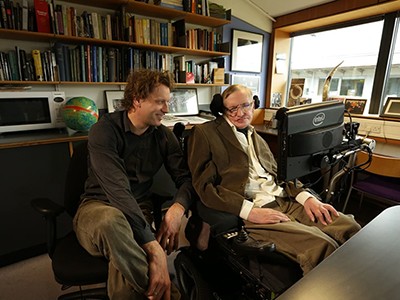
Hawking’s insights and determination remain an inspiration for many people who knew him. I was fortunate to become a close friend in 1996, when I worked alongside him at the University of Cambridge, UK, and like many others benefited from his warm and generous spirit.
How Stephen Hawking flip-flopped on whether the Universe has a beginning
Farmelo’s book captures Hawking’s deep commitment to his students and colleagues — how kind and supportive he was to them and how they helped him in return. It also provides a balanced account of the many ups and downs in Hawking’s life, including the break-up of his two marriages and the constant danger he lived in because of his fragile health. Just as he started his PhD and felt he had found his life’s calling, he was diagnosed with motor neuron disease and given two or three years to live. In the end, he defied the odds and lived to 76 years old.
Hawking chose to work in one of the most difficult fields of science, building on Albert Einstein’s general theory of relativity to understand how gravity governs the Universe. General relativity is probably the most elegant scientific theory ever devised, but it is fiendishly difficult to work with mathematically. Yet Hawking plunged in, using deep geometrical insights to master the theory’s complex equations and obtain powerful results.
After his scientific work achieved global recognition, Hawking wrote a best-selling book in 1988, A Brief History of Time, that sparked huge public interest in cosmology. He sometimes overreached, lost bets, changed his mind and, towards the end of his life, clung to what seemed unlikely hopes of winning a Nobel prize. The book covers all of this brilliantly. Farmelo’s candid, calm and objective tone is a welcome antidote to the hysteria that characterized much of the reporting about Hawking during his lifetime.
Concern for social justice
It would be impossible to recount such a rich life without a few omissions. If anything, the book underplays Hawking’s wider concerns. He had a natural affinity for people in difficult circumstances and used whatever influence he had to support them. For example, his efforts to support social justice in South Africa and the Palestinian territories are barely mentioned.
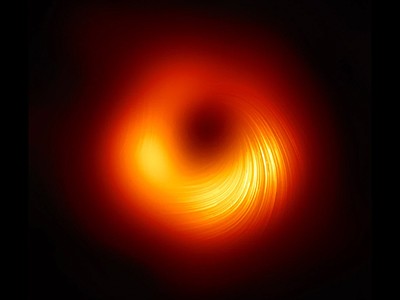
Do black holes explode? The 50-year-old puzzle that challenges quantum physics
Hawking had a remarkable friendship with Roelof Botha, South Africa’s foreign minister from 1977 to 1994, who played a pivotal part in negotiating the end of the apartheid. In 2008, Hawking became a patron and strong supporter of the African Institute for Mathematical Sciences (AIMS) in Muizenberg, South Africa, which I helped to found in 2003. When he visited AIMS in 2008, he also met with former South African president Nelson Mandela. During that visit, Hawking mentioned his hope that Israel and the Palestinian territories would follow South Africa’s example of reconciliation. Hawking visited Birzeit University in the Palestinian territories in 2006, to huge local acclaim, and publicly opposed the direction Israel’s policies were taking even then.
In 1997, he visited Vietnam, another country affected by decades of war. He told me that he had had a wonderful visit and had become the godparent of a Vietnamese orphan, Thu Nhàn, who later visited him in Cambridge. These are only a few examples of Hawking’s global concerns and diverse experiences.
Eye for a new field
Farmelo describes how Hawking became interested in physics and mathematics at school. He managed to get into the University of Oxford, UK, where he was considered a bright but lazy student. He dabbled in politics but spent most of his time partying, coxing rowing boats and playing pranks.
At the end of his second year, he became interested in cosmology and attended a summer school at the Royal Greenwich Observatory in Herstmonceux, UK. He then decided to apply to do a PhD at Cambridge, hoping to work with Fred Hoyle, a renowned cosmologist. Despite doing little work, he scraped a first-class degree at Oxford and was accepted to study with Dennis Sciama, a young theorist at Cambridge. Sciama proved an excellent adviser.
As Hawking’s health declined, he became increasingly determined to do something important. For the first two years of his PhD, he studied general relativity. His brilliance was becoming evident but he had not yet focused on a particular problem. That changed when Roger Penrose made a mathematical breakthrough. He showed how, according to Einstein’s theory, a star above a specific mass must collapse and form a black hole. Sciama invited Penrose to deliver a seminar at Cambridge and Hawking was one of several students who met with him. Soon afterwards, Hawking realized how to extend Penrose’s methods to cosmology and the Big Bang.
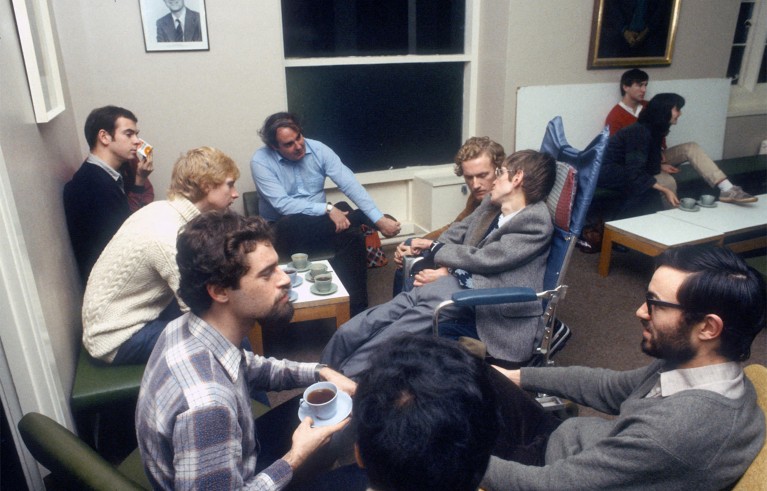
It is common for PhD students in theoretical physics to spend most of their time just learning the field and not feeling able to do anything original. Often, their research comes alive only in their final year. Hawking was a case in point. Inspired by Penrose’s talk, he submitted his thesis entitled Properties of Expanding Universes. Sciama recruited Penrose as Hawking’s external examiner. Despite finding an error in the final chapter of the thesis, Penrose was impressed and became one of Hawking’s strongest supporters.
Farmelo’s painstakingly researched treatment of this crucial early period provides a welcome counterpart to the 2014 film The Theory of Everything. The film captures the spirit — Eddie Redmayne’s portrayal of Hawking is superb — but not the detail of these times. When I asked Hawking whether he liked the film, he raised his eyebrows to say “yes”. But when I asked how accurate it was, he typed out “pure fiction”.
Search for experimental proof
Enjoying our latest content?
Log in or create an account to continue
- Access the most recent journalism from Nature's award-winning team
- Explore the latest features & opinion covering groundbreaking research