Boycotting Disney is hard.
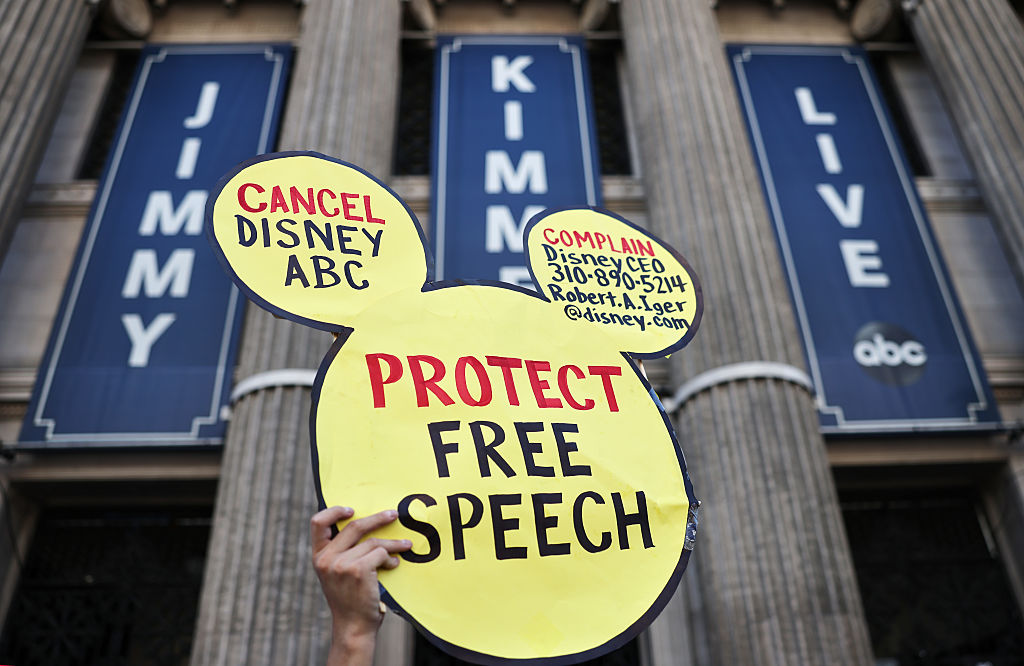
There was a call to boycott Disney last fall. The owner of the ABC network had taken off the air over comments Kimmel made about responses to Charlie Kirk’s murder, sending free speech proponents into a frenzy.
Those free speech proponents include me, who, as a reporter, has clear stakes in protecting that right. Although I was on board with halting support for a company I felt had acted wrongfully, truly boycotting Disney proved harder than I expected.
Disney’s ubiquity
Canceling Disney+ was simple but threw a hefty wrench into my evening routine. I tend to end many weekdays laughing at comforting sitcom reruns and adult animation. I usually associate Disney with princesses, kids’ movies, and, more recently, comic heroes. But Disney also owns Hulu, which exclusively streamed many of my favorite shows for unwinding at the time, like ,,, and It’s Always Sunny in Philadelphia.
Completely boycotting Disney also meant I couldn’t watch the broadcast channels where some of these shows originated, like ABC and FX. It also limited my guilty-pleasure options, since A&E, History, and Lifetime were all partially owned by Disney (Disney has since sold its stake in those networks to Hearst), as were some video games. I had to miss some sporting events, too, since Disney owns all ESPN channels and streaming services.
Weekends often involve streaming a science-fiction or action movie my partner picked out. Due to the protests, though, I had to veto streaming content from some of his favorite franchises, including Avatar, Alien, Predator, and Die Hard.
This was all probably a reminder that I should take a break from the TV and go outside. For argument’s sake, though, I must point out that if I had wanted to spend my time outdoors at a theme park, my options would also have been limited somewhat.
A year later, as airs its 25th season, the difficulties I faced trying to avoid Disney still perturb me.
There was a time when protesting ABC’s decision would have simply meant not watching ABC. After years of media conglomeration, however, protesting ABC can now mean boycotting a massive entity controlling many of my most prominent forms of entertainment—streaming, broadcast TV, comedies, science fiction, and video games—and even children’s programming.
It has been reported that the boycott financially impacted Disney and put pressure on the company to get back on.
But mergers and acquisitions (M&As) are intensifying in the streaming age and consolidating power under fewer owners. And, as we’ve seen before, when there are fewer streaming owners, it can be even harder to end your business with a streaming provider you no longer want to support and for smaller voices to speak up.
Disney settled an antitrust lawsuit through acquisition
Fubo’s previous row with Disney illustrates how a bigger company can summarily silence protests.
The sports-centric streaming service sued Disney, Fox Corporation, and Warner Bros. Discovery (WBD) in February 2024 over the companies’ plans to launch a sports streaming app together. Fubo accused the companies of “antitrust” behavior. Fubo alleged that Disney forced it to spend millions annually on unwanted, non-sports content to get the sports programming that Fubo wanted. Disney and Fox, the complaint said, had “monopoly power in the sports programming market.” Fubo’s CEO, David Gandler, said at the time that the companies “create higher pricing for subscribers and cheat consumers from deserved choice.” Disney declined to answer the questions I sent it at the time.
In January 2025, Disney effectively made the antitrust suit go away by buying Fubo. I asked Fubo about the surprising settlement at the time and received a statement arguing that the merger would bring customers “more choice” by enabling “Fubo to create a new Sports and Broadcast service and other genre-based content packages.” The statement noted that Fubo was now perfectly fine with Disney, Fox, and WBD launching a sports app (the app was still canceled in January 2025). A smaller company that was previously rearing up to fight consolidation in sports streaming merged with one of the companies it accused of stifling competition and driving up prices.
Fubo’s price hike
Extensive media conglomeration plays a role in Fubo’s latest price hike, too.
In July, Fubo increased monthly subscription prices by $15 after it restored some of the channels it lost during a contract dispute with NBCUniversal. During the dispute, Fubo lowered its prices. After Fubo reached a deal with NBCUniversal, it ended up charging more for subscriptions than it did before the dispute, while including fewer NBCU channels than before.
As a sports-focused streaming service, the most relevant channels that Fubo got back were NBC affiliates, regional sports channels, NBC News NOW, NBC Sports Network, Telemundo, and Universo. However, the higher prices are also representative of the non-sports channels that Fubo restored: Brazo, Cozi, and True CRMZ.
“The rising cost of bringing you the programming you enjoy means that, unfortunately, we need to pass some of these increases on to you,” Fubo said in an email to subscribers about the price hikes.
Streaming’s merger-heavy future
Experts that I’ve spoken with over the past couple of years have consistently predicted more streaming mergers. Streaming services launched at unsustainably low prices aimed at growing subscriptions. Years later, streaming companies face increasing pressure to reach profitability and, subsequently, grow streaming profits. This isn’t easy for many services, and some will opt for mergers to stay in business or become more financially successful.
Mergers also help streaming companies manage content costs and build larger libraries that can attract more customers and advertisers.
But as I learned during the Disney protests, it’s difficult to limit a company’s presence in your home when the company owns so much. The streaming industry is increasingly moving toward that sort of suffocating consolidation.
WBD and Skydance Paramount are planning a controversial union that will put HBO Max, Discovery+, CNN, and Paramount+ under one owner. A true boycott against that merged company would mean avoiding the next Batman movie, ’s latest seasons, CNN’s political analysis, and CBS local news. It would also hinder free streaming options by taking Pluto TV off the table.
Merging some of the services could address complaints about today’s content fragmentation that forces streaming customers to sign up for numerous services to watch what they want. But that could easily lead to higher subscription fees, due to higher content costs, larger libraries, and/or less competition.
A merger could also result in less diverse programming on the affected streaming services.
I have similar concerns about Fox’s plans to buy Roku. With both companies currently owning separate free ad-supported streaming television (FAST) services (Tubi and The Roku Channel, respectively), a merger could lead to fewer FAST options.
Further, potentially unfavorable strategies, such as around ad loads, content availability, or conservative programming, could theoretically spread to The Roku Channel under Fox ownership.
Other options
M&As are one response to the various economic challenges facing streaming companies. But there are other things they can do to increase revenue that would also benefit customers.
One is to license content to other platforms more often. This could help services generate additional revenue while addressing content fragmentation. Small, niche services, however, have to walk a fine line when it comes to sharing the titles that make their services stand out to current and potential subscribers.
Offering discounts if users link their streaming subscription to another subscription, like for home Internet or mobile service, is said to help streaming companies reduce cancellations. Streaming services can extract more value from this strategy if they target younger audiences by offering more bundles with services like music, gaming, or food delivery services.
“[T]he current bundles offered by media companies may miss the mark, as younger subscribers look toward broader cross-category ecosystems. Put simply: Bundles have become mainstream, but they still should keep pace with consumer expectations that have become increasingly personal,” Deloitte said in an August blog post.
Streaming services can also get better at helping subscribers with content discovery, which could help services drive subscriptions. In Gracenote’s 2025 State of Play survey of 3,000 “consumers” in the US, Brazil, France, Germany, Mexico, and the United Kingdom, 49 percent of respondents said they “are willing to cancel a service based on difficulty finding what to watch.”
Some services are already leveraging generative AI chatbots and other technologies to help users find new content. However, the challenge of creating reliable content discovery that people enjoy using extends beyond streaming services, including to smart TV operating system owners, marketers, and AI companies.
As streaming mergers steam ahead, customers are at risk of higher prices and less diversity in the ownership of countless beloved shows, movies, games, books, and franchises.
Today, fully boycotting Disney means boycotting numerous streaming services, networks, franchises, and theme parks. With more streaming services uniting, it will become harder to protest and avoid services that make disagreeable decisions, like raising prices or pulling a show because of the host’s expressed views.