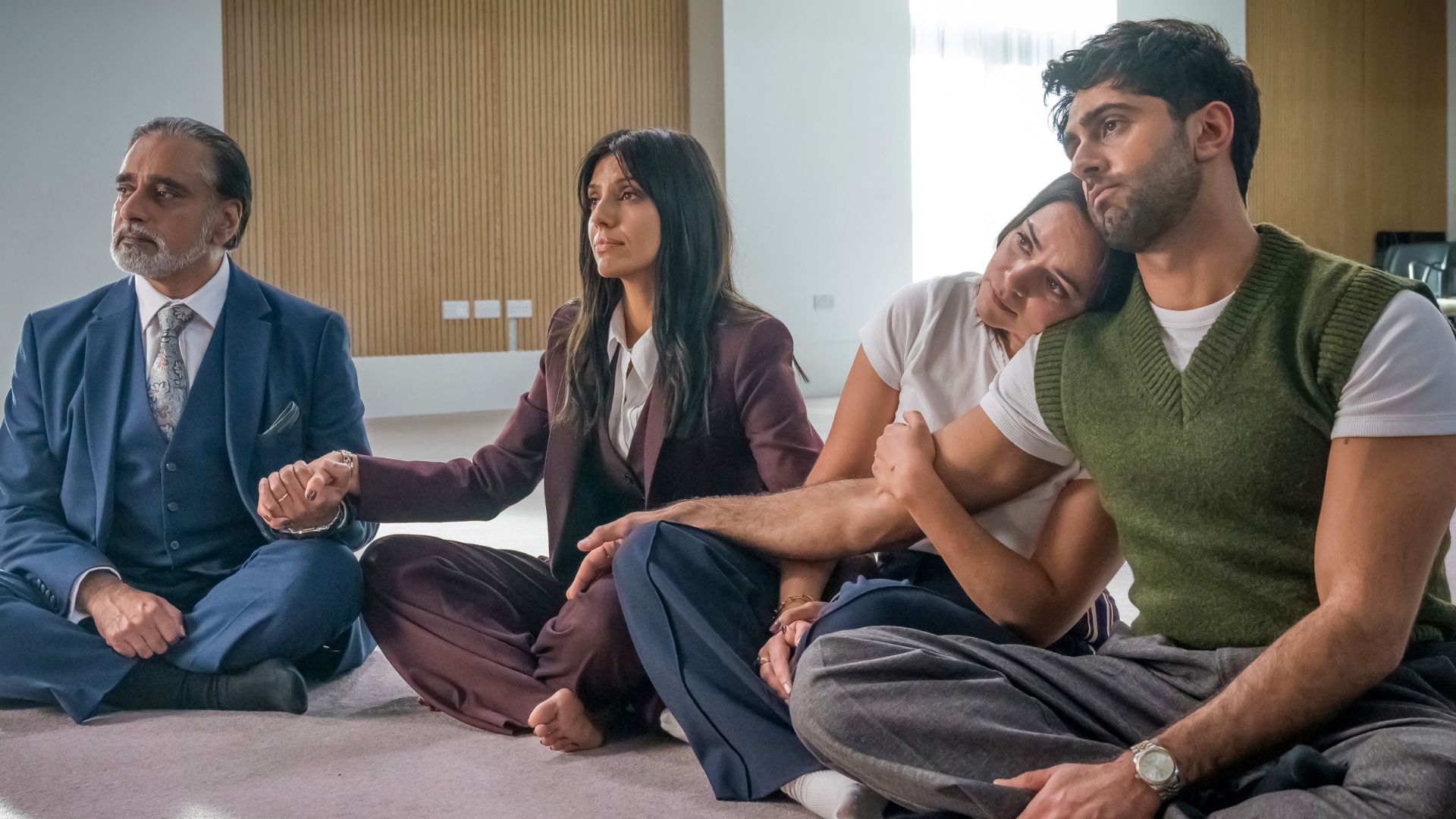
All six episodes of are now on BBC iPlayer and, in the best possible way, it feels a world apart from main series . Both are about families involved in divorce law, but the shape of their family dynamics look entirely different.
The new spin-off follows the Kishan family firm, with Aria (Ritu Arya) poised to take over leadership from her father Dhruv (Sanjeev Bhaskar). However, the death of Aria's mother six months prior causes Dhruv to hesitate.
Add in a workplace love triangle, complicated siblings, and a messy divorce trial walking through their doors every week, and you've got a pretty delicious watch. But, I quickly wondered whether viewers would become preoccupied with the show's (excellent) South Asian representation — so much so that it overshadowed what actually happens in each episode.
Based on press and public reactions to its opening weekend, I was right. The Daily Mirror has reported that fans have "switched off" in droves, while comment section of the YouTube trailer (which you can catch up with below) is sporting exactly the kind of racist rubbish you'd expect from the internet.
However, before any episodes were released, I asked the cast how they felt about others making 's focal point its representation — and, as expected, their answers were even more insightful than I could have expected.
'The Split Up goes beyond representation'

"Ursula [Rani Sarma, writer] beautifully said that goes beyond representation, and there's a universality in how we all feel human," star Arya told me. "I couldn't agree more. It's all about how we bring our authentic selves to the table... I find that a lot more interesting to talk about."
I love how simple yet effective this answer is, but it's Bhaskar's take that I'm the most interested in. Long-time fans of his will know that he was the star and co-creator of the 2001 comedy chat show The Kumars at No. 42, which followed a British Indian family supporting the fictional Sanjeev's dreams to be a TV presenter.
More than two decades on, I still can't believe that Meera Syal, who later married Bhaskar, was the woman playing his grandmother.
"I've got some experience in terms of representation versus family because of The Kumars at No. 42," he said. "That did pretty well around the world even though it was about a British Asian family interviewing guests in their London home. The reason for that was because it was a family... and everyone understands that.
"In terms of people tuning into , if they decide to look at representation, that's more of a political issue. Most people will see a family and see themselves reflected in that. did so well, and at no point did I watch it and think of it as a matriarch having nothing to do with me. I watched it as a drama. I think people who will enjoy this will not be thinking about representation."
I couldn't have said it any better myself — and trust me, is a drama not to be missed.

Jasmine is a Streaming Staff Writer for TechRadar, previously writing for outlets including Radio Times, Yahoo! and Stylist. She specialises in comfort TV shows and movies, ranging from Hallmark's latest tearjerker to Netflix's Virgin River. She's also the person who wrote an obituary for George Cooper Sr. during Young Sheldon Season 7 and still can't watch the funeral episode.