Twenty-two people enter a castle with the intention of lying, trusting, murdering and banishing each other. The format of the Traitors is now well established, but the celebrity version of the show highlights some interesting psychological biases.
In the standard version of the show (secret relationships aside) the contestants are all strangers. With no previous interaction, first impressions are even more important than usual, and will shape the game over the series. However, in the celebrity version, players will probably know others professionally, personally, or perhaps be fans of each other’s work before the game begins. All of this will affect their perception of others, influencing who they will trust and why.
We are all prone to a cognitive bias known as the halo and the horn effect. The halo effect occurs when we observe a positive trait in someone (like humour) and use it to assume that they have other positive traits in unrelated areas. The comedians in the group have an advantage here.
The opposite is also true. The horn effect makes it difficult for someone who is viewed as abrasive to be seen as a “faithful”. It’s rare in The Traitors for anyone who loses their temper to be sitting at breakfast the following morning.
In addition to these effects, we all suffer from confirmation bias at times. When we adopt a belief, we favour information that supports it and ignore or downplay facts that go against it. See the curious case of national treasure and champion murderer Alan Carr in the first celebrity series. His ability to make others laugh led to false assumptions about his trustworthiness through the halo effect. Not even Carr’s giggling while trying to say he was a faithful was enough to make contestants change their minds about his role in the game.
The celebrities entering the castle in this new series will probably come with these biases already in place. If you’re a big fan of Hannah Fry and her factual science communication, it’s going to be difficult to let yourself believe she could be lying to you.
The celebrity hierarchy
There are also interesting social forces at play in the celebrity version. Some contestants are simply far more famous than others. This creates an imbalanced power dynamic, which could lead to players higher up in this established celebrity hierarchy having more influence over those lower down. Additionally it may influence how those lower down, but who have power as a traitor, might choose to wield it.
This was the basis of the so-called “big dog” theory coined by contestants Joe Marler and Joe Wilkinson in the first celebrity series. A very well known celebrity could be seen as too much of a “big dog” to murder or banish early in the game. For instance, in that first celebrity series, the traitors had a conversation in which they concluded that they simply “couldn’t kill Sir Stephen Fry”. He was deemed too big of a name to murder.
The theory may have saved Fry from being “murdered” but actually acted against him in terms of banishment. Interestingly, rather than playing the game at face value, the celebrities started to second guess the show’s producers and who they might pick as traitors. This meta knowledge of how television is made and crucially, what the producers may think would make good television, was eventually used to the celebrities’ advantage when they banished the correct “big dog” traitor Jonathan Ross. Might someone like Michael Sheen suffer the same fate?
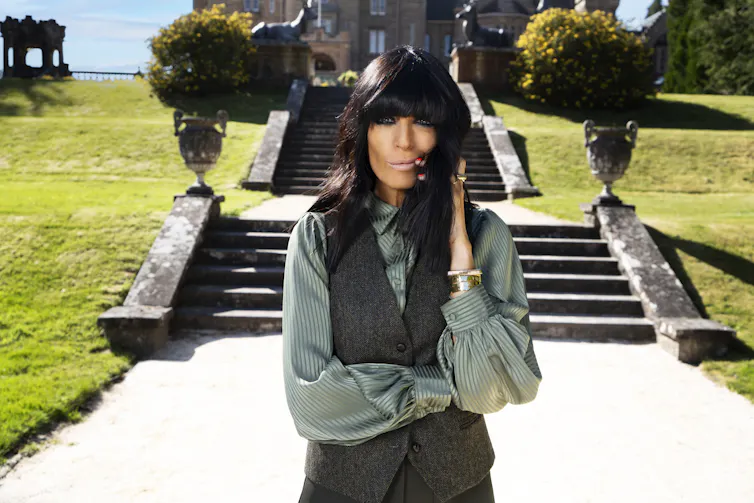
The bottom of this power hierarchy is equally fraught with danger, in that a lesser-known celebrity could find themselves on the chopping block early purely for not yet being in the upper echelons of fame.
This in-group favouritism and out-group bias are present in all aspects of the social world, but in The Celebrity Traitors these cliques and groups are already formed through mixing (or not) in the same social circles in their professional lives. For example comedians Rob Beckett and Romesh Ranganathan, who are appearing in the new series of The Traitors, have a BAFTA-nominated light entertainment show “Rob & Romesh Vs” together.
The glare of the public eye
These hierarchies also demonstrate a knowledge of public perception that is unique to this version of the game. Fear of public backlash against decisions could well come into play. A young up-and-coming star may perhaps think twice before ending the game for a senior figure.
Also, the more prolific a celebrity becomes, the more likely they may question the motives of others. Living with suspicion of the potentially nefarious intentions of new parties will naturally make one more sceptical and perhaps less likely to trust newcomers.
So if a celebrity wants to win the game, the psychology would say make people laugh, and leave your prior knowledge of each other at the castle door. Or be Alan Carr.