Last year marked 250 years of Jane Austen, one of the world’s best-known authors. Her enduring appeal is reflected in the myriad celebrations that took place to honour this anniversary, including exhibitions, festivals and a special six-part podcast series from The Conversation.
Austen at 250 cemented her global status as one of the most-loved literary figures of all time. But what about the other commercially successful female novelists who wrote alongside Austen, yet are barely remembered today?
Scottish authors Susan Ferrier and Mary Brunton offer two such examples. Although relatively modest in their output, their novels – and in particular their first novels, titled Marriage and Self-Control respectively – were popular and widely read in their own historical moment. As their names suggest, these were works concerned with propriety and expectation, but they were also experimental in their own ways.
Recent plot points in Netflix’s Bridgerton anticipate a growing cultural interest in Regency-era Scotland. With a fifth season officially in production, and Scottish scenery foregrounded in the most recent trailer (below), it is timely to consider Austen’s Scottish female contemporaries.
So far, Bridgerton has painted a picture of Scotland as a remote country, far removed from the bustle and excitement of the Ton. As Eloise Bridgerton recounts upon her return from the Kilmartin Estate:
Pen, there may not have been enough people in Scotland, but time spent amidst so much astounding natural beauty did give me considerable time to reflect, and what I realise is that there is no need for me to antagonise suitors or debutantes.
No mention has yet been made, however, of Scotland’s capital Edinburgh, which was the epicentre of literary culture in Regency-era Britain, with a prolific and internationally renowned publishing scene. As the academic Ian Duncan puts it, Edinburgh was, during these years, “a literary metropolis to rival London”.
This was due largely to Walter Scott’s bestselling historical Waverley novels, which popularised Scotland as a tourist destination and prompted a craze for Scottish novels, to which Brunton and Ferrier contributed.
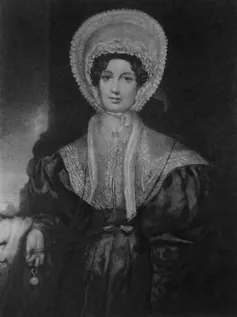
Ferrier was born in Edinburgh in 1782 and lived there until her death in 1854. She came from a relatively wealthy family and was close friends with Scott, to whom she dedicated her final novel. Her proximity to Edinburgh’s social and literary circles is reflected in the lively (and, to some, familiar) characters who inhabit her novels.
Ferrier is often pitched as Scotland’s Jane Austen – a comparison that began during the 19th century and has persisted since. Like Austen, Ferrier’s novels were originally published anonymously, and when Marriage appeared in 1818, one reviewer eager to know the author’s identity wrote that ‘had the authoress of “Pride and Prejudice” been alive, and a native of Scotland, our conjectures would certainly have fastened upon her as the authoress’. In 1878, Ferrier was commended for having achieved for Scotland “what Jane Austen and Maria Edgeworth have respectively done for England and Ireland”.
This comparison is both a blessing and a curse – on one hand, it allows readers to relate to Ferrier quickly; on the other, it has led to a sustained underestimation of her novels.
That said, it is worth noting that Ferrier did not help matters by modelling the opening line of her second novel on Austen’s more famous precedent: “It is a truth universally acknowledged, that there is no passion so deeply rooted in human nature as that of pride” – in which the reference to pride is no doubt uncoincidental.
Ferrier wrote three novels, with the first appearing one year after Austen’s death: Marriage (1818), The Inheritance (1824), and Destiny (1831). Like Austen, she wrote about contemporary life, focusing on women’s experiences of love and education.
Ferrier’s novels offer readers moral lessons, but they are also extremely funny. Frequently reflecting on the differences between Scotland and England, Ferrier makes fun of both, satirising what each thought of the other before showing how this was often misleading.
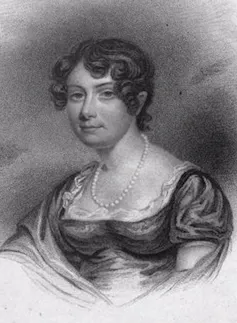
Brunton was born on Orkney in 1778. She eventually settled in Edinburgh, where she died aged 40 from postpartum complications in 1818. Like Ferrier, Brunton wrote three novels: Self-Control (1811), Discipline (1814), and Emmeline, which was unfinished and published posthumously in 1819.
Also like Ferrier, Brunton’s works focus on the daily lives and lessons of their heroines, as well as Scottish national identity. Their titles imply a conservative tone, but Brunton’s novels openly navigate issues including sexual harassment, divorce and suicide.
Austen was familiar with Brunton’s novels and famously described Self-Control in a letter to her sister as “excellently meant” and “elegantly-written” but “without anything of Nature or Probability in it”. That Austen was re-reading Self-Control when she wrote this indicates, however, her esteem for the novel – even against her better judgment.
The public’s opinion was also clear. As the academic Anthony Mandal notes: “When Self-Control appeared in the spring of 1811, six months before Austen’s Sense and Sensibility, it was Brunton’s first novel that was the sensation of the year, an overnight bestseller, and not Austen’s” – a feat that is aptly reflected in the reference to Self-Control in ITV’s 2019 adaptation of Austen’s Sanditon.
Constructing a canon
Between 1832 and 1841, all three women’s works were reprinted in the London-based publisher Richard Bentley’s canon-making series of Standard Novels. This was the first time that Austen’s novels had been republished since her death in 1817, catalysing her rise to become one of Britain’s most popular novelists, but it was Brunton’s novels that appeared first in the series as volumes 15 and 16 respectively.
Literary anniversaries create a sense of community and shared heritage. But they also create opportunities to reflect on forgotten authors who were significant in their own time.
Brunton and Ferrier are not well-known today, but they did outsell, inspire, and benefit from Austen. They thus remind us of the value and importance of reading beyond the canon – something that will no doubt reward Bridgerton fans next year.