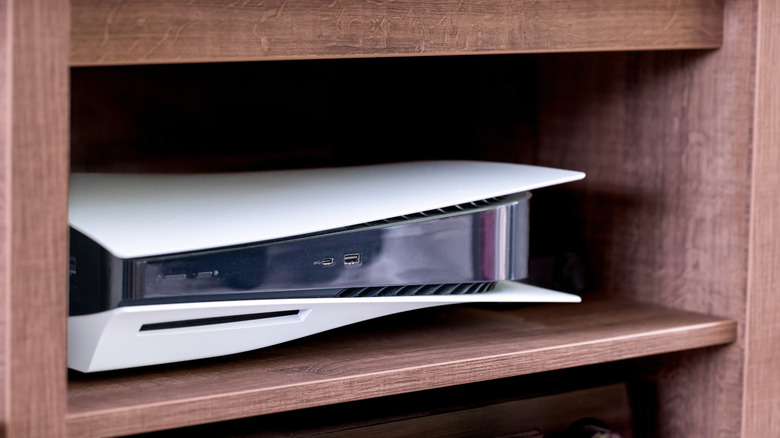
Cabinets are a great way to keep your game console hot, which is terrible for it.
One of the reasons often cited for the failure of the original Xbox in Japan is that the console (and its original bulky controller) was too big for many Japanese homes. Now, there was more to it, such as a lack of the genres and franchises Japanese gamers preferred. But this highlights an important point that space matters; some modern consoles could be an awkward fit if you're living in a cramped studio apartment.
Even in the West, gamers often need to optimize the space around their TV to make it livable for everyone in the home. Aside from comfort, you might be worried about style, aiming for a sleek, minimalist look. And while it may seem like a great idea on the surface, you certainly shouldn't jam any of the latest consoles into a cabinet in your entertainment center.
That might seem counterintuitive, since AV gear is often what those cabinets are for. But doing so could hamper your console's performance or shorten its lifespan. That's a potentially expensive mistake with memory prices inflating console costs by hundreds of dollars.
The dangers of stuffing your console in a cabinet
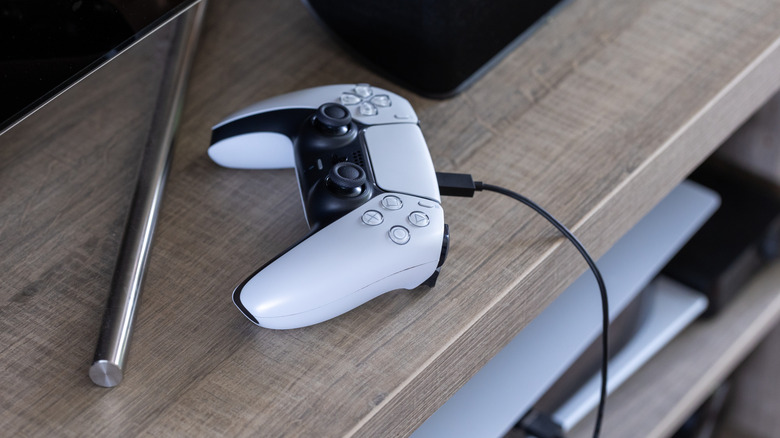
The primary concern here is heat. A modern console like the PlayStation 5 is a far more power-hungry device than your Blu-ray player or cable box. It's rendering real-time 3D graphics and physics, and the hardware necessary to power that consumes a lot of energy. During a game, the standard PS5 can consume up to 220W, a figure roughly matched by the Xbox Series X. Conversely, even Panasonic's relatively high-end UB820 Blu-ray player isn't going to hit any more than 32W.
Consoles have fans to expel heat and vents to take in cold air, but this can't flow well when the system is in a cabinet. The hot air can end up trapped, while it might not have enough room to draw in new air, so it cycles the same hot air. When your console is surrounded by heat like this, it forces the fans to work harder to maintain a safe internal temperature. Your system also might scale back performance to reduce heat production. Under extreme conditions, prolonged heat can trigger visual glitches or force the console to temporarily shut down to avoid damaging its components.
Closely related to this is the issue of dust. Although a cabinet can block some material from getting in, it also make it harder for particles to escape. As with any device, a thick enough layer will trap heat by reducing airflow out of vents or how much air can be taken in. This leads to the same problems and can reduce the lifespan of your console.
What you can do to keep consoles running cool
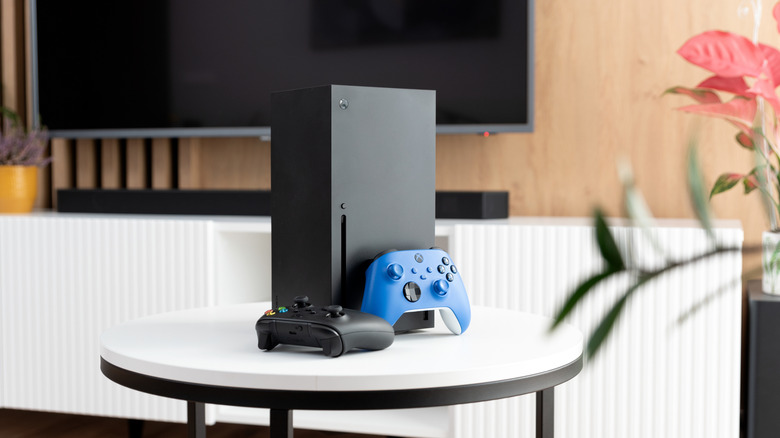
For proper ventilation, Sony recommends leaving about 4 inches (about 10 centimeters) of clearance around a PlayStation. Microsoft is a little more aggressive with the Xbox, proposing 4 to 6 inches (up to 15 centimeters) on all sides. Nintendo simply advises docking the Switch 2 in an "open, ventilated area."
The same principles apply to PC-based systems too, such as the ASUS ROG Ally X or Valve Steam Machine. While every system takes in and expels air at different places, a trapped space is never good. You should also avoid putting controllers, game cases, books or similar items on top of a console, as that will block its vents. Don't keep your console near a heat source, either.
If space is at a premium, some airflow is better than nothing. Remember that the PS5 and Xbox Series consoles can both be placed vertically or horizontally, so experiment with what fits into your setup. You might even consider aiming a small fan toward the console to help air circulate. It's also a good idea to periodically dust the outside of your console using a microfiber cloth and can of compressed air. If you use canned air, be sure to hold it level and several inches away from your hardware. Otherwise, you might spray liquids onto circuitry.
None of this is too complicated. Rather, console makers don't put it front-and-center in their instructions, which they probably should. Gaming hardware has come a long way since people were jamming the 9W NES on a shelf to play and .