Immersive sound doesn’t have to break the bank.
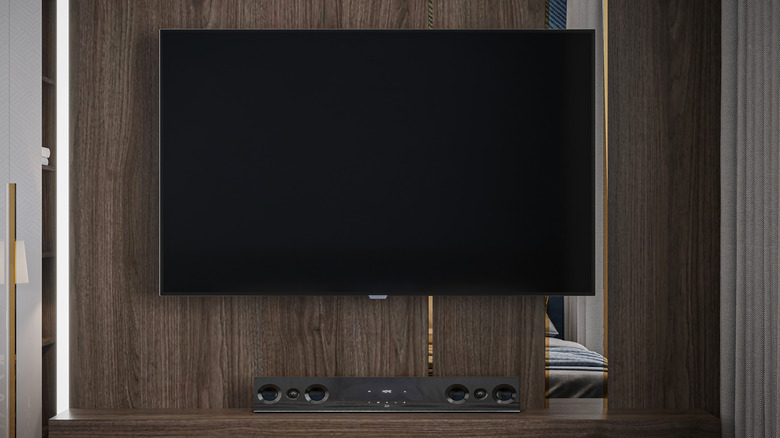
If you're a cinephile or sports fanatic, watching a movie or live game at home always feels lackluster compared to experiencing it in a theater or stadium, partly because of your TV's subpar built-in speakers. Although it's hard to replicate the true feeling of either, Dolby Atmos does a solid job of adding more immersion to your at-home watch party, and it doesn't have to cost you an arm and a leg.
While LG, Sony, Hisense and several other brands manufacture TVs with integrated speaker arrays that support Dolby Atmos, they may not fit everyone's budget or appease audiophiles. So, unless you're just a passive streamer who doesn't care about sound and simply likes to have something playing in the background, it's always a good idea to invest in some solid speakers. In most cases, a soundbar will do the trick.
Instead of spending thousands on a multi-speaker setup, choosing a wallet-friendly soundbar lets you get a taste of Dolby Atmos for a fraction of the price.
Why are some TV speakers so disappointing?

Nowadays, with thin designs being the industry standard, most TV speakers are forced to remain compact and either downward- or rear-facing, meaning your wall, media stand or floor (if the TV is mounted) absorbs the sound before it ever reaches your ears. Knowing modern TVs are barely thicker than a smartphone, manufacturers simply lack the physical space required for the premium drivers or resonance cabinets needed to produce truly dynamic audio.
This typical design is a major bottleneck, stripping away the height channels and depth essential for genuine spatial audio. This leaves you with flat acoustics, muddy dialogue and underwhelming bass. This is especially noticeable if you like streaming music on your TV, as it dampens vocal clarity and can even make your favorite song sound flat-out wrong.
On the other hand, even some top-of-the-line TVs with internal Dolby Atmos support struggle to project sound forward into your room, causing dimensional audio cues to scatter in the wrong directions. Without specialized upward- or side-firing drivers, many of those sound effects will get lost.
Immerse yourself with a soundbar
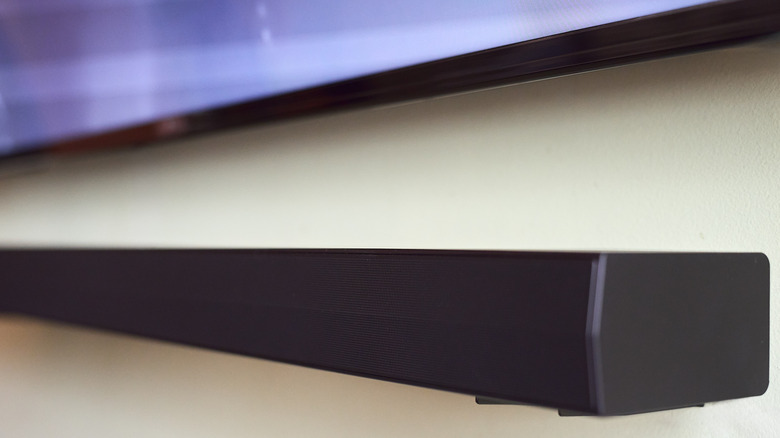
Depending on the brand, an Atmos-compatible soundbar will typically cost much less than a full home theater setup, but it will come with some major trade-offs.
For instance, many budget models rely on virtualized Dolby Atmos rather than genuine up-firing speakers, meaning they depend on special sound-coding to mimic overhead speakers. While the level of immersion is virtually incomparable to actual upward-firing drivers, it still offers a clear upgrade over most internal TV speakers.
Compatible options that rely on virtual processing, including soundbars from Amazon, TCL or even more dependable names like LG, don't have the required height channels to fully take advantage of Dolby Atmos, but some of these will run you under $200. Before buying any of these affordable soundbars, make sure your TV supports Dolby Atmos passthrough. In case it doesn't, an affordable 4K streaming device like the Roku Express 4K+ or Amazon Fire TV Stick 4K will do the job without breaking the bank.