Breathe did its job. For a UK team of fifteen or twenty people stepping off spreadsheets, it’s a tidy, affordable way to track holidays, keep records in order and stay compliant without a heavyweight system. The trouble arrives later.
Somewhere between your fortieth and your hundredth hire, you notice you’re running payroll in one product, surveys in another, performance reviews in a third, and nobody can pull a clean headcount report without exporting three files.
That’s the moment most growing companies start hunting for BreatheHR alternatives that can carry them further than simple SME admin.
The reason is built into Breathe itself, and it’s worth stating rather than lodging as a complaint. Breathe is HR-only by design: it has no integrated payroll, so PAYE, National Insurance and Real Time Information submissions live in a separate tool you connect to. It leans light on performance and people analytics.
It’s also designed for small teams, and Breathe itself describes the product as HR admin for businesses of up to 250 people, which is why fast-growing businesses tend to bolt extra systems onto the side and, in time, re-platform altogether. None of that makes Breathe a bad product.
It makes it a starting point, and this guide is about where you go next.
The nine BreatheHR alternatives below are judged on one thing above the rest: how far each one will carry a company that is still growing.
Some are UK-native tools a rung above Breathe that buy you a few more years; others are platforms built to take a business from its first HR hire into enterprise growth and keep going.
Each profile starts with the growth stage the platform fits, explains what it adds over simple SME admin, states its documented limits, and ends with its key features and the UK price where the vendor publishes one. A comparison table, the scoring method and a cost guide come first.
The BreatheHR alternatives at a glance
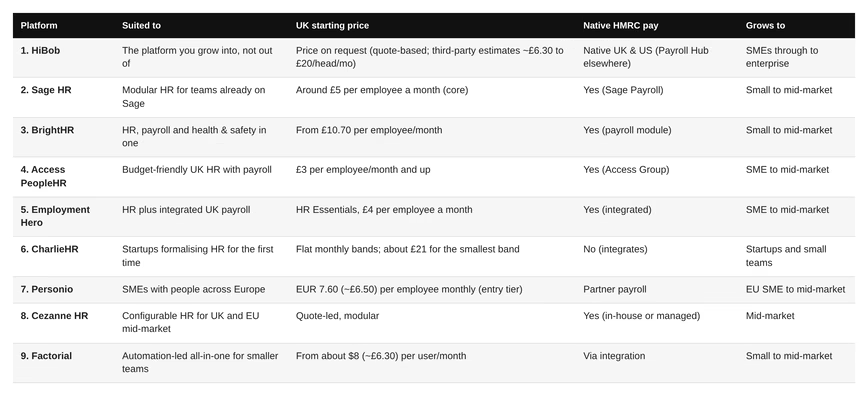
The table below compares the nine on the things that matter when you’re outgrowing a simple SME HR tool: who each one suits, the published UK starting price, whether it runs native HMRC payroll in-product, and how far it scales before you’d need to move again.
How I evaluated these BreatheHR alternatives
The scoring starts from the three things Breathe lacks by design, because those are the reasons a growing company is reading this. Headroom first: how far does the platform go before a team has to migrate again, and does the vendor say so?
Payroll second: does the platform run HMRC-recognised payroll itself, so that RTI filing, PAYE and NI, pension auto-enrolment, SSP and the year-end P60s happen on the HR record, or does it connect a separate product?
Depth third: structured onboarding, approval routing, performance cycles and live people analytics, the things a 40-person company starts needing and a 150-person company can’t run without.
Two more criteria keep the list honest.
One is the UK statutory baseline every size of employer meets, holiday accrual as the Working Time Regulations require, right-to-work evidence, statutory sick pay and paternity leave day-one rules from April 2026, the reduction of the unfair dismissal qualifying period to six months from 1 January 2027, and UK GDPR, which a scaling business needs handled without bolt-ons.
The other is adoption: whether line managers and employees would use the system without being chased, because an HR platform nobody opens hasn’t replaced Breathe at all.
Prices are the figures vendors publish in pounds or converted estimates were quoted in foreign currencies; where a vendor prices via quote, the entry notes it. Ratings are the G2 figures as of October 16, 2026. Evaluating platforms now ensures smooth implementation ahead of the start of the 2027/28 tax year (6 April 2027), when HMRC’s phased mandatory payrolling of benefits in kind begins.
What to look for when you outgrow a simple SME HR tool (2027 update)
The criteria shift once you’re shopping as a scaling business rather than a first-time buyer. Four things decide whether an alternative solves the problem that pushed you off Breathe.
Integrated, native payroll comes first. The usual trigger for a re-platform is an HR system and a payroll that never joined up, with the monthly reconciliation becoming somebody’s job. A platform running native HMRC payroll keeps starters, leavers, pay changes and auto-enrolment inside one flow. One that only integrates passes part of that back to a second product you’re still left managing.
Deeper workflows and performance are second. Simple SME tools handle holidays and records well but thin out on structured onboarding, approval routing, goal-setting, review cycles and one-to-ones. As your headcount climbs, those stop being nice-to-haves and start being the difference between a managed team and a chaotic one.
People analytics is third. Once you’re past a certain size, decisions about headcount, pay equity and retention need live data, not a spreadsheet someone exported last Tuesday. Built-in analytics beat a separate reporting tool you have to feed.
Scale headroom is fourth, and it’s the one buyers tend to underrate. A bargain today can turn into the dearest call over three years if it drives a migration the moment you grow. The strongest BreatheHR alternatives bridge the SME-to-enterprise gap in a single platform, so the system that suits you at 40 still suits you at 250 and past it.
BambooHR, Gusto, and Rippling often turn up on Breathe-alternative lists as well.
BambooHR holds a G2 rating of 4.4/5 from 7,705 reviews as of October 16, 2026, and prices globally across Core at $10 (~£8), Pro at $17 (~£13.50), and Elite at $25 (~£20) per employee per month (or flat monthly rates from $250 / ~£200 for 25 or fewer staff), though UK payroll sits outside it.
Gusto holds a G2 rating of 4.6/5 from 13,522 reviews as of October 16, 2026, focusing on US payroll across Simple ($49/mo + $6/person, or ~£38/mo + £4.70/person), Plus ($80 + $12, or ~£62 + £9.40), and Premium ($180 + $22, or ~£140 + £17).
Rippling holds a G2 rating of 4.7/5 from 14,560 reviews as of October 16, 2026, offering an all-in-one HR, Finance, and IT platform that is strictly quote-based with no published rate cards.
How much does HR software cost as your team grows?
Pricing in this category covers a broad range, and the model matters as much as the number.
Access PeopleHR, Sage HR, and Employment Hero publish per-employee pricing in pounds (from about £3 to £5 a month per head for core HR, up to £7 for higher tiers), Personio starts at €7.60 (~£6.50) per head, and Factorial publishes entry pricing from $8 (~£6.30) a user.
That’s simple to budget while you’re small, though per-head fees rise as the team expands, so size the cost at the headcount you expect, not today’s.
BrightHR and CharlieHR publish tiered pricing too: BrightHR’s entry tier works out at around £10.70 per employee per month for a ten-person team, and CharlieHR charges flat monthly bands by headcount from about £21 a month for the smallest teams.
The scaling-focused platforms, HiBob and Cezanne HR, price by bespoke quote tailored to your size and the modules you need, because the mix of core HR, payroll, performance and planning varies so much between a 50-person and a 500-person business.
Most vendors here offer a free trial or a demo, which stays the fastest way to see if a system fits the people who’ll live in it each day.
Breathe itself prices in tiered monthly bands by team size rather than a single headline figure, so when you compare, line up the full cost of the alternative against Breathe plus the separate payroll and point tools you pay for today.
The best BreatheHR alternatives for growing UK businesses
Each profile below follows the same shape: who the platform is built for, why it earns its place as you scale, its honest boundaries, then its key features and UK pricing. The list leads with the platform designed to carry you furthest.
1. HiBob
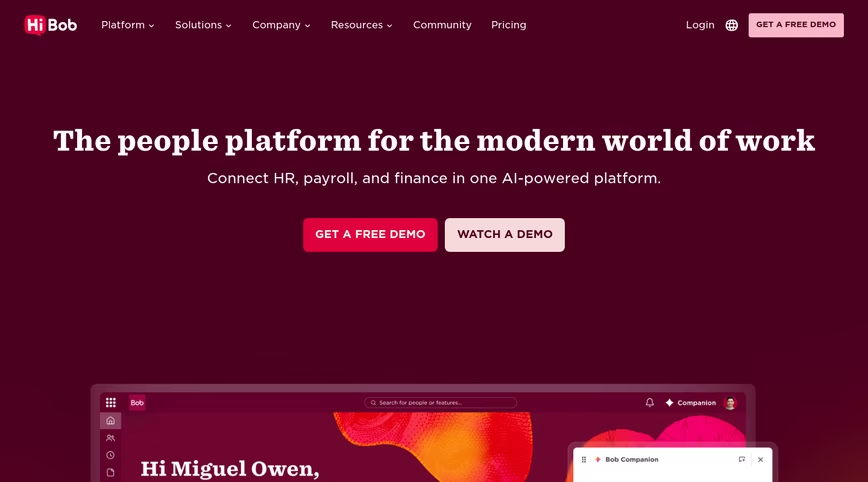
Growth-stage fit: growing UK teams that want one platform to scale into, rather than another tool they’ll replace.
Think about what changes between forty staff and two hundred and fifty. At forty, someone in finance runs payroll in a separate product and HR keeps records in Breathe. By a hundred you have a first proper HR hire, a review cycle, an engagement survey and a hiring pipeline, each in its own tool.
Bob puts core HR, in-product HMRC payroll, recruiting and applicant tracking, onboarding, reviews, engagement, compensation and workforce planning on one employee record, so each of those stages is a module you enable rather than a vendor you add, and the point tools Breathe users accumulate never get bought.
Built for fast-growing companies is how HiBob describes Bob, and the detail behind it matters for a Breathe leaver. Bob is built for growing businesses as well as mid-sized and enterprise organisations, with staff spread over several sites, so the platform you adopt at 60 people is the same one in use as you scale without limits, which is the direct answer to the re-platform Breathe’s 250-person ceiling forces.
The payroll is the second thing Breathe doesn’t do and Bob does. Bob’s payroll module for the UK carries HMRC recognition and runs on the HR record, so the FPS and EPS filings, PAYE and NI, pension auto-enrolment, SSP, payslips, P60s and P11Ds, and IR35 status for contractors are all handled where the people data already lives.
Bring in a starter and their right-to-work evidence, pension assessment and first payslip happen in one flow instead of three tools. Native payroll is available strictly for the UK and the US; all other international destinations connect through accredited Payroll Hub partners.
The third thing is depth, and this is where Bob functions as an end-to-end people platform. Automation carries the joiner, mover and leaver work: a change of line manager, say, re-routes approvals, updates the org chart and moves the person’s review cycle with one confirmation, with policy-based rules handling the exceptions.
People analytics are part of the record, so an HR lead can show the board headcount against plan, pay equity by level and attrition by team from a live dashboard rather than a spreadsheet.
Performance, goals, one-to-ones and lifecycle surveys with sentiment analysis sit beside recognition and feedback, so the culture work lives in the same place as the admin, and because Bob configures to how your business is structured, review cycles, approval chains and fields follow your organisation rather than a template. Line managers handle leave approvals and one-to-ones on their phones, staff get modern self-service, and HR gets a system people use.
October 16, 2026 ratings: G2 4.5/5 from 2,704 reviews.
Key features
- Core HR, HMRC-recognised payroll, recruiting and ATS, onboarding, engagement, performance, compensation and workforce planning, all on one record
- UK payroll run on the HR record: RTI filing, PAYE and NI, auto-enrolment, SSP, payslips, P60s, P45s and P11Ds, with IR35 status for contractors
- Joiner, mover and leaver automation with approval routing and policy-based rules
- Performance, goals, one-to-ones, lifecycle surveys with sentiment analysis, recognition and feedback
- Native in-product payroll strictly for the UK and US; accredited Payroll Hub partners cover other global locations
- A phone-first experience that managers and staff adopt as fast as HR does
HiBob pricing is strictly quote-based, tailored, and flexible. It is calculated per employee with Bob Core as the foundation (carrying people records, workflows, self-service, and analytics) and additional modules or full suites (Payroll, Talent, HR Planning) added as needed.
HiBob does not publish official list prices, but third-party market estimates place Bob Core at around $8 (~£6.30) per employee monthly, with comprehensive multi-suite configurations ranging from $16 to $25 (~£12.50 to £20) per employee monthly. Contact HiBob for an exact quote tailored to your team size and module requirements.
2. Sage HR
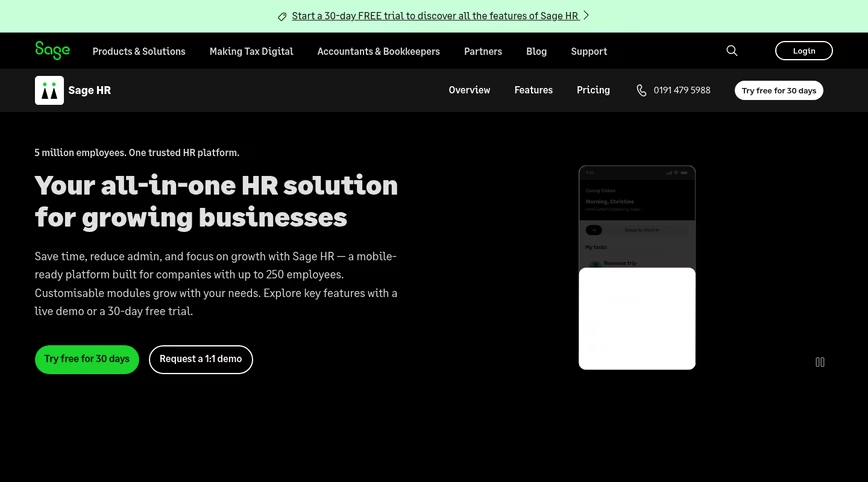
Growth-stage fit: UK teams that want modular HR and want their payroll in the same family as their accounts.
Sage HR is the first step up for a Breathe user whose accounts already run on Sage, because it solves the payroll gap by proximity: HMRC-recognised Sage Payroll sits next door, and the HR modules add timesheets, performance, rotas, expenses and recruiting to the records and leave Breathe already handled.
For a 50-person business whose finance lead lives in Sage 50 or Sage Payroll, that is a cheap and familiar way to get HR and pay on one spine.
As of October 16, 2026, it holds a G2 rating of 4.3/5 from 92 reviews.
The growth question is how far the modules take you.
Each one is bought and billed on its own, so the headline price climbs as the business adds capability, and the HR product stays a finance-adjacent tool rather than a people platform: engagement, analytics and the employee experience are basic, and G2 reviewers say setup and navigation take time to learn.
Sage HR buys a growing Sage business a few more years; it isn’t designed for the mid-market leap.
Key features
- Performance management, timesheets and drag-and-drop shift scheduling as add-on modules
- Mobile app for leave, approvals and expenses on the go
- Connected Payroll via HMRC-recognised Sage Payroll for payslips and P60s
Sage HR’s core HR and leave management module starts at about £5 a month per employee, with timesheets, performance management, rota scheduling, expenses and recruitment each priced as a separate module on top (Sage publishes the current module rates on its pricing page). A 30-day free trial is available, and prices exclude VAT.
3. BrightHR
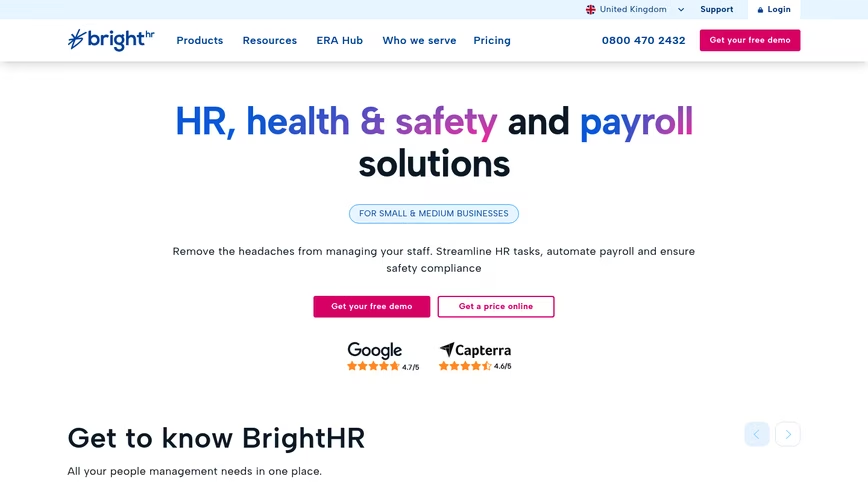
Growth-stage fit: compliance-conscious teams that want HR, payroll and health & safety bundled together.
BrightHR is part of Peninsula Group, the employment-law advisory business, and it grows with a company in a different direction from most of this list: towards compliance coverage rather than people depth.
Beside annual leave, absence, shifts and unlimited document storage it bundles a payroll module, health and safety tooling with risk-assessment templates, an employee wellbeing line and a perks layer, so a UK business that is hiring fast and acquiring compliance obligations at the same pace can cover several of them in one subscription.
The payroll module runs HMRC-compliant pay inside the product. As of October 16, 2026, it holds a G2 rating of 4.2/5 from 208 reviews.
The boundary to note is depth versus breadth. BrightHR covers a lot of ground, but the strategic HR layer, performance and people analytics above all, is lighter than on platforms built around the mid-market. For a team whose priority is compliance coverage and admin efficiency, that breadth-first design is the appeal; for one that needs deep performance and analytics as it scales, it’s a consideration.
Key features
- Core HR: annual leave, absence tracking, shift and rota planning, unlimited cloud document storage
- Blip clock-in app for attendance and overtime, and the PoP app for expenses
- Health and safety tooling with risk assessments and 600-plus templates
- 24/7 employee wellbeing support plus recognition and perks
BrightHR uses tiered, per-employee pricing that falls as your team grows. Based on 10 employees and excluding VAT, core HR software starts from about £10.70 per employee per month, enhanced HR support from about £20.30, and the full HR, health and safety and wellbeing package from about £27.10. Payroll and health and safety support can be added on. All plans include unlimited cloud storage.
4. Access PeopleHR
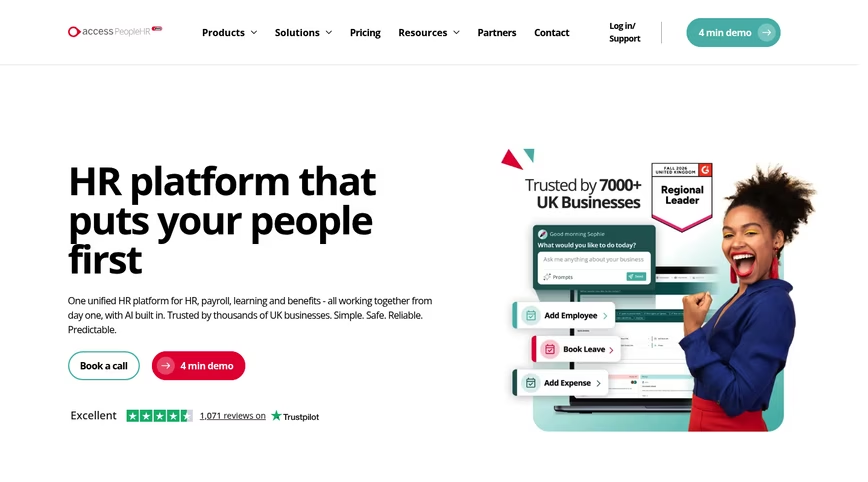
Growth-stage fit: established UK SMEs wanting a budget-friendly all-rounder with native UK payroll built in.
Access PeopleHR is the budget route to HR and payroll from one UK supplier.
Its pricing page lists per-head tiers from £3 a month upwards, the product covers records, leave, performance, timesheets, recruitment and self-service, and UK payroll comes from elsewhere in The Access Group’s portfolio, so RTI and auto-enrolment stop being coordinated in a second product.
For an established SME moving off Breathe with a tight budget and a named HR owner, it covers more of the growth checklist per pound than anything else here. As of October 16, 2026, it holds a G2 rating of 4/5 from 486 reviews.
What it asks of a growing team is patience with the product. PeopleHR belongs to a large software group assembled over time, so the interface and reporting feel older than the newest platforms and the suite rewards someone who will configure it with care.
For a team that wants predictable pricing and UK payroll from one supplier, that is a reasonable trade; for one that wants managers and staff to enjoy the system, it is the compromise to weigh.
Key features
- Core HR with employee records, self-service and document management
- Leave, absence and performance management
- UK payroll available through The Access Group portfolio
- Reporting and workflow automation across the employee lifecycle
- 14-day free trial
Access PeopleHR publishes tiered per-employee pricing, starting near £3 per employee monthly for core HR, with higher packages adding depth and UK payroll available alongside. A 14-day free trial lets you evaluate before committing.
5. Employment Hero
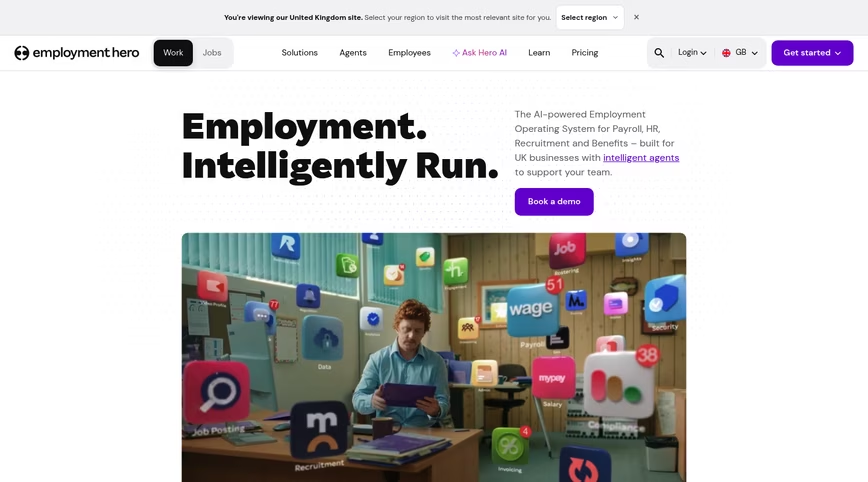
Growth-stage fit: growing teams that want core HR and integrated UK payroll in a single system.
Employment Hero bills itself as an employment operating system, and for a Breathe leaver the relevant part is that payroll is in the box: the UK platform includes payroll that submits RTI and runs auto-enrolment, so pay runs and people data sit together from the first month.
Around that it adds hiring, onboarding with e-signatures, Hero AI, a learning library and a staff benefits layer, which suits a company formalising its processes as it grows. Its UK pricing is published, which is unusual for a platform of this breadth.
As of October 16, 2026, it holds a G2 rating of 4.4/5 from 4,356 reviews.
The boundary is depth as the team grows.
Performance and engagement sit in the HR Engage tier rather than the entry tier, advanced reporting and single sign-on higher still, and G2 reviewers’ top requests are missing features and more customisation, so a company heading for several hundred staff should check the tier it will need rather than the one it starts on.
For a growing UK employer that wants HR and payroll on one bill, it is a solid step up from simple admin.
Key features
- Centralised employee management with a secure cloud database
- Integrated UK payroll with auto-enrolment, plus time and attendance
- Onboarding and offboarding automation with contracts and e-signatures
- Hero AI for instant HR insights and a built-in learning management system
Employment Hero publishes its UK tiers: HR Essentials at £4 per employee a month, the rotas and time-and-attendance add-on at £2; HR Engage at £7 per employee a month, adding performance, engagement and goals; HR Elite and Unlimited quoted, adding advanced reporting, workflows and security, HR advisory and an employee assistance programme. Minimum monthly spends apply, and the payroll software is offered free of a subscription fee.
6. CharlieHR
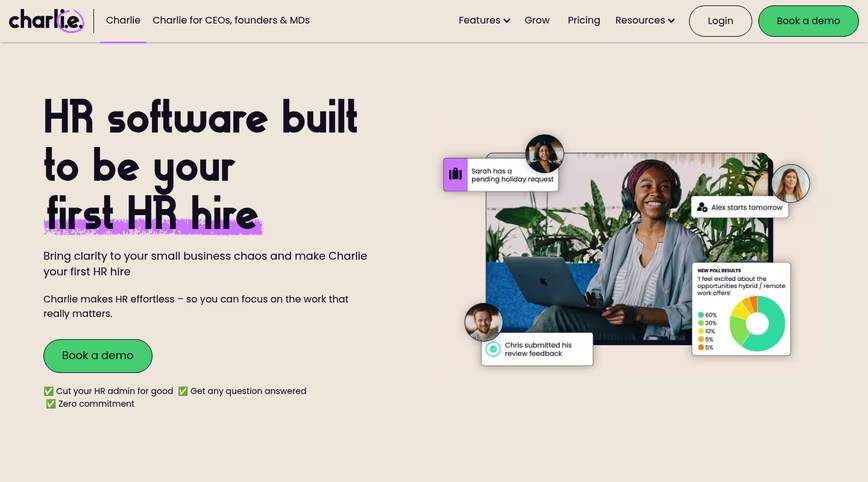
Growth-stage fit: UK startups formalising HR for the first time, with payroll handled elsewhere.
CharlieHR is the alternative for a company that is leaving Breathe sideways rather than upwards: a London-built tool for startups whose first ten to forty hires want onboarding, time off, policies and a perks programme to feel like part of the culture rather than admin.
Reviews, engagement polls and a founder-friendly design give it more personality than Breathe, and the add-ons, Charlie Recruit, Charlie Concierge and Charlie Advice, let a small team buy hiring support and HR advice as it needs them. As of October 16, 2026, it holds a G2 rating of 4.6/5 from 82 reviews.
On the growth test it sits where Breathe sits. Charlie integrates with payroll providers rather than filing RTI itself, so pay stays separate, and it is scoped for small teams, so the structured performance, planning and analytics a company needs at 150 people are outside its brief.
Its flat bands rise with headcount, so a startup that expects to triple should price the band it will land in, and plan for the platform after Charlie as well as Charlie itself.
Key features
- One-click onboarding with automatic document collection
- Time-off management with automated requests and approvals
- Perks and benefits with access to 30,000-plus deals
- Policy templates, compliance support and an integrations marketplace
Charlie prices in flat monthly bands by headcount, from about £21 a month when you have one to four staff, which works out near £5 a head, with an introductory discount for the smallest teams at the time of writing and higher bands as staff are added. Charlie Concierge starts from £20 per month, Charlie Recruit from £55 and Charlie Advice from £179. All plans include a free trial.
7. Personio
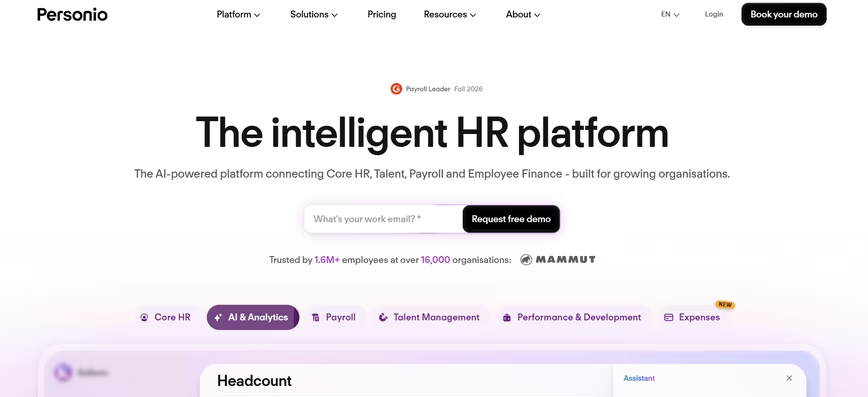
Growth-stage fit: a UK SME with people dotted across several European countries.
Personio is the alternative when growth means a second country.
Breathe is a UK tool; Personio, built in Munich, carries the paperwork, leave rules and sign-off conventions of several European countries on one record, with recruiting, onboarding and a compensation module built in, so a UK scale-up that opens a Berlin or Amsterdam office keeps one system instead of two.
As of October 16, 2026, it holds a G2 rating of 4.4/5 from 1,064 reviews.
For a UK-only business two things keep it mid-list. Personio’s own payroll serves its German-speaking home market, and UK payroll runs through partners, so a Breathe leaver whose main complaint was payroll outside the HR system would find the same arrangement here.
Feature gaps and limited customisation are the commonest G2 requests, and workforce planning is thin next to tools designed for it. If European expansion is in the plan, those are reasonable trades; if it isn’t, you’d be paying for breadth you won’t use.
Key features
- Recruiting and onboarding workflows
- Reporting across the employee lifecycle
- UK payroll through integrations and partners
Personio publishes a euro entry rate of €7.60 (~£6.50) per employee per month, with full packages quoted by headcount and modules plus a setup fee.
8. Cezanne HR
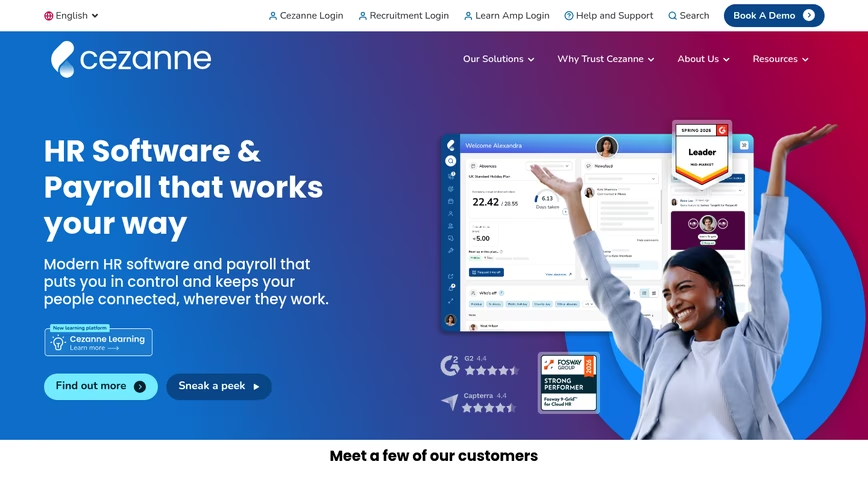
Growth-stage fit: UK and European mid-market teams that want configurable HR with payroll options built in.
Cezanne HR is the alternative for the company whose growth has brought it a payroll team and a preference for control. Beside configurable core HR, onboarding, absence and performance it offers two routes to UK payroll from one supplier: run it in-house on Cezanne’s payroll software, or let its Smart Managed Payroll team process it.
Its website promises no set-up or implementation charges and no long-term tie-in, which is rare in the mid-market, and as of October 16, 2026, it holds a G2 rating of 4.4/5 from 66 reviews.
The trade is that it is built for administrators. Cezanne’s audience is the mid-market HR and payroll team that wants to configure its own processes, so the experience for a line manager or employee is more functional than the people-first platforms, and the modular quote means a conversation before a price.
For a company between 200 and 2,000 staff that wants depth and a choice of payroll models, that is a fair exchange.
Key features
- Configurable core HR, onboarding and document handling
- In-house UK payroll software or Smart Managed Payroll service
- Reporting and workflow configuration across modules
- UK and European data handling
Cezanne HR is priced by quote, built from per-employee bands plus the modules you select, with payroll available two ways, as software you run or as a managed service. There’s no single public headline figure, so request pricing for your size and module mix.
9. Factorial
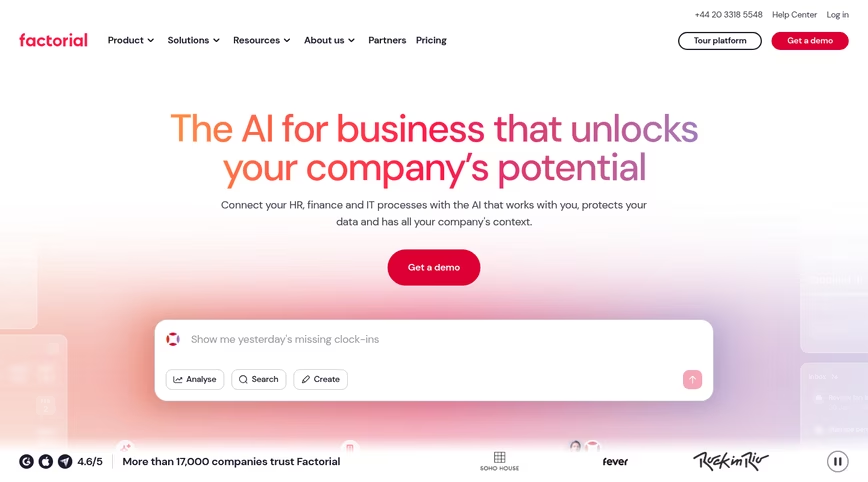
Growth-stage fit: smaller growing teams that want an affordable, automation-led all-in-one.
Factorial is the Barcelona-built platform for a small team that is growing in operational complexity faster than in headcount: it adds shift planning, time and attendance, e-signatures and expenses to the core HR record, with workflow automation across all of it and a published dollar entry price.
For a 30-person company whose Breathe setup has sprouted a timesheet spreadsheet and an expenses inbox, that breadth is the attraction. As of October 16, 2026, it holds a G2 rating of 4.4/5 from 110 reviews.
On the growth test it has two limits. UK payroll runs through an integration rather than an HMRC-recognised engine in the product, so the payroll gap that pushed you off Breathe stays open, and G2 reviewers note some module gaps next to the praise for coverage, with support hours European rather than UK-specific.
For a budget-minded team that wants operational breadth now and can live with integrated payroll, it is a practical pick.
Key features
- Core HR with time tracking, shifts and absence management
- Document management and e-signatures
- Expenses and spend management
- Workflow automation and reporting
- Payroll handled through integration in the UK
Factorial publishes entry pricing from around $8 (~£6.30) per user per month, with fuller packages priced by quote above that. As with any per-user tool, size the cost at your expected headcount and confirm a UK quote in pounds with the vendor.
Choosing among the BreatheHR alternatives as you scale
Sort the nine by the growth stage they serve and the choice gets simpler. CharlieHR and BrightHR are sideways moves for a team that will stay small, one towards culture and one towards compliance cover.
Access PeopleHR, Employment Hero and Sage HR are the step up for a UK SME that needs payroll on the same bill as HR and is happy to buy a few more years of headroom.
Personio is the move when growth means another country, Cezanne HR when it means a payroll team of your own, and Factorial when operations outgrow the HR tool before the headcount does.
HiBob is the one platform on the list designed for the whole arc.
It closes every gap that sends a company looking for BreatheHR alternatives, native HMRC-recognised payroll on the HR record, structured workflows, performance and engagement treated as core, and live people analytics, and it does so in a system that grows from SME to mid-market and on into enterprise without another migration.
Breathe was the right first system; Bob is the one you buy so that your second system is also your last.