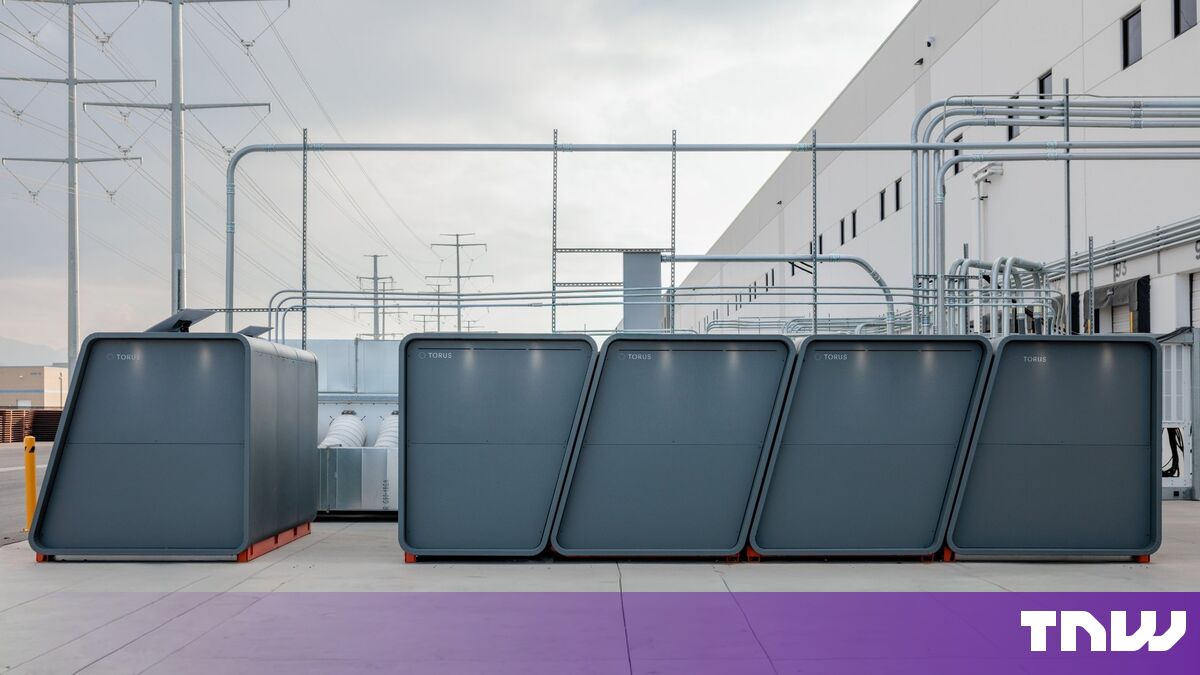
Torus, a Salt Lake City maker of energy storage systems, has raised $500m and launched Foundry, prefabricated units that bring AI computing to existing business and factory sites using grid power they already have. Magnetar led the round, the company said in a statement on Wednesday.
ICONIQ, Origin Ventures, Ridgeline Partners, and Trinity Capital also took part. Mark Chediak reported the raise first for Bloomberg, which described it as a Series C round. Neither gave a valuation. The money will expand GigaOne, the company’s factory in Salt Lake City, and pay for Torus Foundry sites across the US.
“Most providers are bringing power to the chips. Foundry brings the chips to power,” founder and chief executive Nate Walkingshaw said in the statement.
Each Foundry site packs power, storage, cooling, networking, and computing into one prefabricated system. Sites range from 1 to 20 megawatts. The smallest unit is about the size of a small cargo van.
Torus says a site can go from contract to running AI workloads in 12 to 16 weeks. Site preparation takes about a week, and installation takes one to two days.
The units sit behind the meter and use spare capacity at existing transformers, so they need no new grid connection. Each one is paired with Torus Reserve, the company’s flywheel and battery storage product. Reserve covers demand peaks, so more computing fits on the same connection. It also supplies backup power during outages.
Foundry is built for inference, the work of running trained AI models for users. Torus cites McKinsey figures that data centre demand for inference will grow 35% a year through 2030, against 22% for training. Inference start-up Fal raised $1.3bn this month in a round that doubled its value.
Torus says thousands of GPUs already run in Foundry units, and it plans more than 47,000 by the end of 2027. Hydra Host, an AI infrastructure company, and a second, unnamed AI cloud provider are the first customers. Companies can buy an empty powered shell, a turnkey unit with GPUs, or capacity reserved for them alone.
From batteries to computing
Until now, Torus has sold modular battery systems that help businesses and factories manage their energy use and cut power bills. It raised $200m from Magnetar for that business in September 2025.
The new units arrive as US data centre developers struggle to find power. In last week’s midterms, US voters rejected data centres in 40 of 41 local ballot measures. Democrats who campaigned for tighter limits on data centres also won governors’ races in Texas and Ohio, Bloomberg reported.
Walkingshaw told Bloomberg that the shift gives an opening to companies that can add computing without raising power bills or adding noise and pollution. Google is funding a 1GW virtual power plant, and OpenAI has launched a demand response programme to ease the strain AI puts on power grids.
Foundry’s cooling runs in a closed loop and uses no water, according to Torus. Each system also gives GPU time to medical research through Folding@home.
Torus employs nearly 400 people at GigaOne, which opened its first production line in early 2026. Its Foundry line can produce 500 megawatts of IT load, and the company plans to expand it to 1 gigawatt.