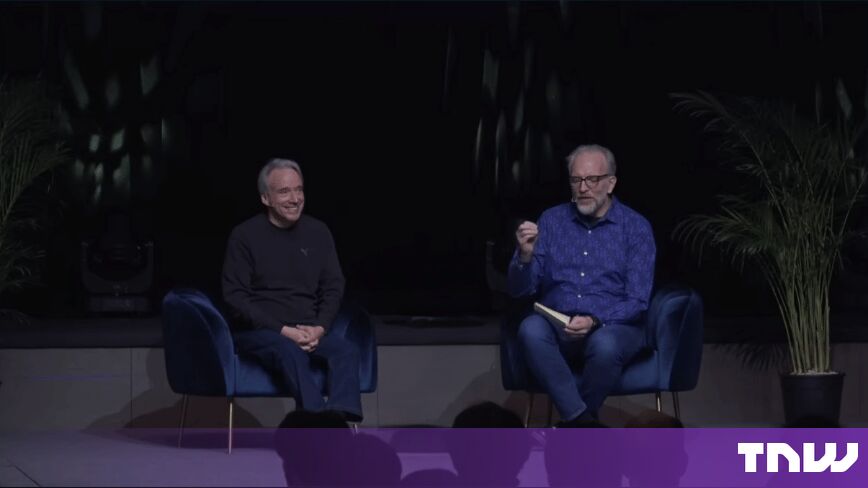
“Do you not see how UTTERLY STUPID those kinds of rules would be?”
Linus Torvalds wrote this on the Linux kernel mailing list on 13 October. He was replying to a developer who wants contributors to keep declaring when they use AI tools. The Register first reported the exchange.
The rule in question is the Assisted-by tag. Since January, the kernel’s documentation had asked anyone using “any sort of advanced coding tool” to add the tag to their commit message. Now the maintainers want it gone.
The maintainers drop the tag
Sasha Levin, a kernel developer and Nvidia engineer, proposed the change on 9 October in a mailing list patch. It has drawn more than 50 replies.
“The Maintainers Summit reached consensus to deprecate the Assisted-by Tag,” Levin wrote. “Remove the documentation requiring it.”
Jeff Layton, a kernel developer at Red Hat, had earlier given three reasons to drop it. Not everyone follows the policy, he said. The tag “basically serves as free advertising for proprietary LLM companies”, he added, and it is unclear why the kernel collects the information at all.
‘I really don’t get the unenforceable argument’
Laurent Pinchart, a kernel developer and founder of Ideas on Board, objected on 13 October.
“I’m not happy removing the tag without adding another mechanism for required disclosure,” Pinchart wrote. “Without that, I can foresee submitters pushing back on the question.”
He said the rule sets expectations, even if some people cheat.
“We’ve always had those, we’ll keep having them, and we’ll keep rejecting their contributions,” he wrote. “I really don’t get the unenforceable argument here.”
Torvalds said Pinchart’s position had “everything to do with your hangups”. Then he offered a rule of his own.
“Here’s a new rule just for you: don’t use compilers for any of your kernel submissions,” he wrote.
Contributors would have to write in assembler to prove they understand the machine, he went on. They should not use an editor for commit messages either, because backspace hides their typing mistakes. Then came the line in capitals.
“The kind of expectations have is that people do their best and I expect people to understand what they are doing. But that understanding has very little to do with what tools they use.”
‘I actually really like using AI’
The reply came days after Torvalds spoke at Open Source Summit Europe in Prague. On 9 October, he sat down on stage with his friend Dirk Hohndel, head of Ericsson Software Technology. ZDNet was in the room.
He used to think AI was “just not very good”, Torvalds told Hohndel. That has changed.
“Now I’m at the point where I actually really like using AI,” he said.
He uses it for “the things that I’m bad at”. For his guitar pedal project, he wanted a modern interface on a small screen he had programmed in C. “I don’t do Java. I do kernels,” he said.
He called vibe coding “a wonderful way to find joy in programming”, and AI a “gateway drug” for new programmers. This week, Epic said it vibe coded its launcher. Google will also let anyone publish an app to the Play Store for free.
“I think that you need to be very careful using AI when you’re doing something real and important,” Torvalds said.
Bots talking to bots
AI tools now find real security bugs in the kernel, he said. They also find flaws in drivers “that nobody has touched in 20 years”, TechRadar reported. In September, he joked that AI made Linux 7.3-rc2 unusually big.
On the whole, AI “is improving our code base”, he said. But there is a cost.
“It is also stressing maintainers out to the point that it’s a problem,” Torvalds said.
At the Maintainers Summit the day before, about three quarters of the talks were on making AI tools less stressful, he said. Hohndel asked about Sashiko, an agentic review system whose reviews now appear on the mailing list. Some subsystem maintainers expect patches to have had such a review, ZDNet reported.
“People are jokingly saying that there are bots talking to bots, and it does actually happen,” Torvalds said.
Not everyone is on board
Other projects are going the other way. System76 has banned AI-generated content from its COSMIC desktop. NetBSD has banned AI-generated code since 2024. It says it has now received $120,282 in donations, against a $50,000 target, The Register reported.