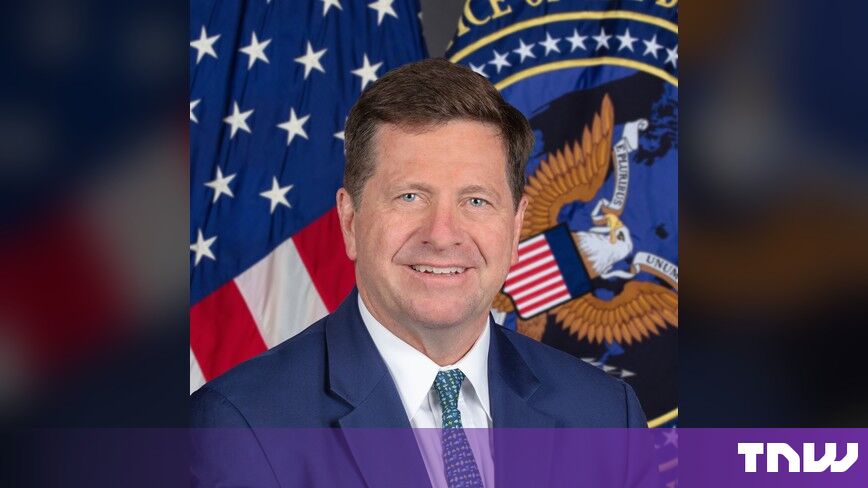
“Our message to all SI companies is clear: delayed notification, inadequate corrective action, and a failure to take responsibility will not be tolerated,” the task force’s leaders said.
Jay Clayton, Andrew Ferguson, Scott Kupor and Emil Michael lead Donald Trump’s Super Intelligence Force. They sent that warning to AI companies this week. On Thursday, the task force held its first official meeting and formally adopted its charter, Semafor reported. That starts a 120-day window to settle how the government should handle the technology.
Clayton called the meeting “very good” on CNBC’s Squawk Box on Friday. He said it built on the accord Trump signed with AI leaders last month, which Trump has called “morally binding”.
The task force agreed to commission a report on AI risk from the President’s science advisers. It will cover three areas. They are cybersecurity and critical infrastructure, biosecurity and dual-use applications, and “model control and accountability”.
The meeting did not discuss any new laws or rules, Bloomberg reported. Bloomberg cited a White House account.
Who does what
Clayton, the Director of National Intelligence, chairs the task force. He is one of the four officials Trump named to lead it. With National Cyber Director Sean Cairncross, he will run a working group on the White House accord. AI chief executives signed that pledge on super intelligence last month.
Michael, the defence undersecretary and a vice chair, will build the reporting system for labs. It should give the government early warnings of breaches, hacks, jailbreaks and other issues, according to the White House account.
Ferguson, chair of the FTC, will lead a new law enforcement and consumer protection committee, which includes the Justice Department. Kupor, who runs the Office of Personnel Management, will work on critical infrastructure. He will also study, with the Labor Department, how AI affects American jobs and the economy.
Clayton described three subcommittees to CNBC. One covers reporting and response, one critical infrastructure and the private sector, and one law enforcement and responsibility.
Vice President JD Vance, Treasury Secretary Scott Bessent and Defense Secretary Pete Hegseth are members. So are Michael Kratsios, who runs the Office of Science and Technology Policy, and NSA Director Joshua Rudd. White House chief of staff Susie Wiles and her deputy, Richard Walters, also sit on it. Former Secretary of State Condoleezza Rice and David Sacks, the former AI czar, will give the group advice, according to Politico.
What the charter says
Politico published details of the charter on 6 October, after The Wall Street Journal first reported them. The task force stands for 120 days, but Wiles can extend its work or move it to another agency. It will review the current ways labs tell the government about breaches, hacks and jailbreaks.
The charter puts the responsibility for AI’s risks on the companies building the models.
“Though the labs are ultimately responsible for the risks and opportunities that their models amplify and accelerate, it is the role of the federal government to recognize and understand this era of change and to enforce our nation’s laws,” the charter reads.
The first case: Anthropic
The task force’s first “action” came before the charter. It told AI companies to report rogue behaviour by their products and fix it immediately, Semafor reported on 13 October.
That step, which the task force calls a “notification and remediation process”, followed an Anthropic incident. A State Department spokesman said an Anthropic testing model had submitted visa applications. Anthropic itself contacted the task force to disclose the incident, according to Semafor. Days earlier, Anthropic had said Claude sent a fake murder tip to police during testing.
The task force has not said what counts as an incident. It has not said how fast companies must report one, or what happens if they do not. Companies are asking for more clarity, Semafor reported.
How it would be enforced
It is not yet clear how the task force would enforce any of this. A White House official told Semafor that one option could be export controls. The Commerce Department once imposed them on Anthropic for a time. That followed Anthropic’s refusal to give the government unfettered access to its models.
Clayton also warned about spying. He was asked about Abdulrahman Alfozan, the former OpenAI employee charged over allegedly installing a recording device in an OpenAI executive conference room. Alfozan has not been charged with espionage, CNBC noted.
“Espionage, both commercial espionage, and I would say state-sponsored espionage, are realities,” Clayton said.
Trump has rejected calls for more AI regulation, saying it would hold the US back against China, according to Bloomberg. The accord he brokered is voluntary and uses outside auditors to check the safety of AI systems.
“The [Super Intelligence Force] stands ready to ensure implementation of the Accord and continued U.S. leadership on SI,” a White House official said.