UiPath’s marketing team has stopped paying outside firms to pull together its advertising data. The head of its paid media team built an AI agent on UiPath’s own platform instead, chief marketing officer Michael Atalla told TNW. It collects the data, analyses it and makes some low-cost changes to how the ads run, around the clock.
Atalla joined UiPath, the automation company founded in Romania, as chief marketing officer in August 2025. For the four years before that, he led worldwide marketing at F5. He spent nearly 15 years in marketing leadership roles at Microsoft. He also founded The MJJM Group, which helps early-stage founders. He works from Seattle.
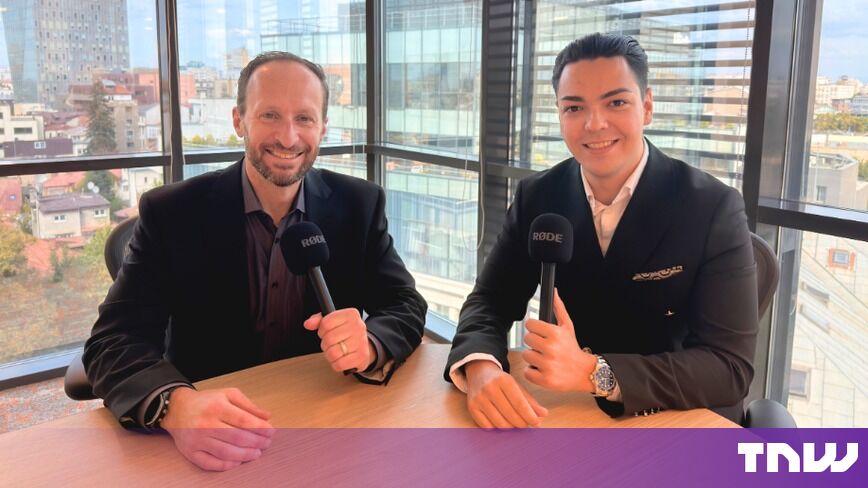
He spoke to Cristian Dina in Bucharest on 29 September, days after UiPath’s FUSION conference in Las Vegas. It is the latest episode of the TNW Podcast, after Yahoo’s Jim Lanzone and Zendesk’s Tom Eggemeier. The full conversation is in the video below.
An agent built by the marketer
The ad data sits on platforms around the world that UiPath does not own, Atalla said. Collecting it was complicated, and UiPath paid other companies a lot for the work. The agent now gathers it. The team can change where the money goes in real time, instead of waiting for reports. He said it saved money and made the team more effective.
What matters most to him is who built it. The person who already runs the process built the automation, with no specialists. Every task his team automates costs less to do, he said. His marketing team includes analysts, data scientists and developers.
What UiPath showed at FUSION
About 2,000 people attended FUSION, not counting UiPath staff, Atalla said. He singled out two launches. The first is Process Atlas, a library of pre-built solutions for common processes. Examples include procurement, payments, medical records and insurance claims. Some work out of the box and some arrive 30% to 50% built, he said. He called industry solutions for regulated sectors such as banking, government and healthcare one of UiPath’s most important growth paths.
The second is Cartographer, which founder Daniel Dines launched in his FUSION keynote. It interviews staff and reads documents to map how a process really runs. The people who run a process rarely write it all down. Atalla said that missing context is one of the biggest gaps in enterprise business today.
Gartner also named UiPath a leader in its Magic Quadrant for business orchestration and automation in September. Atalla expects orchestration to last once the hype around agentic AI settles and companies treat agents as a tool.
Companies often start AI with a low-risk use case, Atalla said. That builds no trust, because nobody is watching, the chief executive included. The second problem is how long progress takes. Together, he said, they keep pilots running for a long time without reaching production.
“You must choose a use case of consequence,” he said.
Agents and people
Agents have no point of view, no grasp of intent and no way to learn on the job, Atalla said. Most invoices get paid and most orders arrive. The exceptions need trust and judgment, and that is where people must stay in control.
“No, agents will not replace humans. Agents will do some jobs better than we can, and we will do some jobs better than they can,” Atalla said.
He pointed to Kate Darling, an expert in AI ethics and robotics who spoke at FUSION. She suggested thinking of AI the way people think of animals. An ox pulls a cart because people are not strong enough.
Cutting junior jobs is “absolutely a mistake”, he said, as Dines has argued. His marketing team ran an internship programme this summer, and the interns are starting full-time jobs soon. AI also creates jobs, he said, such as the process mapping role UiPath calls the cartographer.
Slop and storytelling
AI has changed how far his team can scale its work, Atalla said. But marketing still needs human trust, judgment and oversight. Without them, companies produce terrible marketing, and he said many do today.
“AI slop is a real thing,” Atalla said.
He believes creativity will stay human. That is why he recommends marketing to young people: it is a storytelling job, and he said AI is not a compelling storyteller.
From code to marketing
Atalla’s first trip to Romania was in his first week at UiPath, to spend a week with Dines and the leadership team. He said the country’s recent history, including the fight for democracy that some UiPath staff took part in, shaped a drive that still runs through a company of more than 4,000 people.
He took computers apart at six or seven, taught himself to code as a teenager and started his career writing code, then moved into IT infrastructure. He became a marketer almost by accident. His advice to young people comes from a Shaolin monk who led a morning training session he joined on a beach in California.
“The first thing you do is move,” Atalla said.