Britain’s defence minister, Wes Streeting, has said the UK should establish “additional channels” of communication with Russia as a way to lower the “risk of miscalculation”. His comments come at a time of heightened tension between London and Moscow over the war in Ukraine.
Backchannels have a long history in diplomacy. They have been used by the UK as part of attempts to resolve its dispute with Argentina over the Falkland Islands, as well as in efforts to end the Troubles in Northern Ireland. They have also been used extensively in Israeli-Palestinian peace negotiations.
The most well-known example of this occurred between 1992 and 1993 when key Israeli and Palestine Liberation Organization figures initiated a string of secret meetings that led to the Oslo Accords. I have explored this so-called Oslo Channel in my own research.
Backchannels can provide a number of benefits. First, they can act as a means of dealing with uncertainty. This includes uncertainty around the political costs of engaging in more formal diplomacy.
For example, they allow two sides to come together when they might be willing to engage in dialogue with one another but do not want to initiate contact first to avoid being seen as desperate or weak.
Backchannels can also allow different parties, such as governments or leaders of organisations, to work out what the other side’s interests and priorities are for any negotiation. And the secrecy of backchannels allows the exclusion of groups who might want to spoil such discussion.
Second, backchannels can act as a means to engage an adversary without preconditions and, crucially, without recognising their legitimacy or validating their demands. Russian officials, for example, regularly insist that European countries accept Moscow’s geopolitical and security interests as legitimate and treat Russia as a “normal” state.
And third, backchannels can be a means of relieving tensions by acting as a “safety valve”. The late Henry Kissinger used confidential backchannels to manage US relations with the Soviet Union while he was national security advisor to President Richard Nixon during the cold war.
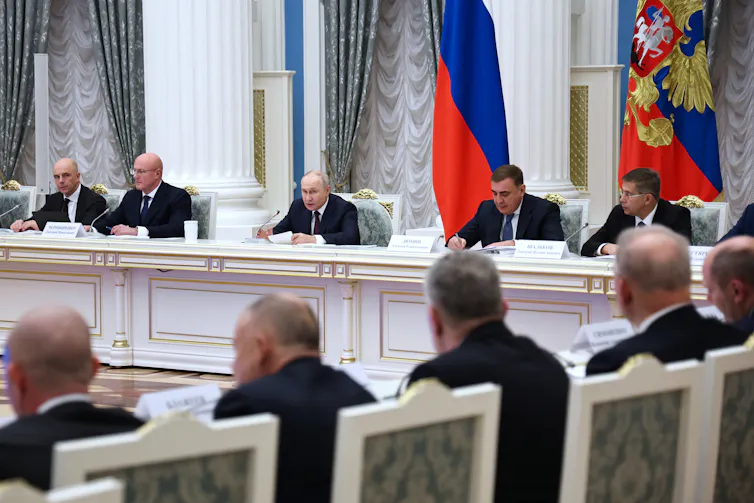
However, diplomatic backchannels are not without risks. Backchannels, and more importantly the contents of discussions taking place within them, can be revealed. This can damage the reputations of those who launched them, as India’s experience shows.
In 1999, India and Pakistan established a backchannel to discuss deescalating the Kargil war. The channel was leaked to the Indian press by disgruntled officials in New Delhi’s foreign office who felt sidelined by the secret negotiations.
This further damaged the relationship between India’s then-prime minister, Atal Bihari Vajpayee, and his Pakistani counterpart Nawaz Sharif, which had already come under pressure due to the war.
Embarrassing UK politicians by revealing backchannels that undermine – even symbolically – British support for Ukraine is not inconceivable with Russia.
While backchannels can help reduce tensions with an adversary, research also suggests they provide a weak foundation for longer-term changes in relations. However, Streeting’s comments appear to be less about improvising the UK’s relationship with Russia and more dealing with the immediate issue of escalation.
Another risk is that leaders can use backchannels to engage in what is known as “channel shopping”. This is where an adversary looks for the alternative communication channel where they feel the most valuable concessions can be extracted.
Russia may already be involved in a form of diplomatic channel shopping through its recent engagements with different European leaders. The German and Russian foreign ministers met on the sidelines of the UN General Assembly in September, for example, for the first time since 2022.
Then, one month later, Finland’s President Alexander Stubb and Norwegian Prime Minister Jonas Gahr Støre held a rare joint call with Vladimir Putin. They said the aim of the call had been to “convey messages directly” to the Russian leader “regarding future negotiations” towards peace in Ukraine.
Should backchannels be used?
Peter Jones, a researcher at the University of Ottawa in Canada and practitioner in unofficial diplomatic dialogue between adversaries, has provided three tests that any UK or European minister should consider when thinking about using backchannels with Russia.
First, is the backchannel being used because secrecy is helpful for allowing new ways of addressing problems to be developed, or is it merely a means of managing the differences between the states?
Second, are those engaging in backchannels accepting and planning for its result to be put under public scrutiny? And third, is the backchannel intended to allow what would not be politically possible to take place, or is it to enable what would be illegal to take place?
The flurry of European diplomatic engagement with Russia in recent weeks may spur a fear among UK officials of missing out in diplomatic terms. However, careful and cautious use of backchannels is advised.