Kyiv’s forces experience connectivity problems on Elon Musk’s satellite network.
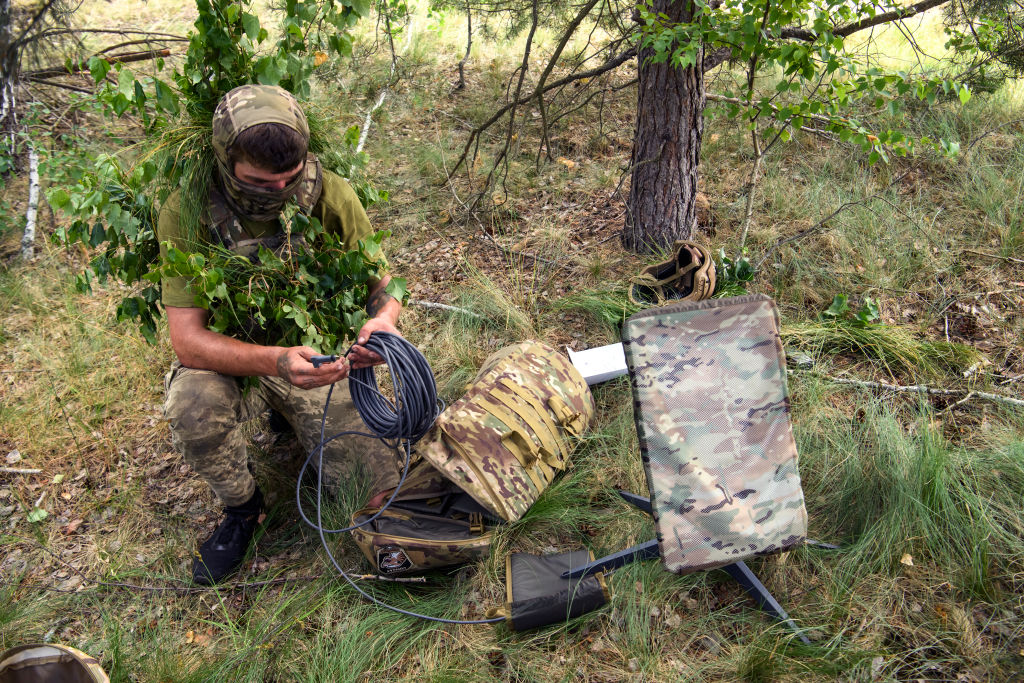
Ukrainian troops have been caught off guard by restrictions on Elon Musk’s Starlink satellite Internet systems that disrupted frontline operations, while Kyiv received no warning from its partners of a Russian missile attack on its energy facilities for the second day running, according to Ukrainian officials.
Starlink terminals used by Ukrainian drone units began experiencing signal failures at speeds above 160 km/h, disrupting several missions early on Wednesday morning, according to military personnel and senior Ukrainian officials.
“Logistics at the frontline and middle strikes are badly limited,” one senior official familiar with the situation on the front told the FT. Ukraine’s middle strikes target Russian military supply lines and logistics. The limitations came with “no warning, just in the middle of the night,” the official said.
Ukrainian defense ministry adviser Serhii Beskrestnov said long-range drone operations were also impacted, as was Ukraine’s ability to defend itself against Russia’s new jet-powered drones, since Starlink is used on the interceptors being developed to combat them. “It is clear that this action is not coincidental and is related to the current political situation,” he wrote on Telegram.
The Starlink disruption comes as Kyiv faces escalating Russian attacks on its energy infrastructure and mounting pressure from US President Donald Trump to make concessions to Moscow to end the war.
Since last week, Trump has stepped up pressure on Ukraine to stop its drone strikes on Russian oil refineries and threatened to cut off vital intelligence sharing. Trump has fumed over the rise in global diesel prices, for which he blames Ukraine, but which analysts have said is largely caused by the US war with Iran.
The lack of advance warning about Russia’s missile strikes, alongside the unexpected restrictions on Starlink terminals, has heightened concerns in Kyiv about the reliability of US support after Trump’s threats.
Trump on Wednesday denied that Washington had cut off intelligence sharing. “No, we haven’t. We help them,” he said. “We are helping them, we are sharing intel. We want the war to end.”
The 7th Rapid Response Corps of Ukraine’s air assault forces on the southeastern front said the restrictions impacted Starshield, SpaceX’s military-grade satellite network made for defense, governments, and intelligence agencies.
“This concerns the Starshield package—the so-called military package, which previously had no data transmission speed limits,” it wrote on the unit’s Telegram channel. “These changes directly affected the use of unmanned aerial vehicles (UAVs) that use Starlink for control during flight.”
The unit said its pilot noticed during drone flights, “the connection could disappear for 10–20 seconds even at speeds of 110–120kph. The aircraft continued to move, but such interruptions complicated their control.”
The low speed presented several problems, including difficulties during drone take-offs and making them vulnerable to Russian air defenses. “Slower targets become more vulnerable to enemy strikes,” the unit also noted. It said “some missions had to be cancelled” due to the Starlink restrictions.
Some Ukrainian officials speculated that SpaceX, which operated Starlink and the many thousands of terminals used in Ukraine by its military and civilians, introduced the restrictions at the request of the Trump administration after Musk posted messages critical of Ukrainian President Volodymyr Zelenskyy this week.
“Zelensky has gone too far,” he wrote in a post on his X social media platform in response to a White House video of Trump saying that he had told Zelenskyy: “You can do whatever you want to Russia, but don’t hit the refineries because that’s a world problem.”
“And what does he do? He goes and hits the diesel fuel. He better damn well stop,” Trump said in the video.
A Ukrainian presidential adviser said military officials were trying to resolve the issue through the coordination center in Wiesbaden, Germany, which serves as the hub for Ukraine’s military liaison with Western partners.
The White House, SpaceX, and Musk did not respond to requests for comment.
Polish Foreign Minister Radosław Sikorski wrote on X, Musk’s social media platform: “Hey, @elonmusk, big man, are you playing politics with your products again? As your European customers, we are watching you.”
Zelenskyy, who arrived in London on Wednesday morning where he is set to meet Prime Minister Andy Burnham, said on the eve of his trip that Ukraine had “once again” received “no early warning from our partners” before Russian ballistic missiles struck the capital’s energy infrastructure, including one of the city’s main combined heat and energy power plants.
“Our systems detected these missiles only when they were already virtually on approach to Kyiv,” he said.
Zelenskyy said Russian forces launched 39 ballistic missiles and more than 120 attack drones against energy and critical infrastructure overnight and into the morning, “the very infrastructure covered by the ceasefire announced by the American President.” The attacks centered on Kyiv and Kharkiv. Ukraine’s air force said just four missiles were intercepted.
The president said there was “significant damage to facilities and equipment” at 26 facilities in Ukraine’s power system and four in the oil and gas sector. At least 600,000 people were without electricity on Wednesday morning. Kyiv authorities reported that at least two people were killed and more than 20 injured in the attack.
“The strike was entirely deliberate and demonstrative in its scale,” Zelenskyy said. “Russia has never before shown such ostentatious disrespect towards the United States.”
He called on Washington to respond to the attacks, saying it was important the US “understood who is responsible for this war continuing” and urging partners to impose tighter sanctions on Moscow.
“Ukraine supported an energy ceasefire. Russia is targeting yet another power plant and the lives of our people.”
© 2025 The Financial Times Ltd. All rights reserved. Not to be redistributed, copied, or modified in any way.