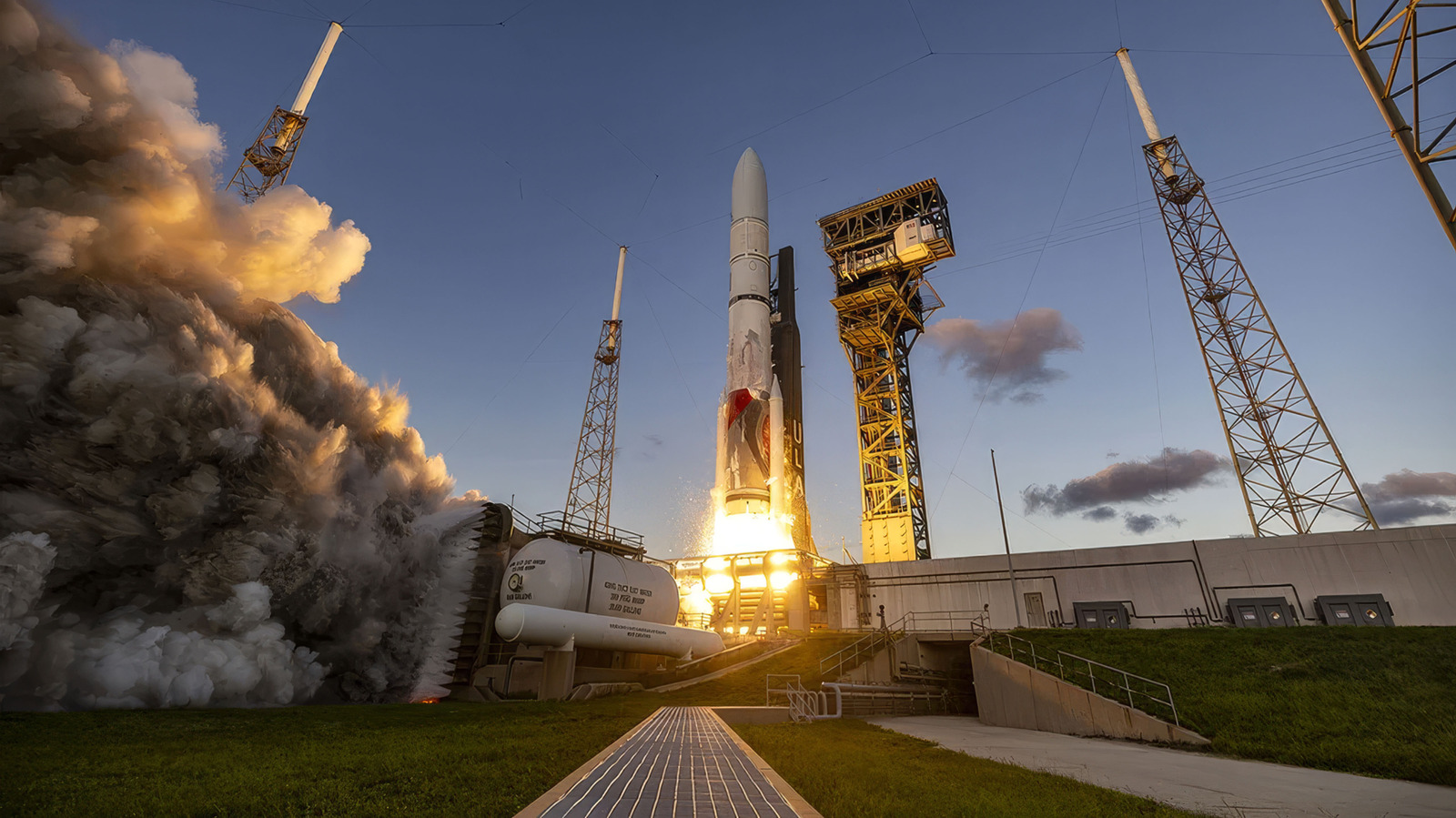
United Launch Alliance is known for its ultra-dependable Atlas V, but its its latest rocket is off to a sputtering start. The new heavy-lift Vulcan rocket malfunctioned while climbing into space yesterday, destroying its payload of 40 Amazon Leo internet satellites.
"Based on data received by our Launch Director, we confirm that the Vulcan vehicle launched from Space Launch Complex 41 suffered an anomaly 10 minutes into the flight and failed to deliver the Amazon mission to orbit," the company said in a post on X. "We will work closely with our customer and other appropriate organizations to find the cause, determine the appropriate corrective action, and return to flight as quickly as possible."
Launch failures are always a risk, but amazingly, United Launch Alliance had never experienced one previously. Since the company formed in 2006 as a partnership between Boeing and Lockheed Martin, its Atlas V rocket has been famously dependable. Now, the company's more powerful, more complex Vulcan will be under review by engineers and is facing a possible grounding.
"Every flight generates data, and every flight teaches us something. Since the anomaly just occurred, we don't have any specific data yet to understand what occurred today," United Launch Alliance wrote. "ULA is committed to full transparency with our customers, and they will have visibility into the investigation process, which utilizes rigorous methodology and corrective action."
Following a refuelling issue that scrubbed a Friday launch, it was eventually rescheduled for Sunday, November 15th at around noon ET. However, controllers called a hold at T-minus 20 seconds due to an unknown technical issue. The problem was resolved before the end of the launch window and the rocket roared off the pad at 12:40 PM ET.
The solid boosters, which caused problems on two earlier flights, appeared to work normally. However, the first-stage methane engines fired longer than expected based on ULA's estimated timeline, as pointed out. After the first stage separated, the hydrogen-powered Centaur upper stage engines came on line for a planned 12.25-minute burn. The anomaly apparently occurred during that phase, ULA said on its website.
As well as being a major setback for United Launch Alliance, the failed launch will be a blow to Amazon's Leo internet satellite system, intended to rival SpaceXSI's Starlink network. Leo has 38 Vulcan flights booked to launch its satellites, following eight successful Atlas V missions. Many of those are now likely to be delayed.
Amazon's other launch provider, Jeff Bezos' Blue Origin, suffered its own setback in May when its New Glenn rocket exploded on the launchpad. The company has 24 flights booked on that rocket.
The Federal Communications Commission required Amazon Leo to have 1,600 satellites in orbit by July 31, 2026, but so far it only has around 390 in service. The company still planned to have 3,232 satellites in orbit by July 2029, but that goal may now be harder to obtain. "No operator could have predicted that all three core heavy-lift launch programs... would experience repeated, concurrent scheduling slips severe enough to exhaust the buffers Amazon Leo had built in," the company said back in July. With the failure of ULA's Vulcan on top of those delays, Leo can't seem to buy a break.