Nvidia’s chip-smuggling problem won’t go away as arrests continue.
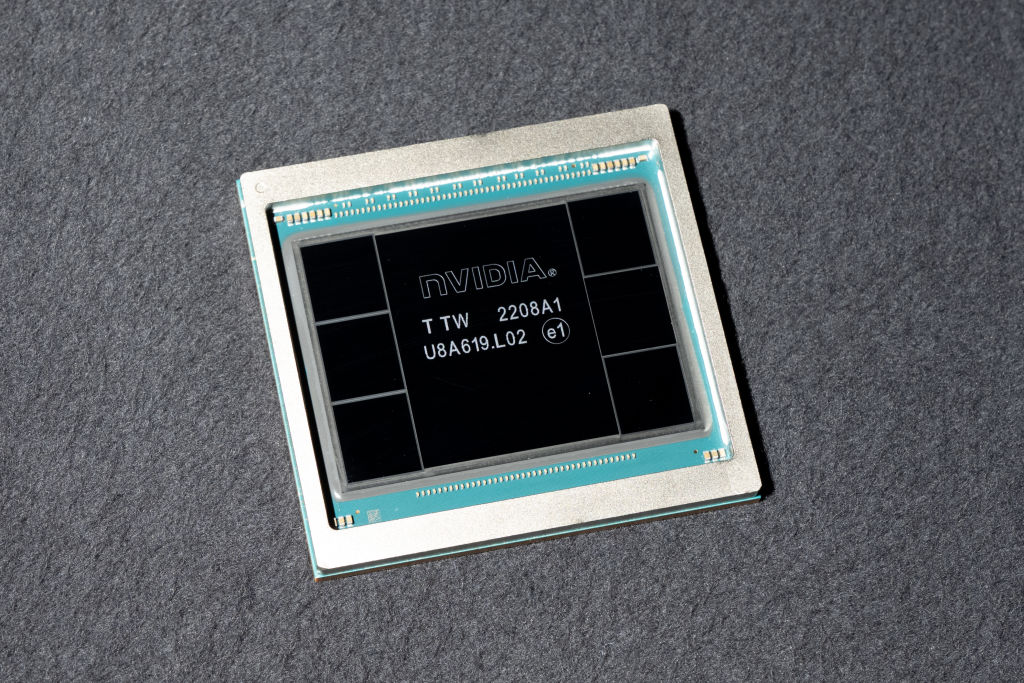
The US has arrested another suspect accused of smuggling high-end computer servers containing export-controlled Nvidia chips into China.
In a press release on Thursday, the Department of Justice accused 38-year-old Greg Lui of using false paperwork to mask shipments of servers worth more than $300 million that he allegedly knew were ultimately destined for China.
As the CEO of Earthmade Computer, Lui allegedly conspired with freight-forwarding firms in South Asian countries like Malaysia and Singapore to illegally divert chip shipments into China, including Nvidia’s A100 GPUs and H100 GPUs, the FBI’s indictment alleged. These are not Nvidia’s most advanced chips. However, the chips can process large amounts of data and train large language models, which the US fears could pose national security risks if China suddenly gets access to enough chips to drastically advance its AI or strengthen its military.
Emails and bank records exposed the smuggling scheme, the DOJ alleged, which started in October 2023 and continued until August 2026.
One key piece of evidence is a 2024 email discussing an order for 70 servers with export-restricted GPUs that were fraudulently claimed as destined for Malaysia. After “Lui submitted a purchase order to a US manufacturer for 27 of these servers for approximately $7,614,000,” the DOJ alleged that a co-conspirator told a Malaysian government official that all 27 were shipped to China.
A similar shipment of 92 export-controlled servers was allegedly routed through Singapore to Malaysia, then Hong Kong. Finally, the chips went to a Chinese firm based in Hangzhou, the FBI alleged, which The Wall Street Journal last year described as China’s AI hub.
Yet another flagged 2024 shipment shows how far Lui allegedly went to fool US officials.
When shipping 100 Malaysian-bound servers—each containing Nvidia H100 GPUs worth over $22 million—Lui allegedly submitted fraudulent documentation from a fake buyer identifying its CEO as “Jackie Lui.” Three years prior, Lui “purchased the identifying documents of an individual whose identity is known to the grand jury and used this identity to conduct business transactions in furtherance of the export evasion scheme,” the FBI alleged.
In 2024, Lui’s firm allegedly received more than $176 million from the scheme. Payment records from Lui’s accounts with Bank of America and JP Morgan provided further evidence of how he allegedly operated the smuggling business.
Arguing the evidence backs the charges, the DOJ wants to seize all funds gained through the scheme. Arrested on three counts, Lui is accused of conspiring to violate the Export Control Reform Act and the Export Administration Regulations, as well as federal smuggling and money laundering laws. He faces up to 20 years in prison if found guilty of either the conspiracy or money laundering counts, and the smuggling charge carries a maximum penalty of up to 10 years.
Nvidia denied seeing red flags
Lui’s arrest comes after an Nvidia senior manager based in Taiwan was linked to a similar smuggling scheme allegedly run by ex-Supermicro staff in that country.
At that time, Nvidia CEO Jensen Huang urged Supermicro to fix its compliance problem while claiming there was no evidence of smuggling. Since then, as more arrests have followed, Nvidia has pivoted from denying smuggling to downplaying the role smuggled chips and servers play in China’s AI industry, which is now largely powered by Huawei chips. On Thursday, a spokesperson told Bloomberg that “less than one half of one percent to Nvidia products” have allegedly been diverted to China.
“Governments and media have found insignificant diversion of controlled US products—a drop in the bucket compared to the ocean of domestic compute China already has,” Nvidia’s spokesperson said.
Experts suggest that the black market is “hard to measure,” though, and likely much bigger than has been reported.
Increasingly, Nvidia faces questions about its own “blind spots” when it comes to compliance with export controls, according to a lengthy Bloomberg investigation “based on conversations with dozens of people across five countries.”
Officials around the world suspect that hundreds of thousands of AI chips are being exchanged in a sprawling shadow trade likely powering small data centers and potentially even “a handful of hyperscalers” in China. These chips could fill a hardware gap that China doesn’t expect to address on its own until 2030, one “top executive” told Bloomberg.
Rushing to cut off the supply, US officials want Nvidia to voluntarily tighten its protocols and flag more suspicious shipments. That way, the chips don’t end up going to leading Chinese firms that Donald Trump has accused of stealing US technology to quickly expand Chinese AI capabilities, like DeepSeek.
“Government officials and industry experts are increasingly pointing to gaps in Nvidia’s due diligence, questioning how the company failed to catch red flags,” Bloomberg reported. Officials suggested the most scrutinized shipments ought to be facilities in Thailand, Malaysia, and Singapore.
Nvidia screens buyers and has blocked shipments when end buyers are unknown, but it’s not detecting seemingly obvious fraudulent shipments that some US officials think could easily be flagged.
For example, Nvidia and Supermicro visited a Taiwanese facility that bought high-end chips that were quickly passed on to a Chinese firm. Eventually, Taiwan’s Coast Guard “noticed discrepancies in shipping manifests,” Bloomberg reported, and seized the bulk of export-controlled servers. However, the FBI alleged that Nvidia could’ve stopped the shipments before they started since the facility “was clearly insufficient to house all the ordered servers.” Instead of exercising “basic scrutiny,” both chipmakers authorized the deal anyway, Bloomberg reported. Even more alarming, in another case, Nvidia didn’t notice that a small data center in Thailand diverting chips was relying on fake leases to purchase bulk orders. Nvidia won’t comment on whether that site was ever visited, Bloomberg noted.
Nvidia disagrees that it could’ve thwarted shipments officials have flagged. A spokesperson told Bloomberg that “a startup’s growth plan in a friendly nation is an opportunity for America, not a ‘red flag’ to be feared.” Most likely, Nvidia won’t turn down orders that don’t seem to fit existing facilities, since “Nvidia-powered servers are financeable asset that help startups secure capital and infrastructure, including data center space,” the spokesperson said.
Most glaringly, Nvidia continues to work with at least one entity that the US has recently flagged as potentially evading export curbs. Nvidia told Bloomberg it wouldn’t comment on whether it has conducted the urgent checks the US government requested to ensure Megaspeed wasn’t diverting tens of thousands of excess AI chips into China. The company will keep working with Megaspeed until it’s ordered to stop, the spokesperson said.
“When the law is clear, American companies honor US laws as they are, not as America’s critics wish they were,” Nvidia’s spokesperson said.
Rather than scrutinize its customers’ orders in countries neighboring China, Nvidia chose instead to make “an internal whitelist of Asian firms pre-approved for AI chip purchases,” sources told Bloomberg.
Nvidia wants more chips in China
Overall, Bloomberg’s report suggested that unless the US specifically bans sales or requires actions, Nvidia will continue doing business that ensures its AI chips dominate the market and power the world’s leading AI models.
Stricter rules are unlikely to follow, despite some calls in Congress to pass laws cutting off China from more chips. Industry opposition already watered down one anti-smuggling bill, Bloomberg noted, and Huang recently snubbed a congressional invitation to testify on the problem.
Additionally, Huang’s growing influence over Trump has spurred the president to similarly relax more export controls. So far, the Trump administration has been happy to let Nvidia police itself while moving slowly to block suspicious shipments, sources told Bloomberg.
That hands-off approach aligns with Trump’s general strategy for combating AI risks. The president is so determined to win the so-called AI race that he won’t put any meaningful guardrails on the industry. Meanwhile, polls show most voters want stricter AI regulations ahead of the mid-term elections.
Critics worry that Trump’s most recent attempt to rebrand “artificial intelligence” (AI) to “super intelligence” (SI) will only confuse the public even more about AI risks, while serving primarily to make Trump feel like the US has already achieved a milestone in AI that is, in reality, quite far off.
With US firms like OpenAI seemingly losing control of their frontier models, Trump’s understanding of AI risks also continues to draw scrutiny.
But Trump wants to be trusted as the sole authority on AI, no questions asked. At a recent United Nations assembly, Trump claimed his rebrand is simply because the president thinks the word “artificial” makes the technology sound “fake,” the South China Morning Post reported. He’s used security scandals to argue that frontier AI now goes beyond “merely imitating or automating aspects of human intelligence” and that supposedly makes “super intelligence” a “better reflection” of American AI firms; “growing capabilities and potential,” SCMP reported.
Trump officials have already adopted SI as a preferred term. In the DOJ’s press release, Assistant Attorney General for National Security John A. Eisenberg declared that “SI is the defining technology of the era.” Even though AI leaders know the term is technically inaccurate, CEOs like Huang and Elon Musk have also committed to using SI.
Kyle Chan, a fellow at the Brookings Institution, told SCMP that Trump’s just trying to project American dominance while ignoring risks. By overhyping today’s AI, the president hopes his rebrand will tie his legacy to the moment AI exceeded human capabilities.
Chan joined California governor Gavin Newsom in warning that the rebrand risks heightening “some people’s perception of risk and fear” amid frontier AI firms claiming that the technology could soon pose existential risks.
Newsom outright rejected Trump’s rebrand—describing it as an “impotent and craven failure to address well-documented emerging security and safety risks.”
And “respectfully,” so does China’s foreign ministry, SCMP reported. Both governments have immense influence over AI regulations and will continue using AI, not SI.