The new LFP battery charges from 10 to 70% in 4.5 minutes at just 65˚C.
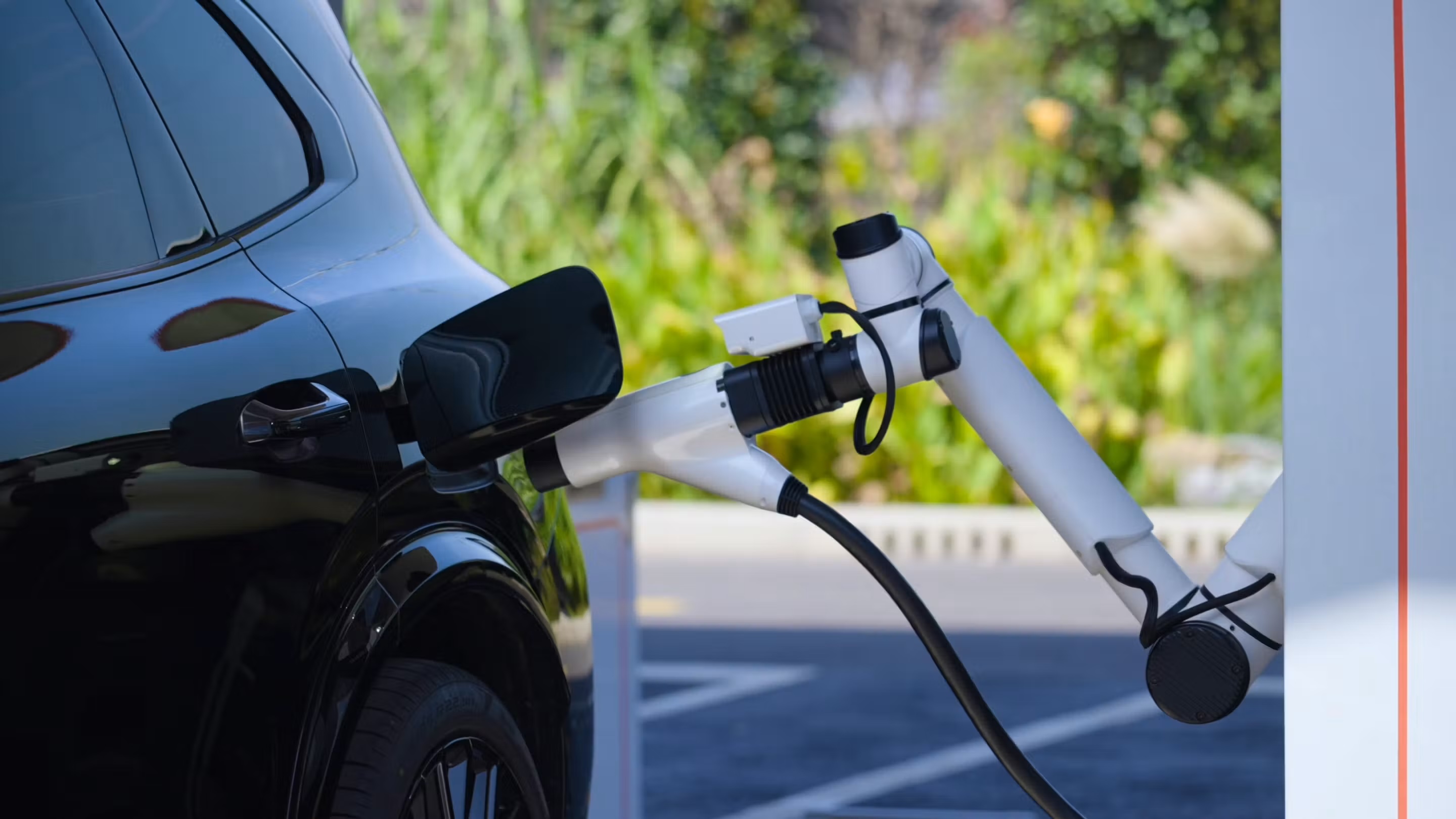
Hype merchants have a habit of overdoing it, but there’s no denying that China is making the US look more than a little antiquated when it comes to electric vehicles. Some of that is due to a deep integration of connected services and an extension of the car as part of the owner’s digital life—think additional infotainment screens and AI personal assistants, but with an Android phone-maker’s cadence of updates rather than that of a traditional car company. Other advances sound more appealing. China’s OEMs are in a battle over who can charge the fastest, and this week, Geely fired its latest salvo.
China might have a much younger driving culture than North America or Europe, but it has still been long enough to condition those drivers to how long it takes to fill a tank of gas. For all their many improvements over internal combustion engine vehicles—far greater efficiency, instant torque, very little NVH, more reliabiity, and so on—EVs do still take longer to recharge than it takes to refuel a car with a liquid.
At least until now, it seems.
Geely’s new battery can charge at up to 2.2 MW and will recharge from 10 to 70 percent in 4.5 minutes. A 10–98 percent charge takes 8 minutes and 40 seconds. Predictive thermal management is done through AI, with an average pack temperature of 55˚C and a peak temperature during charging of 65˚C, Geely said.
And while you might think pumping large amounts of energy into a battery quickly and repeatedly could harm its health, Geely says that, using AI, the system applies micro pulses of current to “reactivate lithium ions accumulated at the negative electrodes during repeated fast charging,” extending battery life by 20 percent. The pack has been tested in both the Zeekr 001 and Lynk and Co 10—maybe we’ll see a Volvo or Lotus use the same tech someday.
The numbers eclipse those from BYD, which debuted a new product in March that can charge from 10 to 70 percent in 5 minutes and 10 to 97 percent in 9 minutes. But CATL still looks like it’s on top; in April, it announced an LFP battery that can charge from 10 to 80 percent in 3 minutes 44 seconds, or from 10 to 98 percent in 6 minutes and 27 seconds.
In the US, the most powerful car chargers deliver a modest fraction of those megawatt outputs. All but the newest Tesla Superchargers top out at 250 kW and 400 V; in the 800 V world, Electrify America maxes out at 350 KW, IONNA’s new machines are rated for 400 kW, and ChargePoint has a 600 kW charger on the market.
Meanwhile, our electric vehicles lag in their charging speeds. Hyundai and Kia’s popular range of 800 V EVs (including the Ioniq 5 and EV6) will actually max out around 240 kW on an 800 V DC fast charger, and Porsche’s Taycan will only accept up to 320 kW, not all 350. The latest wave of 800 V German EVs like the BMW iX3 and Porsche Cayenne are now arriving with 400 kW DC charging capabilities.
Megawatt charging in the US is still the preserve of heavy-duty EVs—buses, semis, and the like; ChargePoint told Ars recently that “if you take two Express solos [its new 600 KW charger] and join them with a common DC bus, you now can deliver 1.2 megawatts through one port,” said ChargePoint CEO Rick Wilmer.
“Now, obviously, a NACS connector or a CCS1 connector won’t handle that much power, but an MCS connector will. So that’s all part of the roadmap for the Express architecture, with the Solo being the first product off that architecture,” he said.