The Russian official who called commercial satellites “legitimate targets” now says concerns are “unfounded.”
Four years ago, a senior official in Russia’s foreign ministry painted a bullseye on commercial satellite networks that assist Ukraine in its fight against invading Russian military forces.
On Wednesday, several days after a Russian military spacecraft moved within striking distance of one of those commercial satellites, the same Russian diplomat assured the world there’s no reason to worry.
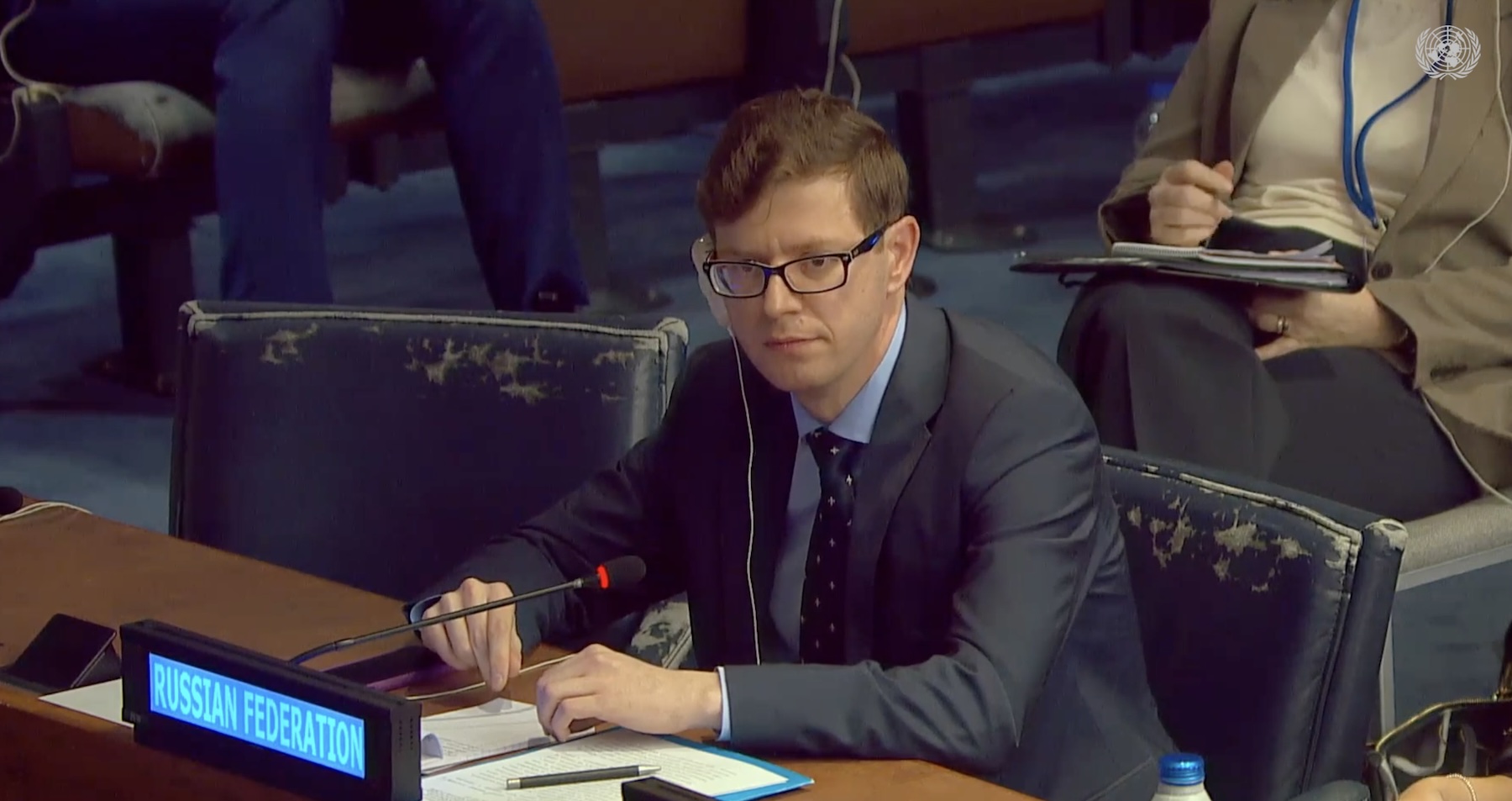
There’s a sharp incongruity in those statements from Konstantin Vorontsov, deputy head of Russia’s delegation to the United Nations. Vorontsov’s comments Wednesday in the UN General Assembly’s First Committee came moments after a US official called attention to recent maneuvers by Kosmos 2612, a Russian military craft that approached a US-registered commercial satellite some 340 miles (550 kilometers) above Earth.
“Just last weekend, Russia’s Ministry of Defense Kosmos 2612 exhibited threatening behavior by intentionally maneuvering dangerously close to a commercial satellite,” Brian Hardesty, a US State Department official, told the UN committee. “These behaviors appear consistent with an on-orbit weapons operation. The decision to conduct these activities was deliberately reckless and violated long-established safety thresholds in low-Earth orbit.”
Thomas DiNanno, the US Under Secretary of State for Arms Control and International Security, shared a similar statement on X. The comments were the first from the US government since the close encounter last weekend.
Vorontsov said the US government’s concerns, echoed by European officials, were “unfounded” distractions. “Western countries headed by the United States continue to use loudspeaker diplomacy repeating absurd accusations about Russia’s space activity.”
All Russian activity in space is “purely peaceful in character,” Vorontsov said. “This applies to the activity related to Kosmos 2612.”
There’s a history
Vorontsov’s statements in 2022 were more provocative. At that time, as Ukraine ramped up its reliance on commercial satellite communications and surveillance, Vorontsov said that commercial space infrastructure used by Ukraine’s military, including Western satellites, could be a “legitimate target for a retaliatory strike.”
It is no wonder, then, that the Russian military’s unprecedented maneuvers near one of those satellites raised alarms. Since its launch in April, Kosmos 2612 performed a series of carefully choreographed rocket burns to match orbits with ICEYE-X36, a radar surveillance satellite owned by the US subsidiary of the Finnish remote sensing company ICEYE.
These maneuvers follow several Russian tests in recent years of suspected anti-satellite (ASAT) weapons, including a system called Nivelir, which can fire a projectile at high speed to smash into another object in orbit. Russia’s co-orbital ASAT experiments date back to the Soviet era.
“Countries can, of course, deny until they are blue in the face that they have weapons in orbit, but observable and confirmable behaviors are hard to deny,” said Jessup Taylor, the US Deputy Permanent Representative to the Conference on Disarmament. “What you do up there speaks much louder than what you say down here.”
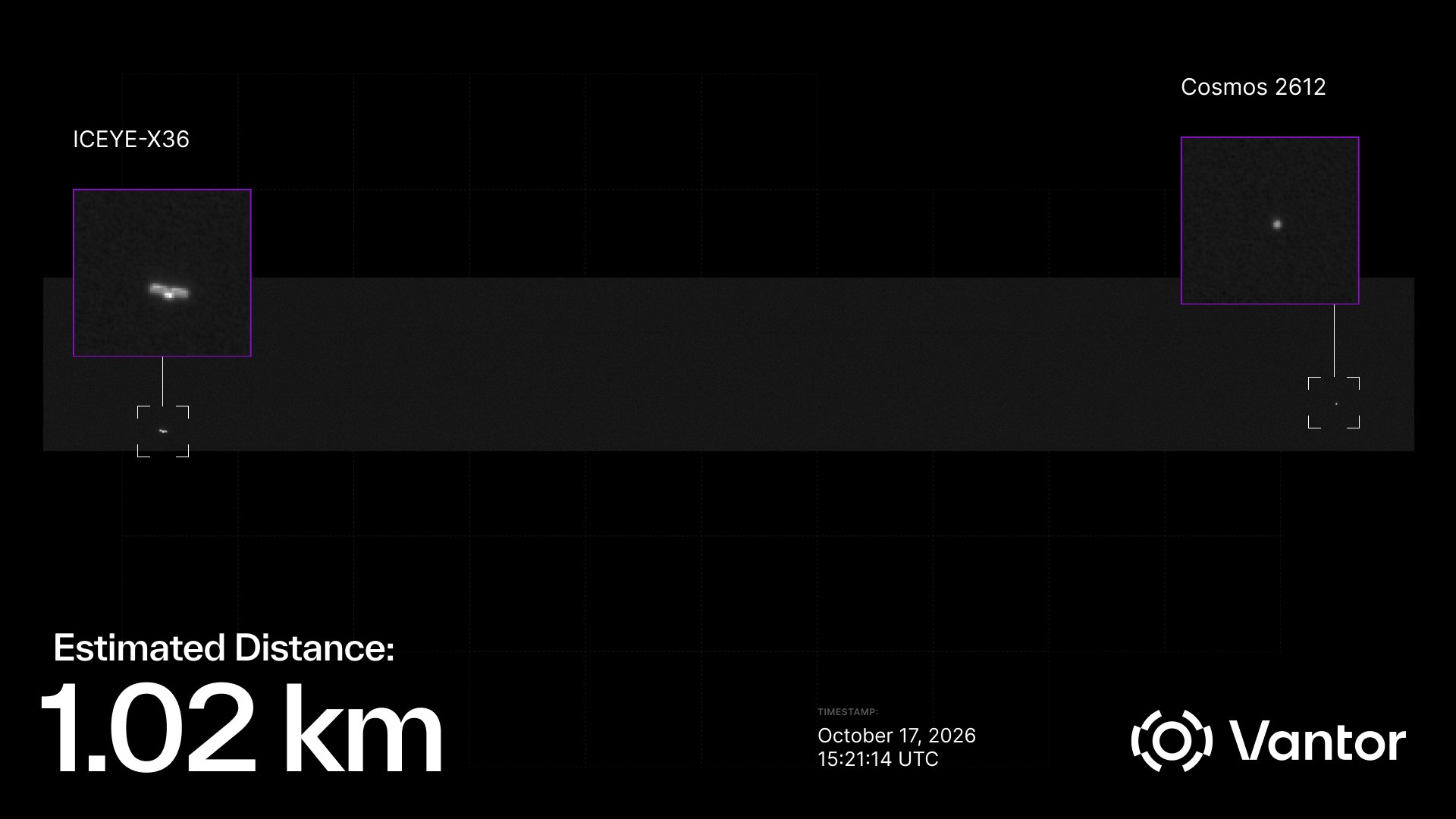
Last week, Kosmos 2612 moved closer and held position in “extreme proximity” to ICEYE-X36, according to orbital intelligence company LeoLabs. An executive at LeoLabs told Ars on Monday that Kosmos 2612 moved within 500 meters (about 1,640 feet) of the ICEYE satellite, and likely much closer. An image from Vantor, a satellite remote-sensing company, first published by Axios, showed the satellites about 1 kilometer apart on Saturday.
Taylor suggested Wednesday that Kosmos 2612 may have ultimately closed within a range of 100 feet. It’s hard to know for sure due to the limitations of satellite tracking.
“I would note that Russia did not attempt to explain why a Russian military satellite moved within tens of meters of another country’s commercial satellite,” Taylor said. “The decision to conduct operations violated long-established safety thresholds in low-Earth orbit.”
Kosmos 2612 backed off from ICEYE-X36 without firing a shot and is orbiting far away, although its trajectory does not preclude attempting another approach.
In September, Pentagon officials acknowledged for the first time that the US military possesses space-based weapons. Air Force Secretary Troy Meink announced the news, but he did not reveal any information about the weapons. The United States, Russia, China, and India previously tested ground-launched anti-satellite missiles, but the US government is the first to admit the placement of weapons in orbit.
Examples of China’s weapons testing in space include a 2021 demonstration of a Fractional Orbital Bombardment System, and demos of robotic arms and highly maneuverable satellites that could be used for servicing and repair or the inspection and capture of an adversary’s spacecraft.
Much of the discussion at the UN on Wednesday focused on proposals by Russia and China for an international agreement to ban the placement of any weapons in space. US officials say such proposals are moot because the world’s leading space powers already possess them. There’s also the thorny question of how to determine what constitutes a weapon in space, where ramming and jamming could be done by conventional technologies flying on many kinds of satellites.
Such blanket bans are “ineffectual and unrealistic,” Hardesty said. They would “inevitably be violated by its proponents while interfering with our ability to defend against those who would cheat on their obligations.”
Instead, US officials have underscored a tenet of the 1967 Outer Space Treaty, which bans weapons of mass destruction in orbit. In 2024, under the Biden administration, the United States proposed a resolution in the UN Security Council that would have reaffirmed the ban, two months after a US intelligence leak suggested Russia was developing a nuclear-armed anti-satellite weapon. Russia vetoed the UN resolution.
All of this is happening amid a slowdown in SpaceX’s Starlink or Starshield broadband service in Ukraine, affecting the country’s use of satellite connectivity to support drone operations. The decision to restrict Starlink service in Ukraine, whether directed by SpaceX or the US government, came after President Trump and Elon Musk criticized Ukraine for attacking Russian diesel refineries.
Satellites like the ICEYE platform, meanwhile, provide overhead imaging to support Ukraine’s efforts to target Russian battlefield forces and strike deeper into Russian territory.