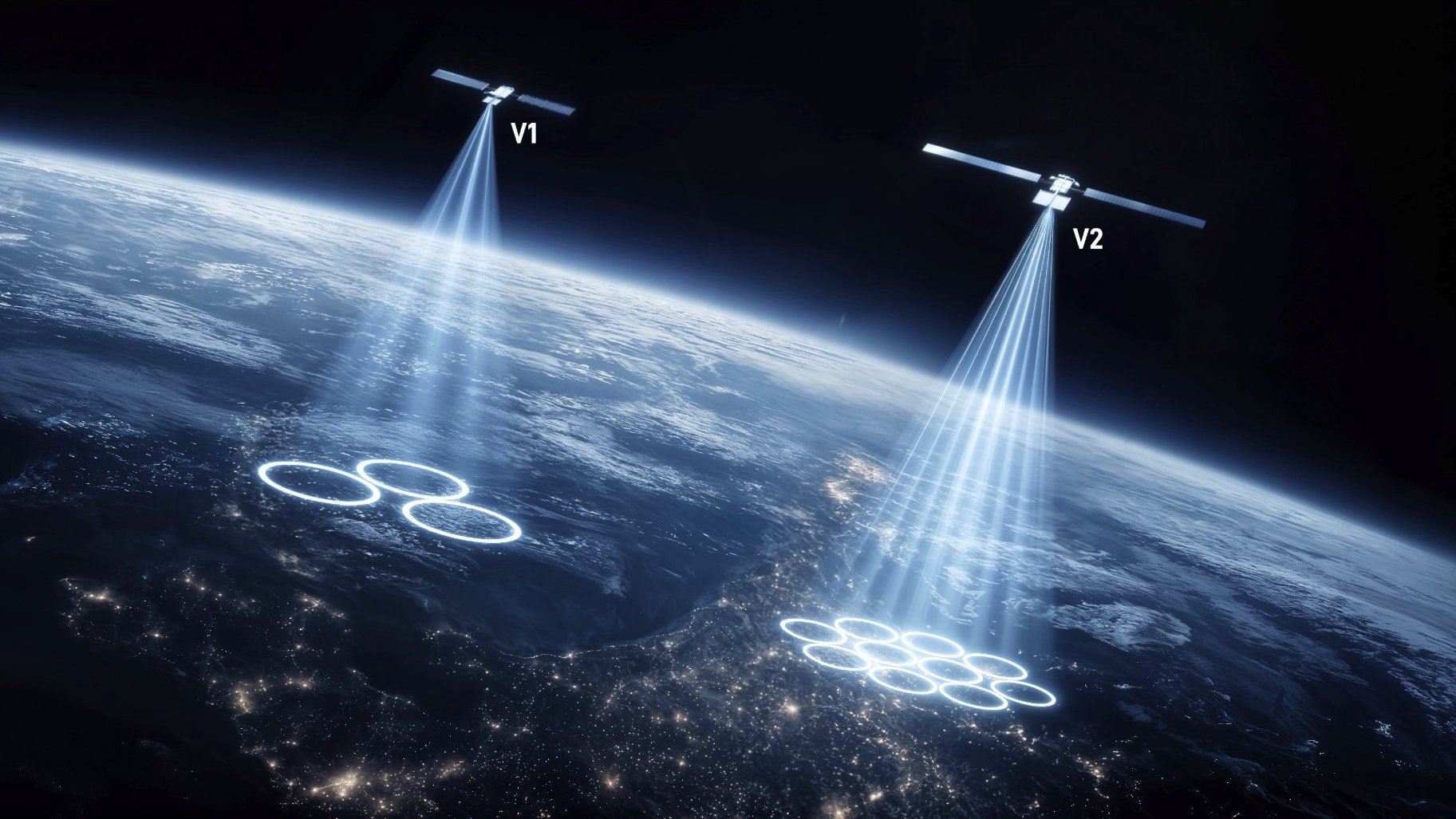
- Zelenskyy says China is passing Russia technology for a Starlink alternative that could give Moscow dominance in Ukraine's skies
- The system is Bureau 1440's Rassvet, which has launched 32 satellites against a 2026 plan of 156 and has lost at least one
- Kyiv has not publicly named any Chinese firms or shown evidence, and Beijing has previously rejected similar accusations even as Ukraine aims to push for US permission to use Starlink over Russia to hunt missile launchers
Ukrainian President Volodymyr Zelenskyy says China is giving Russia the technology to build its own version of Starlink and warns it could give Moscow a decisive edge in the skies over Ukraine.
Zelenskyy made the remarks to reporters in Pryluky, where a Russian cruise missile struck an apartment building on October 7 2026, killing 22 people, including five children.
He said he has been telling partners in the US and Europe that China is working on alternatives to Starlink. "They're getting closer. They're passing this on to Russia. Russia could end up dominating," he said, according to LIGA.net's translation.
A warning months in the making even if the impact so far is limited
This isn't a new narrative from Kyiv; In August, Zelenskyy said Russia was developing its own answer to Starlink with Chinese help and expected it to be ready by December 2026.
On September 30, Ukraine's acting ambassador in Washington, Denys Sienik, urged the US to sanction entities behind Russia's Rassvet satellite network, warning that a launch by year's end would let Russia "hit Ukrainian targets in real time on our territory," with Reuters describing those entities as Russian.
Three days later, Zelenskyy told the Financial Times he had asked Donald Trump several times, most recently on the sidelines of the UN General Assembly, to sanction the Russian and Chinese firms involved, saying Beijing "works on the possibility of helping Russia with a similar Starlink." On October 4, he went further, telling journalists that "the Chinese will share with Russia" relevant technology around the turn of the year.
The network at the center of all this is Rassvet ("Dawn"), built by Bureau 1440, a subsidiary of Russia's IKS Holding. Its first 16 production satellites launched in March, around three months late, and a second batch of 16 followed in July, for a total of 32 satellites so far.
Russia's federal rollout plan called for 156 satellites in 2026 and 292 by 2027, which means that with less than three months of the year left, Russia has launched roughly a fifth of this year's target.
The satellites that do exist have had a rough ride. Rassvet-3 No. 4 never raised its orbit and reentered the atmosphere on June 6; two satellites from the July batch showed no orbit-raising maneuvers, and none had reached the roughly 800 km target altitude by late August. Ukraine's military intelligence chief, Oleh Ivashchenko, says there are still too few satellites and their effectiveness is low, and his deputy, Vadym Skibitskyi, said Russia uses Rassvet "in a fragmented manner, only once the satellites pass over Ukrainian territory."
No Chinese firms named yet
Zelenskyy has not named a particular Chinese firm yet; if Beijing is helping, the clearest signs point to internal components, not a complete network. Bureau 1440 says it develops its satellites' key modules in-house, but experts interviewed by Ukrainian outlet Militarnyi said much of the core hardware is probably built from off-the-shelf Chinese parts. Other experts point to American and European parts reaching Russia through sanctions-evasion networks, as Euromaidan Press noted.
Russia's wider space industry does lean on China, though: leaked plans to expand Angara rocket production list only 57 Chinese machines out of 541, yet those make up 28.2% of the project's technological core.
One could argue that this is inevitable given both the US's technological dominance in the field and China's stranglehold on the market as a secondary seller to both price-conscious and sanctioned buyers, even as Russia qualifies on both grounds.
The real reason for Zelenskyy pushing is somewhat transparent: Kyiv wants Starlink over Russia to help target infrastructure and military targets alike as the war has spilled onto the former, even as the latter has considerably hardened its defenses of late.
Zelenskyy wants Ukrainian drones to be able to use Starlink to hunt ballistic missile launchers and drone launch sites up to 200 km inside Russia, and says Trump backs the idea but has left the decision to Elon Musk. The pressure here is also tied to air defense. By Zelenskyy's count, Ukraine received 675 Patriot missiles in 2023, 364 in 2025, and 264 so far in 2026.
The slowdown is seen as a mix of Trump's deteriorating relations with the Ukrainian premier, coupled with a shortage of interceptors spurred by an ongoing on-again, off-again conflict between the US and Iran. It also means that Ukraine is hedging its bets rather than simply depending on US help.
Ukrainian firm Stetman plans a 360-satellite constellation built by Denmark's GomSpace and launched by SpaceX from 2027, though only a test satellite launch had been agreed when that plan was reported, and Zelenskyy said in Pryluky that European projects aren't yet close to what Ukraine needs.
None of this makes the warning empty, because Rassvet is real and its coverage is growing. But the strongest version of the claim, that Chinese technology will hand Moscow control of Ukraine's skies within months, runs north of the established public record.
For now, China's role is asserted without named companies, and the constellation sits at roughly a fifth of its 2026 target. Whether Washington moves on sanctions, or on Starlink access over Russia, before that launch schedule catches up may matter more than the rhetoric that has been ongoing for a long time.
This is even as Ukraine vies for more support at a time when Donald Trump has just clinched an expanding deal with Russia for diesel in what many feel is a somewhat desperate bid to save Republican polling numbers as midterms loom next month.

Rahim Amir is a UAE-based tech writer who enjoys building PCs as much as he enjoys writing about them. He has been professionally writing about PC hardware since 2023, focusing on buyer’s guides, hardware reviews, and sponsored content and features related to tech.
Having built hundreds of gaming PCs and being an avid gamer in his spare time, Rahim tends to have stronger opinions about hardware than most. This is particularly on display when he gets his way with powerful, but minimalistic RGB builds even as Small Form Factor (SFF) PCs come a close second.