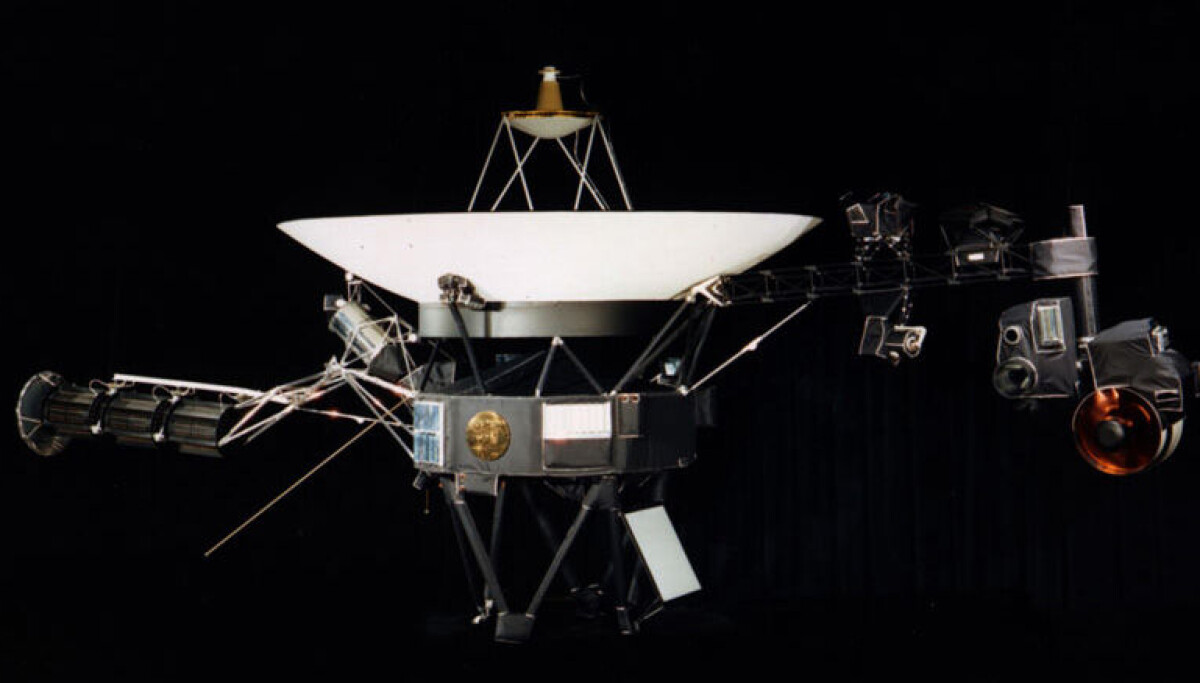
Voyager 1 gave controllers the silent treatment for a few days this month before resuming communication weeks before the spacecraft reaches the one-light-day milestone.
The incident happened on October 18: NASA's Deep Space Network (DSN) couldn't detect a signal from the probe. On October 19, on the next scheduled communication attempt, there was still nothing. Was this it? Had the decades-long galactic venture finally ended?
Things are operating on a knife's edge for the two veteran spacecraft, which will reach their half-century next year. Voyager 2 suffered an antenna pointing issue in 2023, and a low power condition caused Voyager 1 to unexpectedly turn off one of its two radio transmitters.
The good news is that on October 20, the signal reappeared, leaving engineers wondering why Voyager 1 temporarily went silent.
Thus far, it seems a group of thrusters went offline and their backups were turned on. This could indicate onboard computers detected a problem and put the spacecraft into a safe mode.
Kareem Badaruddin, Voyager mission manager at NASA's Jet Propulsion Laboratory, said: "This is the first time we've seen the spacecraft do something like this, but we are also at a point in the mission where we have to expect the unexpected.
"We're relieved to be back in contact with Voyager 1 and are eager to understand what happened."
spoke to Badaruddin in 2024, where he described the challenges of working with the veteran spacecraft, but he reckoned the work was the "best job at JPL."
The twin Voyager spacecraft have recently been through a procedure dubbed the "Big Bang," where controllers turned off onboard devices and switched to lower power alternatives. The result will extend the lifetime of the spacecraft by a few more years and postpone further instrument deactivation. It was completed first on Voyager 2, and then Voyager 1, six weeks later in September.
However, the brief lapse in communication highlights that despite the ingenuity of the team that keep the spacecraft running, the project must eventually come to an end. In 2026, Suzanne Dodd, Project Manager for the Voyager project, told what the end would look like.
She said, "We're just going to one day not hear the signal from the DSN, and we're going to rush around and make sure that it's not something on the ground."
Months of listening will follow, before engineers throw in the towel and declare the mission over. And then? Maybe a farewell message sent to the last known location.
Thankfully, in this case, the signal returned, so no need for a goodbye transmission just yet.
In a few weeks, Voyager 1 will be so far away that it will take a full 24 hours for commands to reach it and another 24 hours for a response to reach Earth.
Communications blip notwithstanding, there is every chance both Voyager spacecraft will still be operational as they pass their half-century milestone next year and, technology and funding permitting, continue sending data to Earth for a good few years yet. ®