Why do people speak Germanic languages such as English in England and Swedish in Sweden, but Celtic languages in Ireland, Wales and Brittany? The dispersal of languages is one of the enigmas of European prehistory.
Two new studies in Nature, which we took part in, show how DNA from several thousand ancient individuals helps us solve this riddle.
As early as the 17th century, scholars noticed striking similarities between the European languages. English , Swedish , Irish , Latin and Greek do not resemble each other by coincidence. Today, we know that these languages, together with Baltic, Slavic, Indic and Iranian, evolved from a common ancestor: Proto-Indo-European.
But how did this ancestral language come to be spoken so widely across Eurasia? During the 19th and 20th centuries, a wide variety of theories were developed about its origin. One of these placed its homeland on the vast grassy steppes north of the Black and Caspian Seas around 5,000 years ago.
Subsequent migrations by the pastoral nomads of the Yamnaya culture are thought to have spread the ancestral language across Europe and Asia.
The occurrence of such a migration, inferred from archaeology, was debated for over a century with the answer seemingly lost to time. However, thanks to ancient DNA, we now know that large groups of people migrated from the Eastern European steppes to Europe around 5,000 years ago, providing compelling support for the spread of Indo-European languages from that region.
Today, the spread of Indo-European languages from the Steppes is accepted by most historical linguists. Yet several questions remain: how did the individual Indo-European languages subsequently spread to their historically known locations?
As part of an international collaboration, led by researchers from the University of Copenhagen in Denmark and Leiden University in the Netherlands, we analysed the DNA of thousands of prehistoric Europeans, including more than 700 newly sequenced individuals. This allowed us to test, for the first time, specific theories on the prehistoric dispersals of the Germanic and Celtic languages.
The first Germanic speakers in Northern Europe?
It has long been assumed that the earliest form of Germanic arrived in Scandinavia with the first Steppe migrants around 4,800 years ago. This event would then have been followed by several millennia of linguistic and genetic continuity.
Our analyses yielded a surprisingly different result. Around 4,000 years ago, a second group with Steppe ancestry appeared in Eastern Scandinavia, probably arriving from across the Baltic Sea.
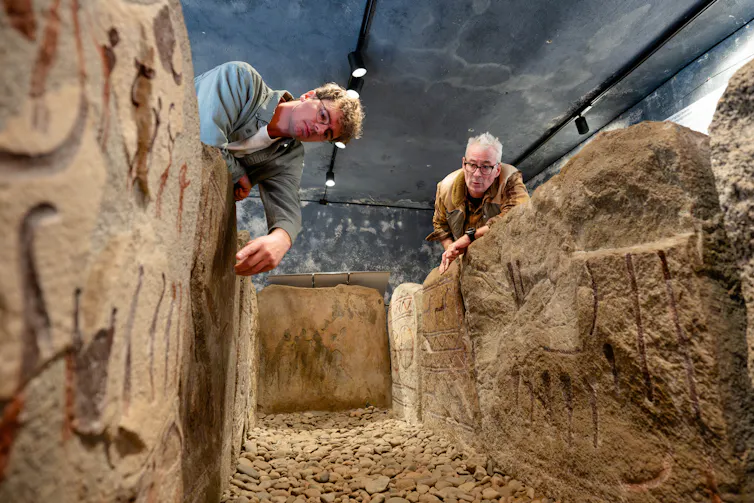
This previously unknown population spread across much of Scandinavia, ultimately matching the region where the ancestral form of Germanic is believed to have been spoken during the first millennium BC.
This distribution, combined with their ancestry persisting in most later Germanic-speaking populations, suggests these newcomers may have introduced the precursor of the Germanic languages, some 800 years later than traditionally assumed. In this scenario, the timeline for the language history of Northern Europe is reset.
Anglo-Saxons and Vikings share a surprising past
Our understanding of the regions where specific Germanic languages were spoken suddenly comes into focus around 2,000 years ago. At this point, writing spread to northern Europe in the form of the runic alphabet, allowing us to compare migrations with the spread of the Germanic languages we still know today.
By around 2,000 years ago, people from Scandinavia began spreading south, into present-day Poland, Germany and the Netherlands. During the Migration Period, beginning around 400 AD, related populations from around northern Germany subsequently dispersed across Europe. Among them were the West Germanic-speaking Anglo-Saxons, who settled in England and the Langobards, who ultimately established a kingdom in Italy.
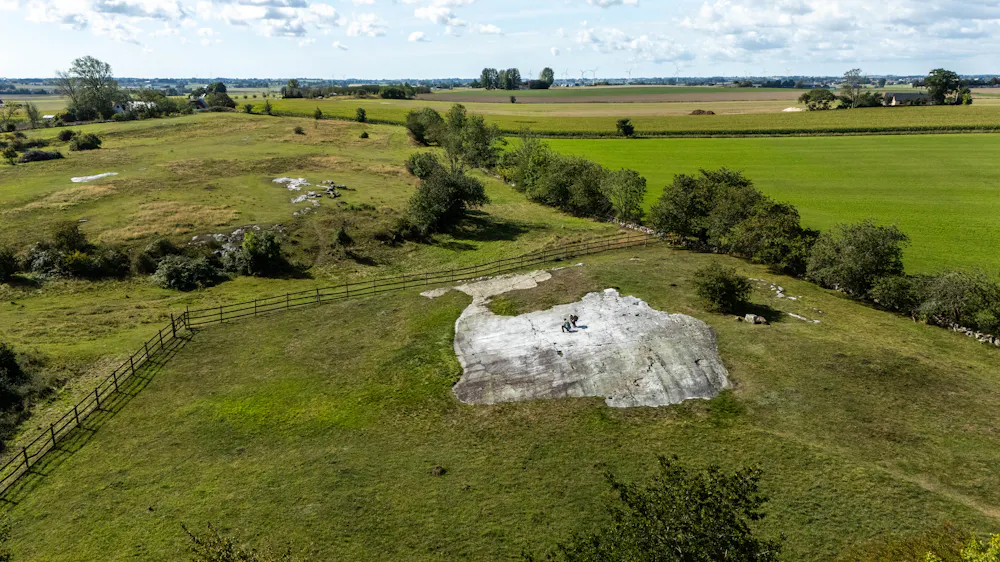
But we also discovered a migration in the opposite direction. People from northern Germany and southern Jutland, still largely descending from Eastern Scandinavians, moved back into Denmark and southern Sweden. Intriguingly, they were closely related to the ancestors of the Anglo-Saxons who migrated to England, which may help explain similar art styles and cultural elements between the regions.
This migration coincided with major cultural changes in Southern Scandinavia, the emergence of new political centers and the earliest stages in the development of Old Norse, the language of the Vikings.
Norway, however, tells a different story. Despite remaining largely unaffected by this migration, pre-Viking Age Norwegians still participated in the linguistic changes that gave rise to Old Norse.
This suggests that linguistic changes spread not only through migration, but also through cultural contact between closely related Scandinavian communities.
A new perspective on the origins of Celtic
Before the spread of Germanic and the expansion of the Roman Empire, Celtic languages were spoken across much of Europe, from Spain and France to southern Germany and the Balkans. Today, they survive mainly along the Atlantic coast, particularly in Ireland, Wales and Brittany.
The origins of the Celtic languages have also long been debated. Some scholars propose that they emerged along the Atlantic and subsequently spread eastwards. Others place their origins in Central Europe, in the context of the Bronze Age Urnfield and successive Iron Age Hallstatt and La Tène cultures.

Our genetic analyses provide the strongest support for the latter scenario. Between 3,200 and 2,800 years ago, ancestry associated with populations of the Urnfield culture expanded westward into France and Great Britain, eventually reaching northeastern Spain. This closely matches the model for the spread of Celtic from central Europe.
However, an earlier Atlantic migration from southwestern Europe into Britain, around 3,800 years ago, offers partial support for theories proposing western Celtic origins, indicating the process was potentially more complex.
Ancient DNA cannot reveal the language or languages a particular individual spoke. But by comparing prehistoric population movements with archaeological and linguistic evidence, we can increasingly test competing theories about how languages spread.
Our studies reveal a complex European past in which populations, cultures and languages develop through repeated migrations, contact and mixture. Thanks to ancient DNA, we can now reconstruct that history with unprecedented precision.