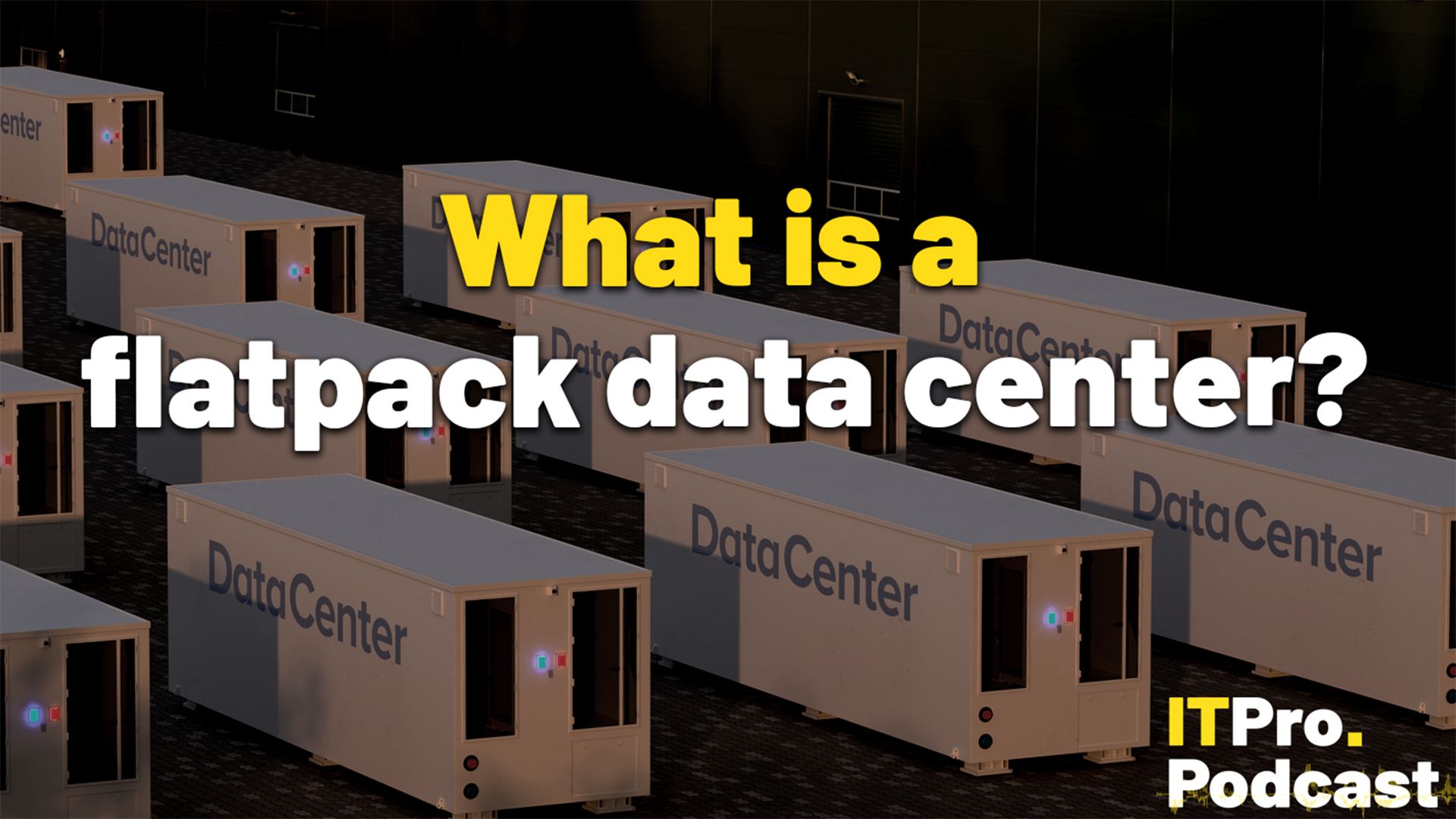
As data centers are rapidly constructed around the world, people are inevitably beginning to question their sustainability and the impact they have on the communities that surround them.
From an enterprise perspective, there is even more to wrestle with. Data centers are long-term investments that need upgrades and maintenance to continue operating. Is there a cheaper and more environmentally friendly way to do this?
Chris Carreiro, the CTO of global IT infrastructure services firm Park Place Technologies, joins Jane and Bobby to discuss the pros and cons of flatpack data centers and how modular computing can help enterprises scale up.
"These are now purpose-built for higher workloads – a few years ago we were building data centers for 5 and 10 kW cabinets; every rack was about 10KW – now we're going into the 40-40 kW on a regular build, and an AI facility, AI factory, is demanding 100 kW per rack now."
"A traditional data center, two years of trucks and construction carry us forward into maybe 5 to 7 years down the road without adding additional cooling capacity or additional pieces. So I think there is a little bit of runway for some of those systems. But as far as upgrading, if the design is chasing the 500 kW cabinet that Nvidia is talking about, as long as there is space for those types of cooling elements, you would be able to leverage just upgrading a few components inside of a facility."
Sign up today and you will receive a free copy of our Future Focus 2026 report - the leading resource for IT decision-maker insight on priorities and investment areas in AI, security and more.