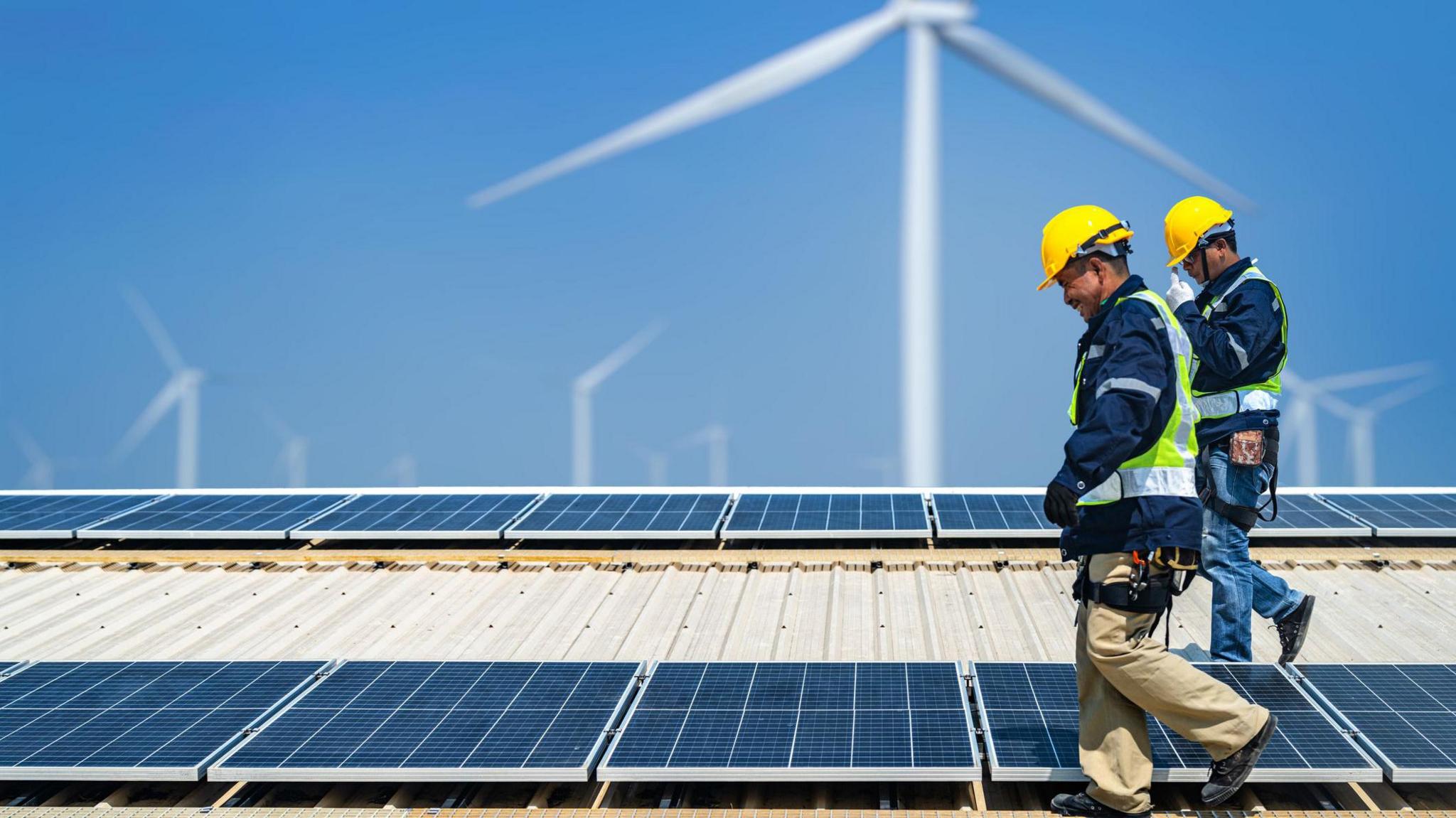
Achieving "net zero" is the world's key strategy to fight climate change, which is already having serious consequences for people and nature around the globe.
But the political consensus around the UK's net zero policies has collapsed, with the Conservative and Reform parties now branding them too difficult and expensive.
What does 'net zero' mean?
Net zero means balancing the amount of planet-warming "greenhouse" gases produced by human activities with the amount being actively removed from the atmosphere.
Effectively this means no longer adding to the total amount of these gases in the atmosphere to limit climate change.
Greenhouse gases include carbon dioxide (CO2) and methane. Their levels in the atmosphere are increasing rapidly due to human activities, including burning fossil fuels, chopping down forests and farming.
In practice, reducing these emissions means switching from coal, oil and gas to cleaner energy sources like wind and solar power.
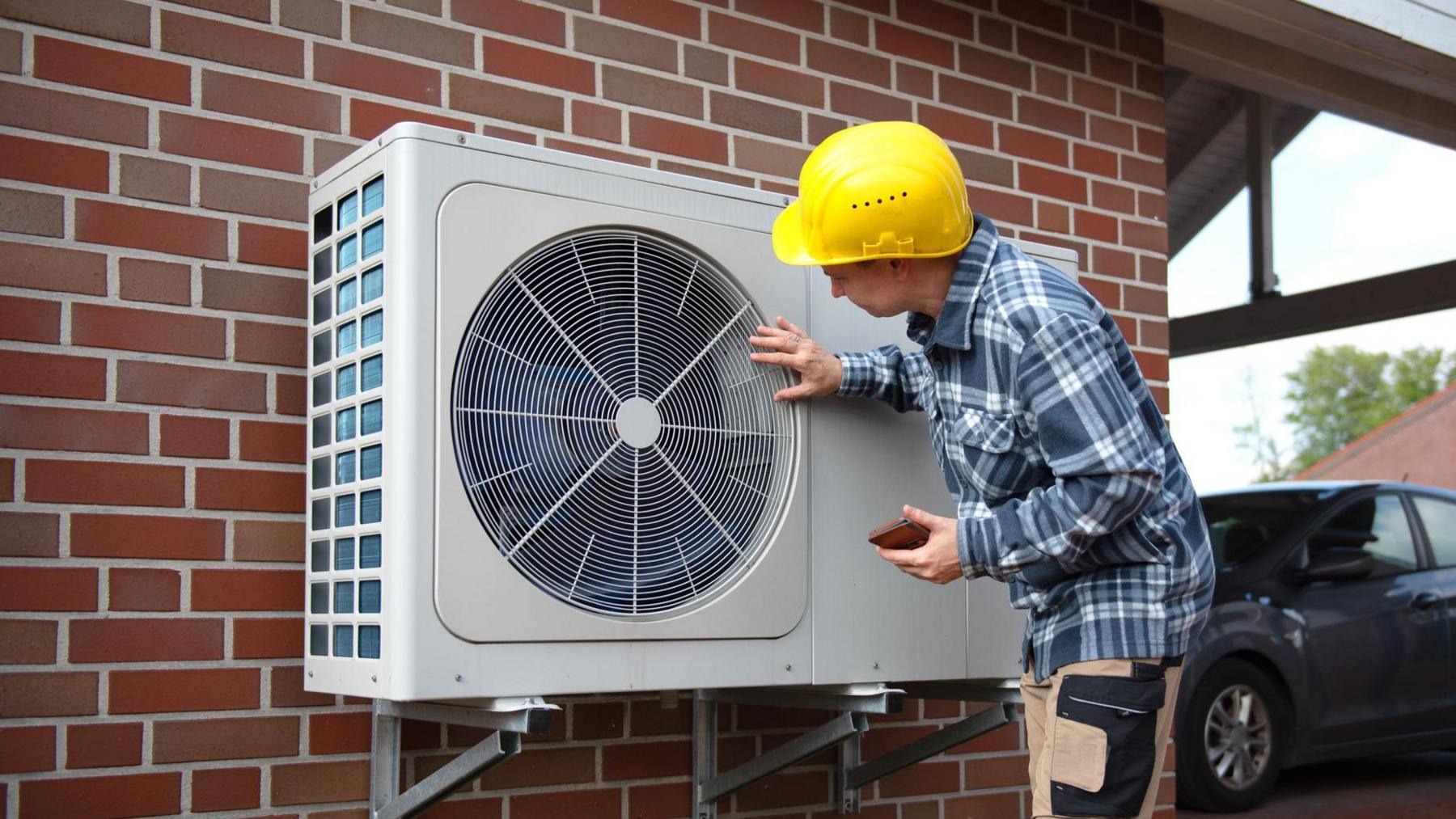
It also involves adopting green technologies like electric vehicles and heat pumps to replace petrol or diesel cars and gas boilers.
But not all emissions can be eliminated.
So remaining emissions must be matched by things like planting trees, restoring peatlands or using machines to remove CO2 from the air.
But there are limits to these "carbon removal" techniques in scale and cost. That is why most of the focus is on drastically reducing emissions in the first place.
Why are net zero targets needed?
The world is warming because of humanity's greenhouse gas emissions, which increase global temperatures by trapping extra energy in the atmosphere near the Earth's surface.
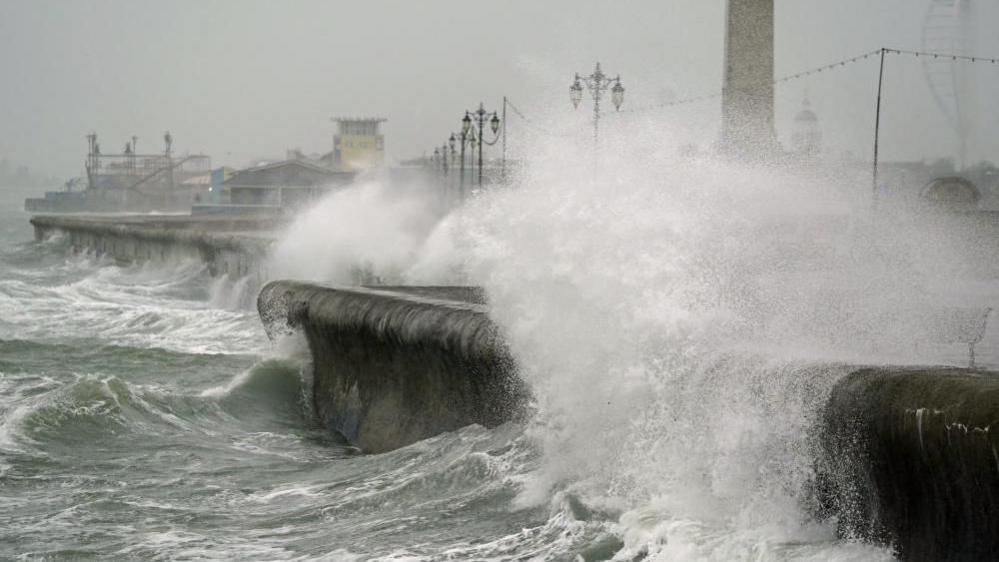
This is bringing more heatwaves and extreme weather as well as melting ice sheets and raising sea levels.
In 2026, the UK experienced its hottest summer on record, which the Met Office said was made 130 times more likely by climate change.
Aiming to avoid the worst of these impacts, nearly 200 countries signed the landmark 2015 Paris Agreement. A target was set to reach net zero globally in the second half of the century.
Around 140 countries have their own net zero targets, covering roughly three-quarters of global emissions and 80% of the world's population.
It's widely accepted that richer nations will need to get to net zero before poorer ones, which often have fewer resources to switch to cleaner technologies and have contributed less to climate change historically.
What is the UK doing to reach net zero?
The UK's greenhouse gas emissions have fallen sharply: in 2025 they were 54% lower than in 1990, according to provisional data.
This figure only includes emissions generated within the UK and not from products manufactured abroad and imported.
Successive UK governments have pledged to reach net zero by 2050 and the target was written into law in 2019.
To help achieve this, the current Labour government has committed to:
These policies began to be implemented under Sir Keir Starmer's government and have continued to be pursued by Prime Minister Andy Burnham.
However, recent decisions have led some environmentalists to question whether the government can still meet its targets:
In June, the government's independent adviser, the Climate Change Committee (CCC), warned that the UK was "not moving fast enough" towards net zero.
However, the Chancellor, John Healey, said in his autumn budget speech that the government remained "unshakably committed" to the goal.
Where do UK parties stand on net zero?
When former Conservative Prime Minister Theresa May signed the UK's 2050 net zero target into law in 2019, it passed through parliament with the support of all major parties.
But that political consensus has since fragmented. The term "net zero" is often used by critics to attack environmental targets, which they claim are being put ahead of economic goals.
Labour Prime Minister Andy Burnham has said he is "determined" to meet the 2050 deadline, a policy also backed by the Liberal Democrats.
Meanwhile, the Green Party wants net zero "as soon as possible, and more than a decade ahead of 2050".
These parties argue that it's in the UK's economic interest to move away from fossil fuels, which can be volatile in price. Supplies can also be interrupted by international events like the US-Israel war on Iran.
They argue that, in isolation, the UK's efforts make little difference to climate change, not least because UK emissions are much smaller than those of countries like China and the US.
The SNP has targeted net zero by 2045 for Scotland, while Plaid Cymru has introduced a 2040 deadline in Wales.
What will net zero cost the UK?
There is no single path to net zero, which means there is no fixed price.
But the Climate Change Committee says the policy will require tens of billions of pounds a year by the end of the 2020s, most of which it expects to come from the private sector rather than government spending.
By the early 2040s, the CCC calculates that the savings from moving away from fossil fuels to cleaner, more efficient technologies should outweigh the costs.
Multiple studies have found that, globally, the economic cost of tackling climate change is much smaller than letting warming continue unchecked, which would result in widespread and increasing climate hazards.
However, as with any transition, the costs and benefits can be unequally felt. For example, while there is huge potential for new clean energy jobs, those employed in the oil and gas industry are likely to be negatively affected.

Sign up for our Future Earth newsletter to keep up with the latest climate and environment stories with the BBC's Justin Rowlatt. Outside the UK? Sign up to our international newsletter here.