A Bluetooth adapter may be all you need for wireless audio, while a CarPlay or Android Auto display can give an older dashboard a much bigger update.
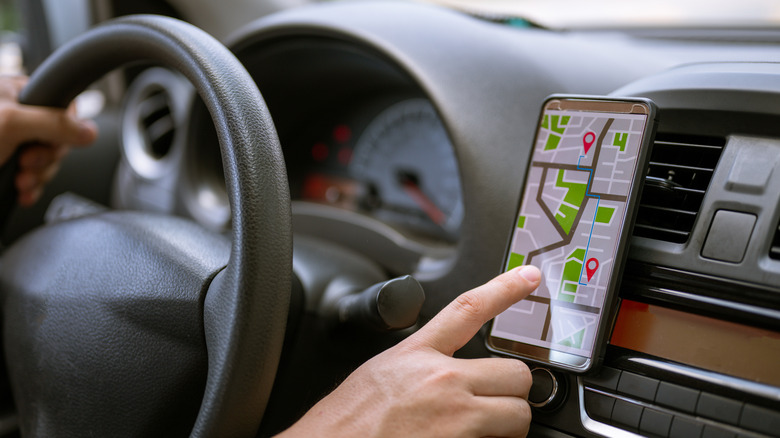
An older car doesn't need a completely new sound system just because it was built before Bluetooth, CarPlay and Android Auto became common. If the radio and speakers still sound fine, you may only need a small adapter to enjoy music from your phone. Plus, a portable dashboard display can add navigation and other phone controls without replacing the factory stereo.
The right upgrade depends on what's missing. If you just want wireless music or podcasts, start with the connection between your phone and the stereo. If you want maps, calls and messages on a screen, a portable CarPlay or Android Auto display is a bigger step. Replacing the head unit (the stereo built into the dashboard) makes more sense when you want those features permanently installed.
Sound quality is a separate issue. If your phone already connects the way you want but the system sounds weak, distorted or short on bass, the better investment is likely speakers, an amplifier or a subwoofer instead.
Start with the simplest way to get your phone connected
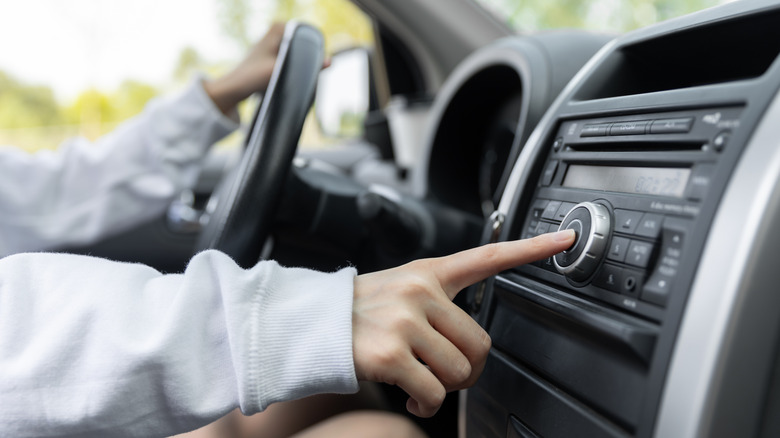
If your car stereo has a 3.5mm AUX input, usually a small round socket labeled AUX or AUX IN, then a Bluetooth receiver is likely the simplest upgrade. Your phone connects to the receiver over Bluetooth, and the receiver sends the sound through the car's existing AUX input. You keep the original radio and speakers, and there's no need to take the dashboard apart.
Cars without AUX can use a Bluetooth FM transmitter. These usually plug into the car's 12-volt socket ("cigarette lighter"), connect to your phone over Bluetooth and then send the audio over an unused FM frequency. You tune the car radio to the same frequency to hear it. The downside is interference: if you drive near a radio station that uses that part of the dial, you'll need to choose another frequency. This is a particular concern if you often drive long distances.
AUX avoids that extra FM step, so an AUX Bluetooth receiver is the simpler option if your car supports one. But if all you want is music streaming, podcasts or other phone audio through an old radio, either option can solve the problem without replacing the sound system.
Add a screen if you want CarPlay or Android Auto
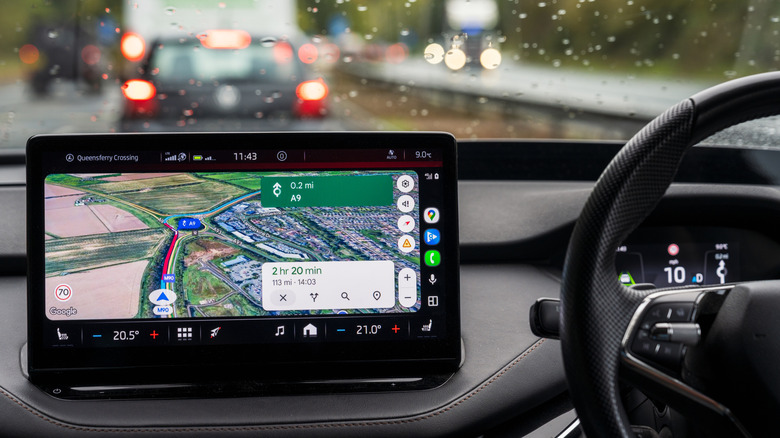
If you want more than wireless audio, a portable CarPlay display can add a touch screen without replacing the factory radio, and many similar displays also support Android Auto. These are separate screens that mount on the dashboard or windshield, much like a standalone GPS unit. Your phone connects to the display, which can show maps, music, calls and messages. Depending on the model, its audio can then play through the car's existing speakers using AUX, FM or another supported connection.
One accessory won't help with an older, non-smart radio: the small USB adapters sold for wireless CarPlay or Android Auto. A wireless Android Auto adapter only works with a car that already supports wired Android Auto. It can't add the platform to a stereo that never had it. The same limitation applies to wireless CarPlay adapters, as noted in our our CarlinKit 5 review.
A permanent approach is replacing the factory stereo itself. This part of the car is often called the head unit. An aftermarket head unit takes its place in the dashboard and can add features such as a touchscreen, Bluetooth, CarPlay and Android Auto in one built-in system. The catch is that the original stereo may do more than play audio. In some cars, it's also connected to steering-wheel buttons, backup camera, factory amplifier or vehicle settings. Keeping those features working can require vehicle-specific wiring harnesses or interface adapters, so be sure to check compatibility before buying a replacement. You might need a professional to do the swap properly.
If your car already has the connectivity you want, none of those upgrades will fix mediocre audio. Better speakers can improve clarity, an amplifier can give compatible speakers more clean power and a subwoofer handles deeper bass. There are also ways to improve CarPlay's audio quality, some of which work for all the above methods.
There's no single upgrade order that works for every car. Start with the problem you can actually hear or the feature you're missing, rather than replacing components simply because they're older.