Most children who are infected with SARS-COV2, the virus that causes COVID, experience only mild symptoms or no symptoms at all. But a small proportion develop severe illness which can sometimes even require hospital care.
The reason why only some children develop severe illness hasn’t been clear until now. But our latest study provides new insights into the immune responses associated with severe respiratory infections such as COVID.
Our study analysed blood gene expression profiles from 333 South African children with similar genetic backgrounds. A gene expression profile measures the activity of thousands of genes simultaneously. Analysing them can tell us whether some genes have been switched “on” or “off” in response to an infection.
Of these children, 127 were considered healthy, 71 had mild or asymptomatic COVID, 41 were hospitalised with severe COVID, 47 were hospitalised with a respiratory syncytial virus (RSV) infection and 47 had pulmonary tuberculosis. Only children who were exposed to a single respiratory infection were included. We also adjusted our analyses for age.
Our study identified thousands of genes that behaved differently in children with severe COVID and other respiratory infections compared with healthy controls.
More than 5,000 genes showed altered activity in the children who were experiencing a severe respiratory infection. Many of these genes were involved in immune responses.
For instance, children with severe respiratory infections exhibited stronger neutrophil responses. Neutrophils are a type of immune cell that form part of the body’s rapid, first-line of defence against infections.
Similarly, interferon-gamma signalling, which is a critical pathway that helps coordinate immune responses to pathogens, was switched “on”.
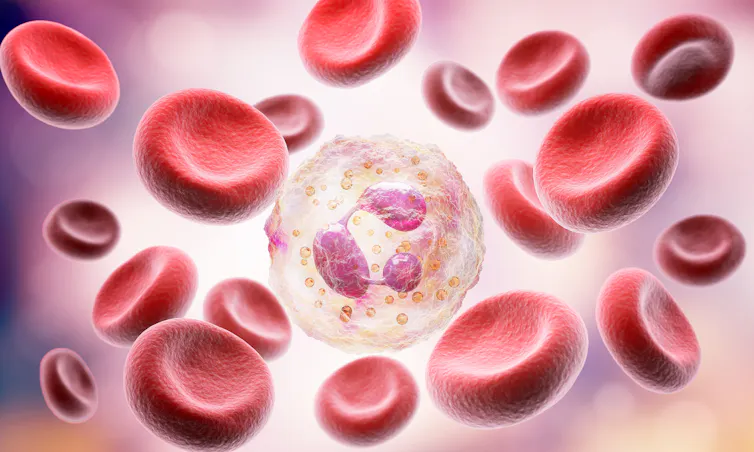
Interestingly, our study also found significant differences in the types of immune cells that children with severe respiratory infections had circulating in their blood. Those experiencing severe infections had significantly higher proportions of macrophages – the body’s innate immune cells. But they also had lower proportions of T cells – immune cells that coordinate overall immune response.
These changes were not seen in children with mild or asymptomatic COVID or in healthy children.
One of the most interesting findings was that some immune responses were shared across COVID, RSV and pulmonary tuberculosis. We identified a total of seven types of immune cells that showed similar patterns of activity across these different respiratory illnesses. This suggests that children may activate common defence mechanisms when faced with severe lung infections.
At the same time, other gene expression patterns appeared to be unique to particular infections. This highlights important biological differences between diseases. Identifying responses that may help distinguish different respiratory infections would be useful, as different infections require different therapies.
The study also identified 82 genes that could help distinguish a severe COVID infection from a mild or asymptomatic one. This raises the possibility that we could use gene expression signatures – which provide a snapshot of which genes are activated at a given time – to predict which children are most at risk of developing severe disease.
Childhood immune responses
Children with respiratory infections often arrive at hospital with very similar symptoms. Yet the biological processes driving these illnesses can be quite different.
By comparing healthy children against children infected with common respiratory infections, we’re beginning to identify both the shared and unique features of childhood immune responses. Understanding these differences could eventually improve how doctors diagnose infections, monitor diseases and tailor treatments.
Some of the genes highlighted in this study may also become important targets for future research. They may be particularly useful for those studying whether the severity of a disease can be predicted, or when developing new therapies for serious infectious diseases.
Although these findings are promising, they represent an important discovery stage rather than a clinical breakthrough. Before these genes can be used to identify children at risk of experiencing severe disease, they must be tested in larger groups of children.