Plus invisible tattoos, medieval skeleton gets an ID, trapping a single antimatter particle, and more.

It’s a regrettable reality that there is never enough time to cover all the interesting scientific stories we come across. So every month, we highlight a handful of the best stories that nearly slipped through the cracks. October’s list includes an epigenetic mechanism for why large dogs age faster than smaller ones; physicists who trapped a single particle of antimatter for months; and invisible tattoo inks that only show up under UV light.
Why large dogs age faster
In many mammalian species, larger creatures tend to have longer lifespans. Mice, for instance, live an average of just two years, while some whales can last for as long as 200 years. Dogs, however, buck this pattern; larger dogs tend to age faster and die younger than smaller ones, which makes canines an ideal model for biologists to study to learn more about aging in general. Arizona State University scientists report that these lifespan differences seem to be due to so-called “jumping genes,” according to a paper published in the journal Science.
The authors used data from 864 dogs collected in the Dog Aging Project to map patterns of DNA methylation (which influences how much certain genes are turned on or off) across the entire genome. It’s part of the epigenome, whose markers can change over time in response to stress and other environmental factors. Genetic sequences, by contrast, are largely fixed. So DNA methylation is a good chemical indicator of aging and DNA regulation.
Their analysis showed that aging in dogs is linked to the decrease in the regulation provided by DNA methylation, particularly in regions where there are “jumping genes” that can move from chromosome to chromosome. These jumps can damage DNA, causing cancer and other age-related diseases, and their activity increases with the loss of regulatory markers. The authors identified a specific class of jumping genes called LINE1s that were responsible for the different rates of aging in dogs. Giant dog breeds lost roughly 35 percent more LINE1 methylation each year compared to small breeds.
“This is one of the clearest molecular signatures we’ve seen that aligns with the well-known size-lifespan trade-off in dogs,” said co-author Blaise Mariner. “It suggests that faster aging in larger dogs may be driven, at least in part, by reduced control over these jumping genes.”
Science, 2026. DOI: 10.1126/science.aeb2986 (About DOIs).
Trapping an antimatter particle for months

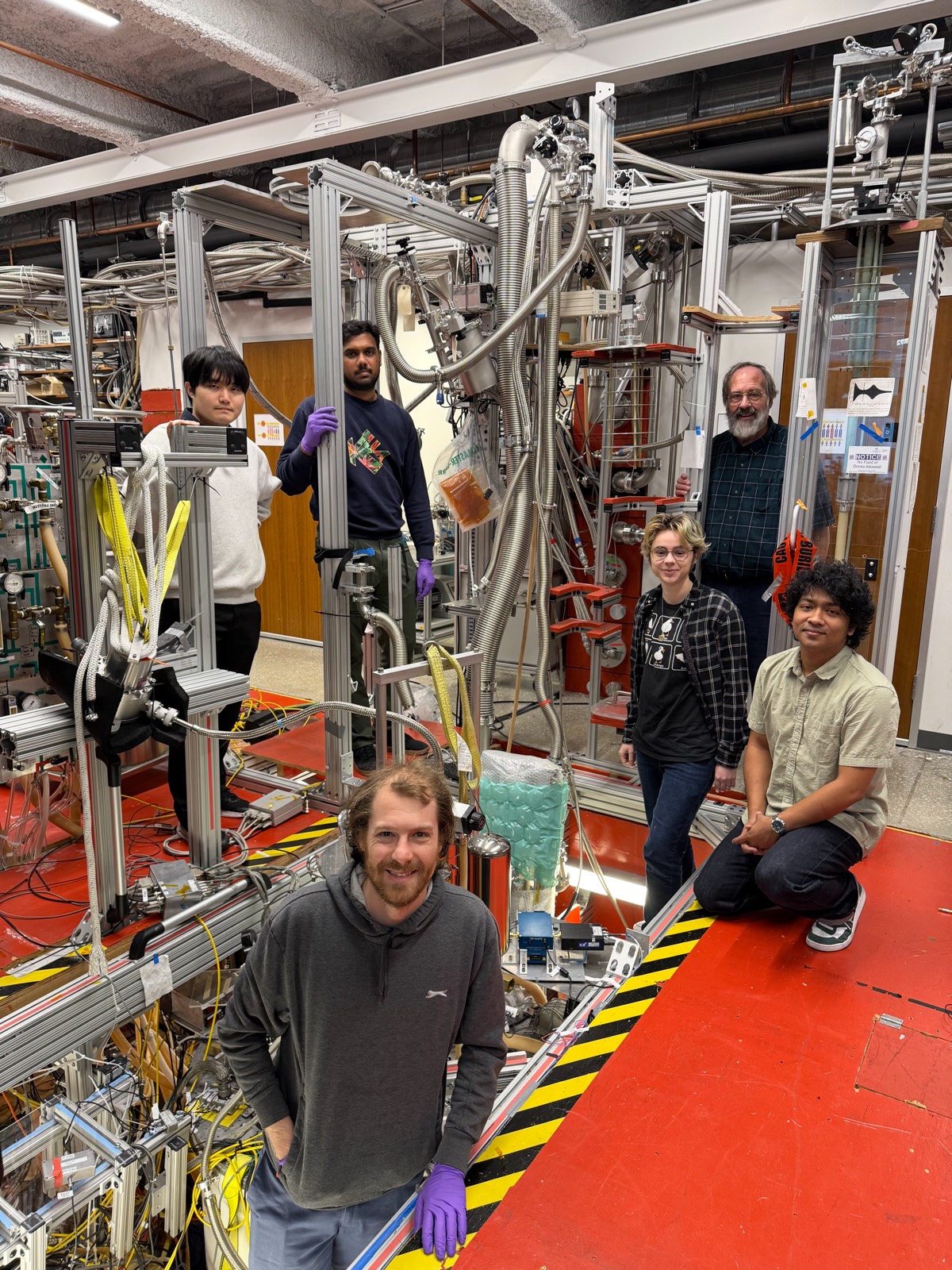
One of the biggest unanswered questions in cosmology is why the early universe had a fundamental asymmetry between matter and antimatter. When matter and antimatter particles collide, they annihilate into energy, so that asymmetry resulted in matter dominating our universe, which contains much more matter than antimatter. It’s extremely difficult to create and isolate antimatter, requiring special traps. Physicists at Northwestern University have succeeded in trapping a single positron (antimatter particle) for months on end, according to a paper published in Physical Review Letters.
Co-author Gerald Gabrielse and his team built on earlier work, in which they trapped a single electron to create a one-electron quantum cyclotron. They then used the setup to make one of the most precise measurements of its magnetic moment yet. Trapping a positron was a bit trickier. They harvested the positron from sodium-22 nuclei, slowing it down enough to guide it into a near-perfect vacuum trap of electric and magnetic fields. Once inside, they chilled the positron to just 300 millikelvins (0.3° above absolute zero), thereby keeping the positron in its quantum ground state. They found they could maintain that state for months at a time.
That enabled Gabrielse et al. to manipulate and detect the particle’s individual quantum energy state using tuned microwaves—the first critical step in being able to measure the positron’s magnetic properties, hopefully with the same precision they achieved in their earlier experiments with a single electron. The Standard Model of particle physics predicts that there should be no difference between the two particle measurements. If they are not equal, “that would be the biggest discovery in physics in the last century,” said Gabrielse.
Physical Review Letters, 2026. DOI: 10.1103/gbkc-6nlj.
Invisible tattoos that show up under light
Many people sport tattoos, but there are situations where hiding them is desirable. A new line of multicolored tattoo inks could one day make that dilemma moot; they are invisible to the human eye unless one illuminates them with UV light, according to a paper published in the journal Matter & Light. “There’s a stigma, in science and in many cultures, around body art,” said co-author Carson Bruns of the University of Colorado, Boulder, who sports a green lion tattoo on one arm, among others. “I’m proud to be pushing against that.”
As previously reported, epidermal electronics attached to the skin via temporary tattoos (e-tattoos) have been around for more than a decade. So-called e-tattoos connect to skin without adhesives, are practically unnoticeable, and are typically attached via temporary tattoo, allowing electrical measurements (and other measurements, such as temperature and strain) using ultra-thin polymers with embedded circuit elements. In 2024, researchers developed special polymer-based conductive inks that can be printed onto a person’s scalp to measure brain waves, even if they have hair. This could one day enable mobile EEG monitoring outside a clinical setting, among other potential applications. And earlier this year, scientists at Pennsylvania State University developed a novel conductive ink that can be painted directly onto the skin in colorful custom designs, turning into a functional electrode for biomonitoring after drying.
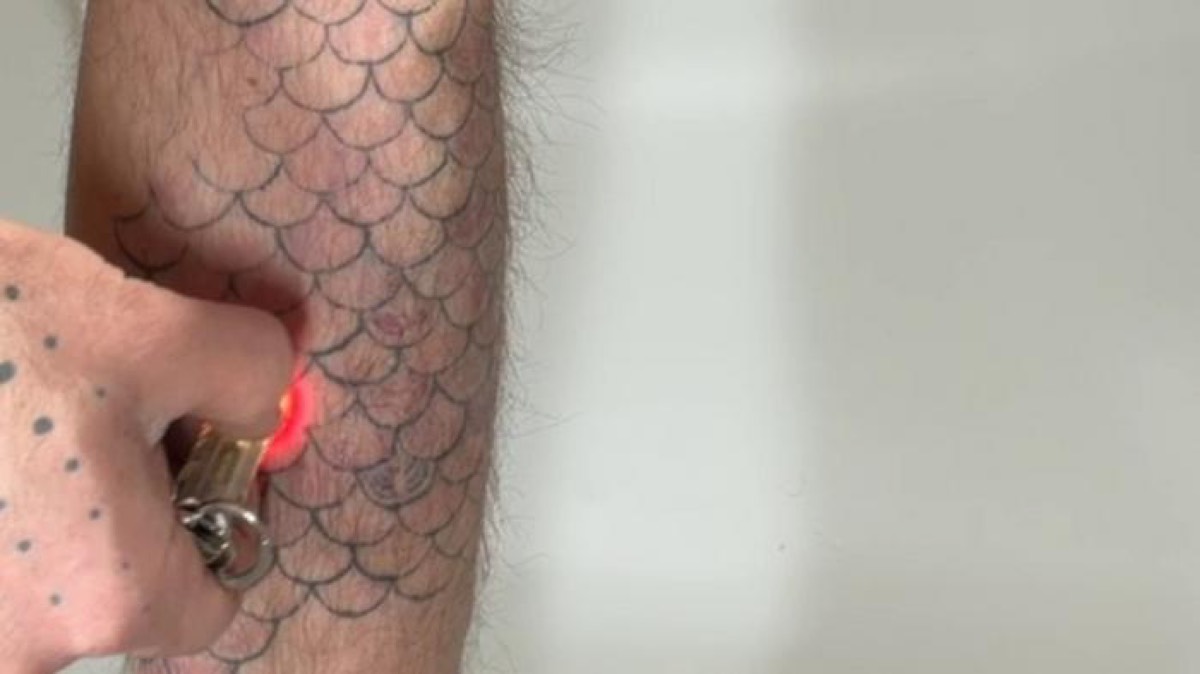
Bruns et al. created their inks, known as PhotoTat, from color-changing dyes injected into tiny spheres of polymethyl methacrylate (PMMA), a material used in dermal fillers among other medical applications. Mixing the primary-colored dyes can create full-color images. The tattoos are invisible until exposed to UV light, when they turn blue, magenta, or yellow. They fade after a few hours, faster if exposed to bright LED light. It’s still a proof of concept, but Bruns did test the dyes on himself, inking a black outline of fish scales that turn red, orange, or blue, like mermaid scales, under UV light. The dyes could also help cancer patients undergoing radiation therapy, who need small tattoos so doctors can guide the beams. PhotoTat would make such tattoos invisible except when the treatment is being administered.
Matter & Light, 2026. 10.1016/j.matlit.2026.100119.
Westminster skeleton likely a monk

Over 150 years ago, archaeologists discovered a skeleton buried in a Roman sarcophagus on the grounds of Westminster Abbey, bearing an inscription to a wealthy Briton from between 300 to 400 CE named Valerius Amandinus. But there was also a Latin cross sculpted into the lid that dated to the 10th or 11th century, i.e., the late Saxon period. Were the remains actually those of someone who lived and died centuries after Valerius? According to a paper published in the Journal of the British Archaeological Association they are—specifically, these are the bones of a high-ranking medieval monk.
The authors reasoned that this was an abbot’s skeleton because it was buried within a sarcophagus, while skeletal clues suggested it was a man between 35 and 49, standing about 5 feet, 9 inches tall. The most likely conclusion is that the bones belong to a Benedictine monk named Aelfwig, who died around 1020 and was buried at Westminster Abbey, where he had served as abbot. However, the bones may also be those of Aelfwig’s successor, Wulboth, who died in 1049 and was likely buried on the grounds as well. There is also evidence that the body was originally housed in a timber coffin that decayed over the ensuing seven centuries.
Journal of the British Archaeological Association, 2026. DOI: 10.1080/00681288.2026.2675788.
More on how Botticelli’s favorite model died
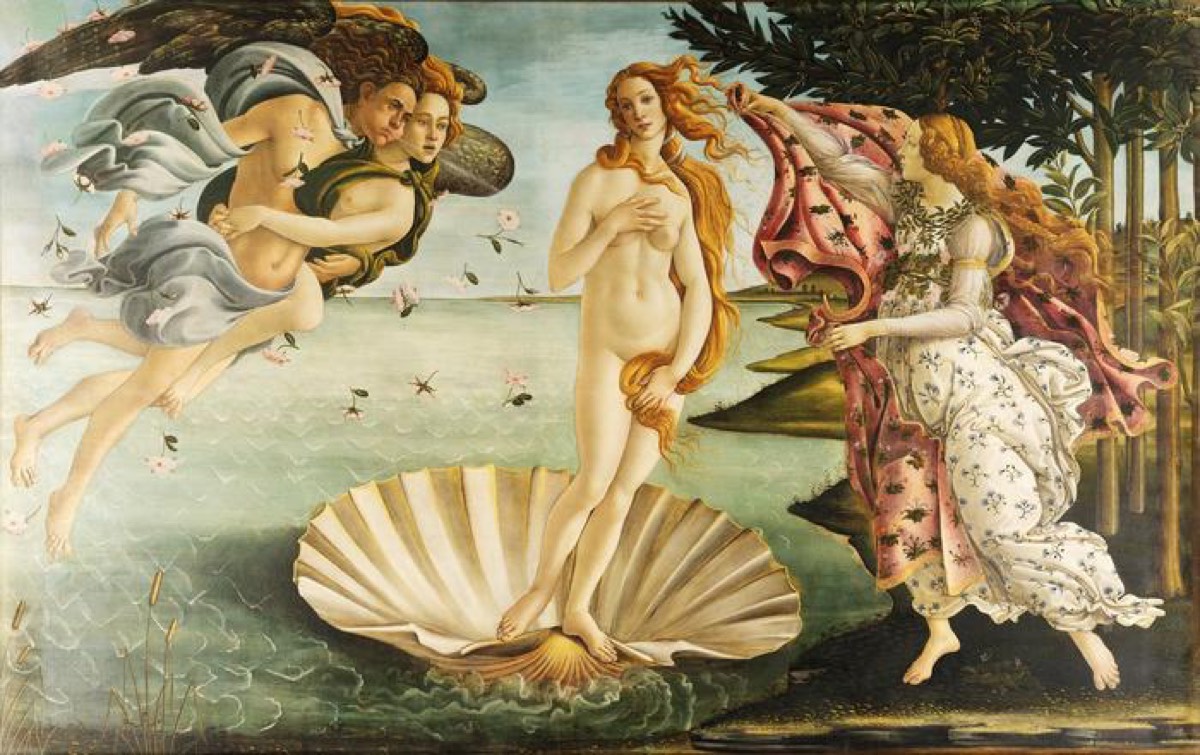
In June, we reported on the research of Paolo Pozzilli of Queen Mary University of London and several co-authors into the cause of death of one of Sandro Botticelli’s models. Among his best-known works is the Birth of Venus, depicting the naked goddess, newly birthed, standing in a giant scallop shell. The model for the painting (disputed by some historians) was allegedly Simonetta Vespucci (née Cattaneo), a renowned beauty in Florentine high society whom Botticelli greatly admired. He painted her five times before her untimely death in her early 20s.
It was long believed that Simonetta had succumbed to tuberculosis, but it was argued that she may have suffered from a pituitary tumor (adenoma) that gradually increased in size due to prolactin and growth hormone secretions, citing her appearance in several portraits as evidence. This could have caused a sudden tumor-related fatal apoplexy. They examined letters between Simonetta’s father-in-law, Piero Vespucci, and Lorenzo de Medici, which described how Simonetta had collapsed during a ball a few days before her death. Her symptoms included headache, hallucinations, vomiting, and a high fever, all symptoms of a rapidly expanding pituitary tumor, per the authors.
Pozzilli et al. are back again with a paper published in the journal Medical Humanities providing further evidence for their hypothesis about Vespucci’s cause of death. They argued that the tumor could also explain the irregular eye positioning in the Birth of Venus, suggesting the model had a squint or eye misalignment. After more closely studying how Botticelli depicted the model’s eyes in Birth of Venus and several other portraits, the authors noted pronounced swelling around the left eye, likely due to fluid buildup, while some of the tissue covering the white part of the eye is loose. This and the telltale squint support the theory that Simonetta had a tumor in her pituitary gland.
Medical Humanities, 2026. DOI: 10.1136/medhum-2026-014199.
Dating van Gogh’s
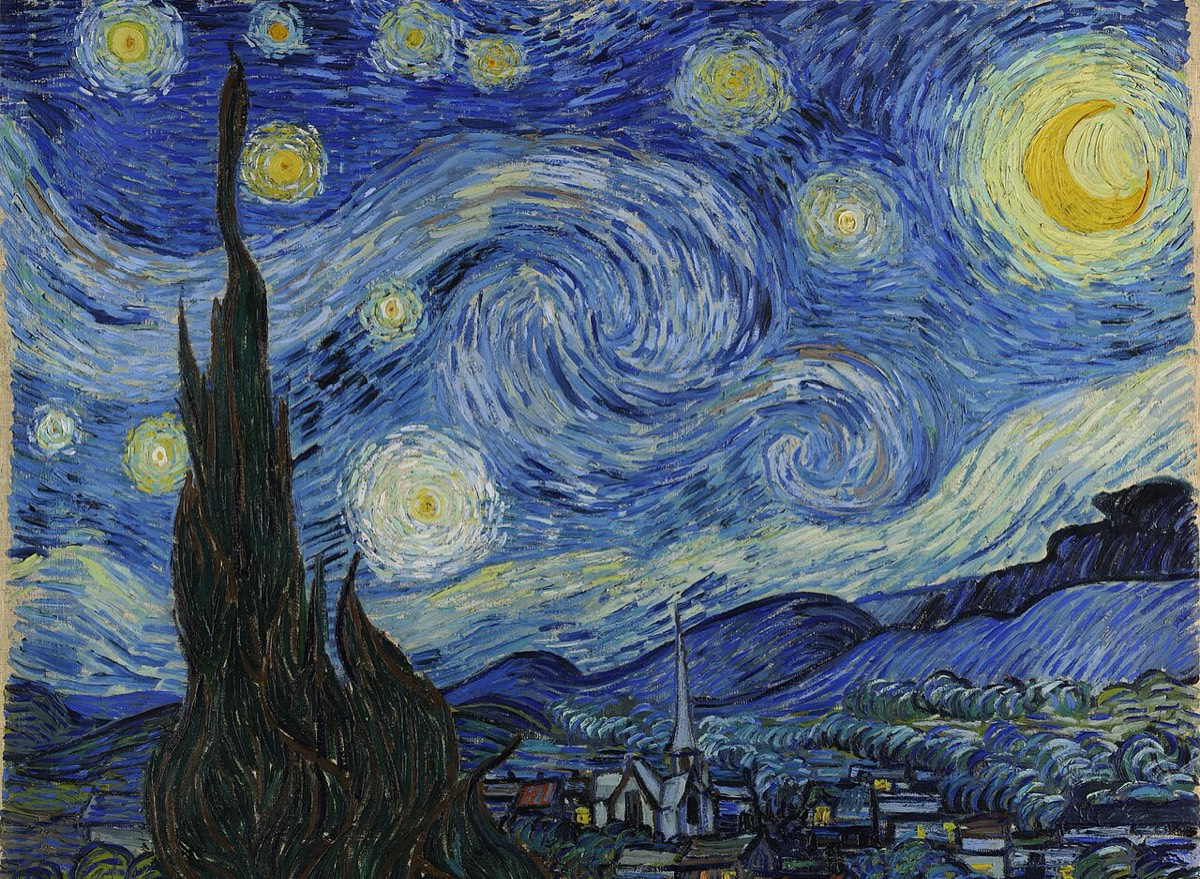
Vincent van Gogh’s masterpiece, (1889), has long fascinated art lovers and scientists like. Some physicists have even suggested that the painting is a masterful depiction of atmospheric turbulence, and a 2024 paper found that the illusion of movement in the blue sky is also due to the scale of the paint strokes—a second kind of “hidden turbulence” at the microscale that diffuses throughout the entire canvas, although others have objected to that conclusion. Now a team of South Korean astronomers has used “forensic astronomy” to pinpoint the precise month in which van Gogh painted his masterpiece, according to a paper published in the journal Scientific Reports.
Other astronomers have previously suggested that is not just a symbolic representation, but shows the actual night sky at the time it was created, specifically in June 1889. This new analysis—which takes into account simulations, historical weather patterns, star positions, and van Gogh’s letters from that year—shifts that date to just before dawn on July 22, 1889. Co-author Elijah Jeong-hyun Kim told Gizmodo that his interest was piqued when he came across previous research identifying the constellation Aries. Kim thought the lights in the painting more closely resembled the Hyades star cluster in the constellation Taurus, suggesting the July date. While van Gogh said that his work exaggerated the point of view he painted, the authors note that such exaggeration “presupposes a real object to amplify.”
Kim et al. are in good company in forensic astronomy. As we reported in 2020, the so-called “celestial sleuth,” Donald Olson, applied similar tools to determine that Vermeer’s View of Delft most likely shows the city on September 3 or 4, 1659 (or earlier), at 8 am. Over the years, Olson has found evidence that the blood-red sunset that inspired Edvard Munch’s was likely an aftereffect of the 1883 eruption of Mount Krakatoa in Indonesia; that the Moon may have contributed to the sinking of the helped identify the precise location of Julius Caesar’s landing site in Britain in 55 BC; and showed that Mary Shelley was probably telling the truth about a moonlit “waking dream” that inspired . And in 2015, Olson determined the precise time of day that Life magazine photographer Alfred Eisenstaedt took his most famous photograph (V-J- Day in Times Square) on August 14, 1945.
Scientific Reports, 2026. DOI: 10.1038/s41598-026-73025-5.