
It's been over four years since Intel Arc graphics made their debut. Team Blue, primarily known for making some of the best processors of all time, had made its second big swing against the best graphics cards. Alchemist had promise from a price-to-performance perspective; the A-series impressed with budget-friendly performance in 1080p and 1440p with the Arc A750 and Arc A770, respectively, despite some driver issues and (initially) a lack of developer support.
Everything changed with Battlemage. Intel's second-generation Arc graphics cards received higher praise, with far superior generational performance, rivalling the best cheap graphics cards. In particular, the Arc B570 was a powerhouse for 1080p gaming with its $219 / £219 MSRP, and the Arc B580 confidently earned a perfect review from us with its all-star 1440p performance for just $249.99 /£249.99. However, that was some time ago.
Now, nearing the end of 2026, the concept of a cheap video card, or a true graphics card deal, is (sadly) extinct. You can expect to pay double (or more) for a B580 that made waves due to its value proposition just two short years ago, lessening the impact of an otherwise excellent GPU. Team Blue has reportedly canceled its Celestial range of discrete graphics cards, and the future of Druid (the codename for Intel's fourth-generation GPU) and beyond is uncertain.
Has Intel abandoned the dedicated GPU market to go all-in on the likes of its G3 Extreme chip found in the best gaming handhelds? Moreover, is there still hope for a third major competitor during the worst time to build (or buy) a gaming computer in recent memory?
What were Intel's original plans for Celestial?
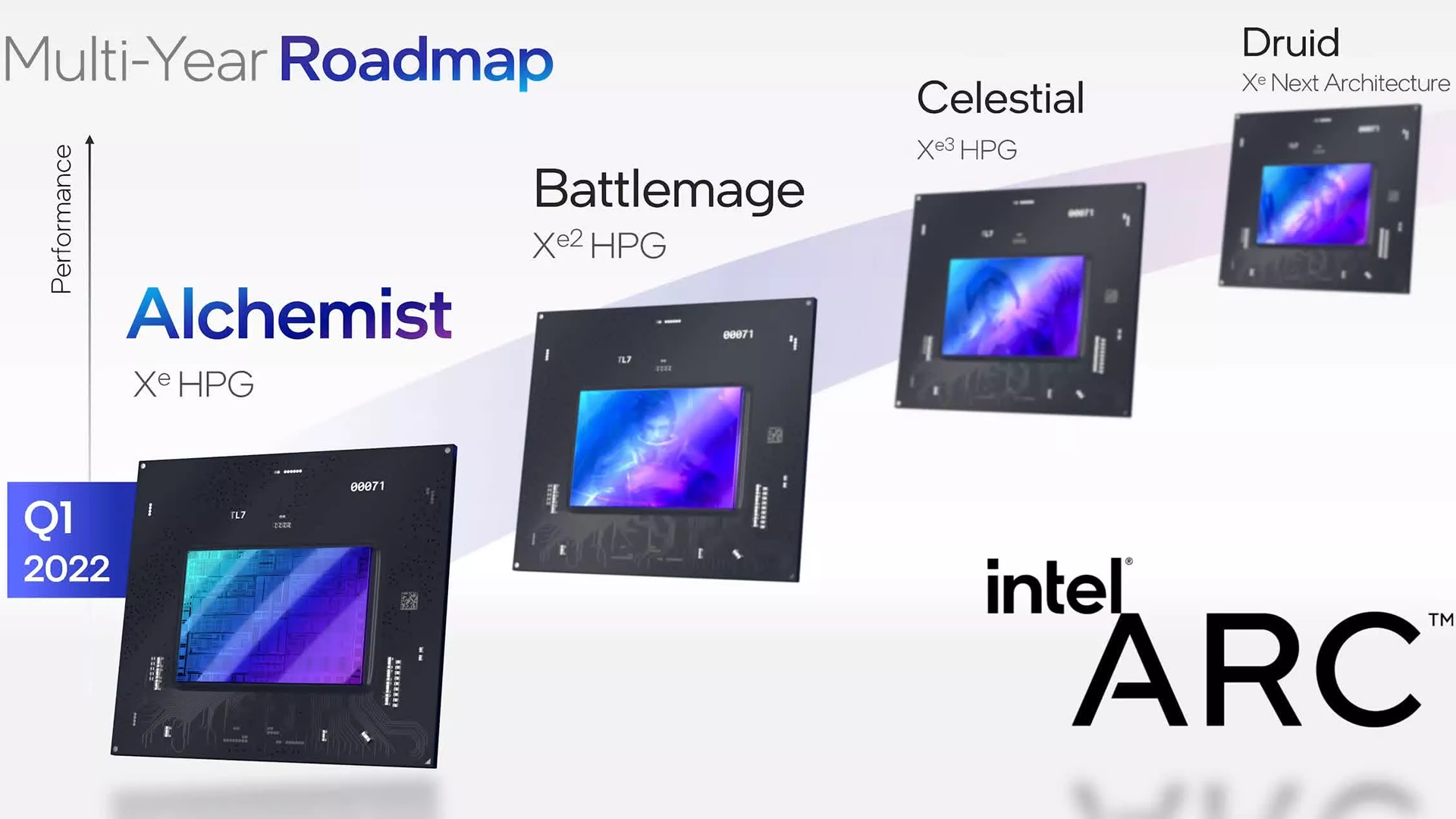
When Intel Arc was originally announced more than five years ago, Team Blue confidently laid out its "Multi-Year Roadmap", with Alchemist (A-Series) slated for Q1 2022, a goal the company only just achieved as the initial GPU lineup dropped on March 30. With that said, no dates or timeframes were confirmed for the second, third, and fourth generations of its Xe platform.
Intel Arc Battlemage (B-series) graphics cards were officially launched on December 3, 2024, meaning almost three years (or two years and eight months) had passed between the two Xe generations. This release schedule is fairly standard for GPU launches; Nvidia launched the Blackwell-based RTX 50 series on January 30, 2025, with the RTX 5090 and RTX 5080, succeeding the RTX 40 series that debuted on October 12, 2022, with the then-flagship RTX 4090 (two years and three months).
It's nearing the time when we should start hearing about Intel Celestial, especially given just how well-received Battlemage was, and yet there's radio silence from Team Blue. More specifically, speculation around The C-series' cancellation were sparked from rumors dating back to April. Specifically, it was hardware leaker Jaykihn on X who alleged that "Celestial was canned long ago" and that "Druid is up in the air".
If we look at the updated Intel Arc Graphics roadmap, the company alleged that the Xe3P Cestial graphics cards should have been arriving in 2026.
What happened to Intel Celestial?
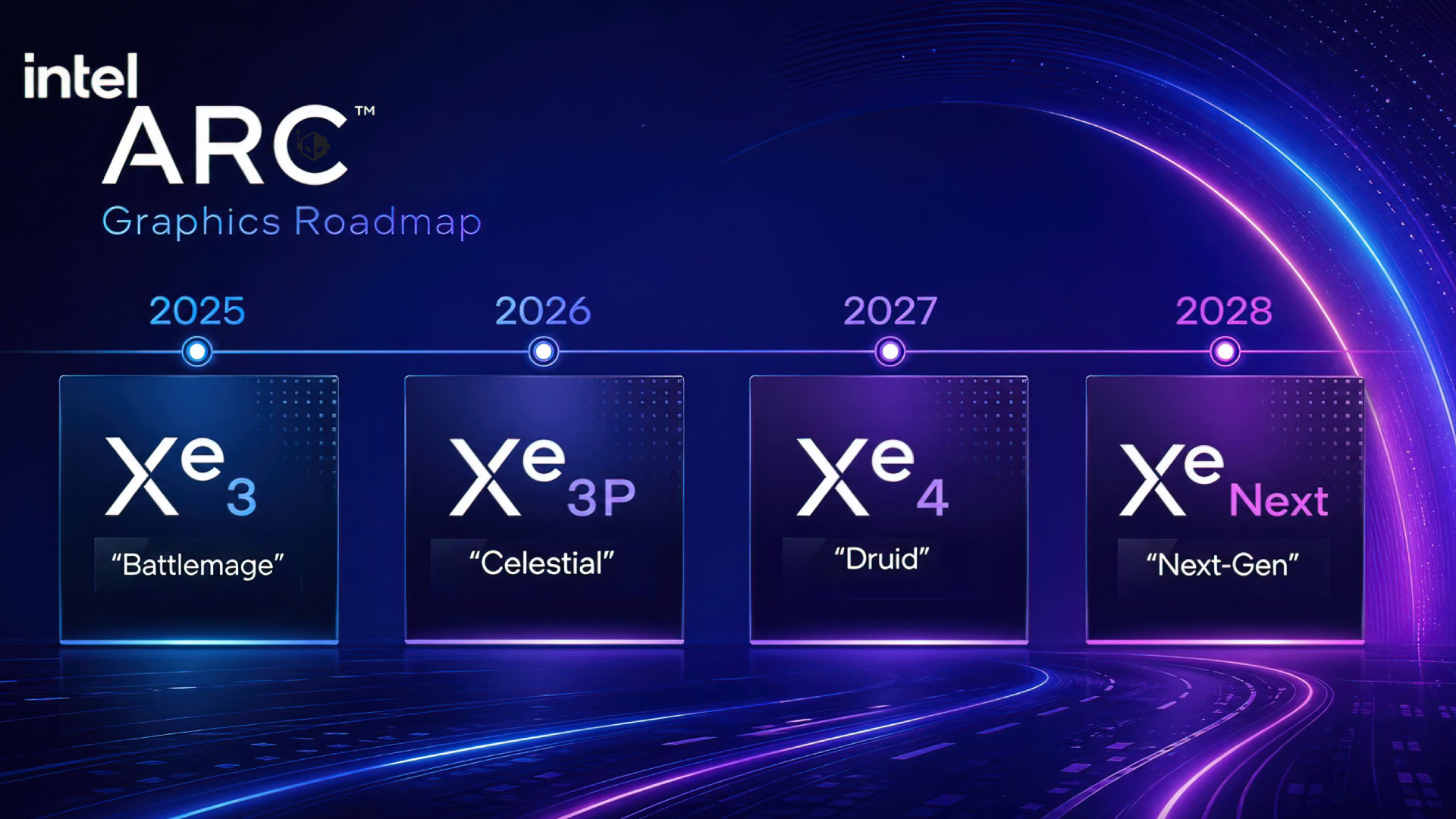
Intel had clearly stated in 2025 that next-generation Xe3 Battlemage graphics would arrive that year, and then year-on-year we would receive Xe3P with Celestial in 2026, Xe4 with Druid in 2027, and Xe Next, the "Next-Gen," in 2028. So what actually came of these claims? So far, so good, as the B-series is integrated into the latest G3 family.
As well as the Intel 18A-based Compute Tile (14-core with NPU 5 and up to 8,533 MT/s LPDDR5x memory), it also uses the Xe3 architecture for its 10-12 Xe-cores, 10-12 RT units, and 80-96 XMX AI Engines, whether it's the standard or the G3 Extreme variant. In other words, Intel has decided to renew Battlemage for a third year running, with no apparent space (or need) for Celestial at this time, at least for the purpose of dedicated gaming.
It's alleged that Xe3P architecture (Celestial) is being baked into the upcoming Intel Nova Lake processors. More specifically, the C-series could be entirely relegated to integrated graphics onboard certain incoming chips rather than powering discrete graphics cards.
This is claimed to be the case with the Nova Lake-S lineup, which is said to be a 16-core CPU with a 12-core Xe3P iGPU forged on the silicon, unlike other Nova Lake processors that could feature just two Xe3 cores.
While Xe3 is already being used in gaming handhelds powered by the G3 and G3 Extreme, the combination of both Xe3 and Xe3P in Nova Lake could be where Celestial lives. It's been rumored that the extra performance of the newer-generation cores could be primarily for driving the Visual Engine rather than being used for anything more intensive. Revealed at Hot Chips 2026, Intel announced that Xe3P would be powering its Crescent Island AI GPUs. At the moment, then, it seems that Team Blue has no interest in bringing over Celestial tech for gaming.
Battlemage isn't worth the price anymore, and Intel needs to learn from this
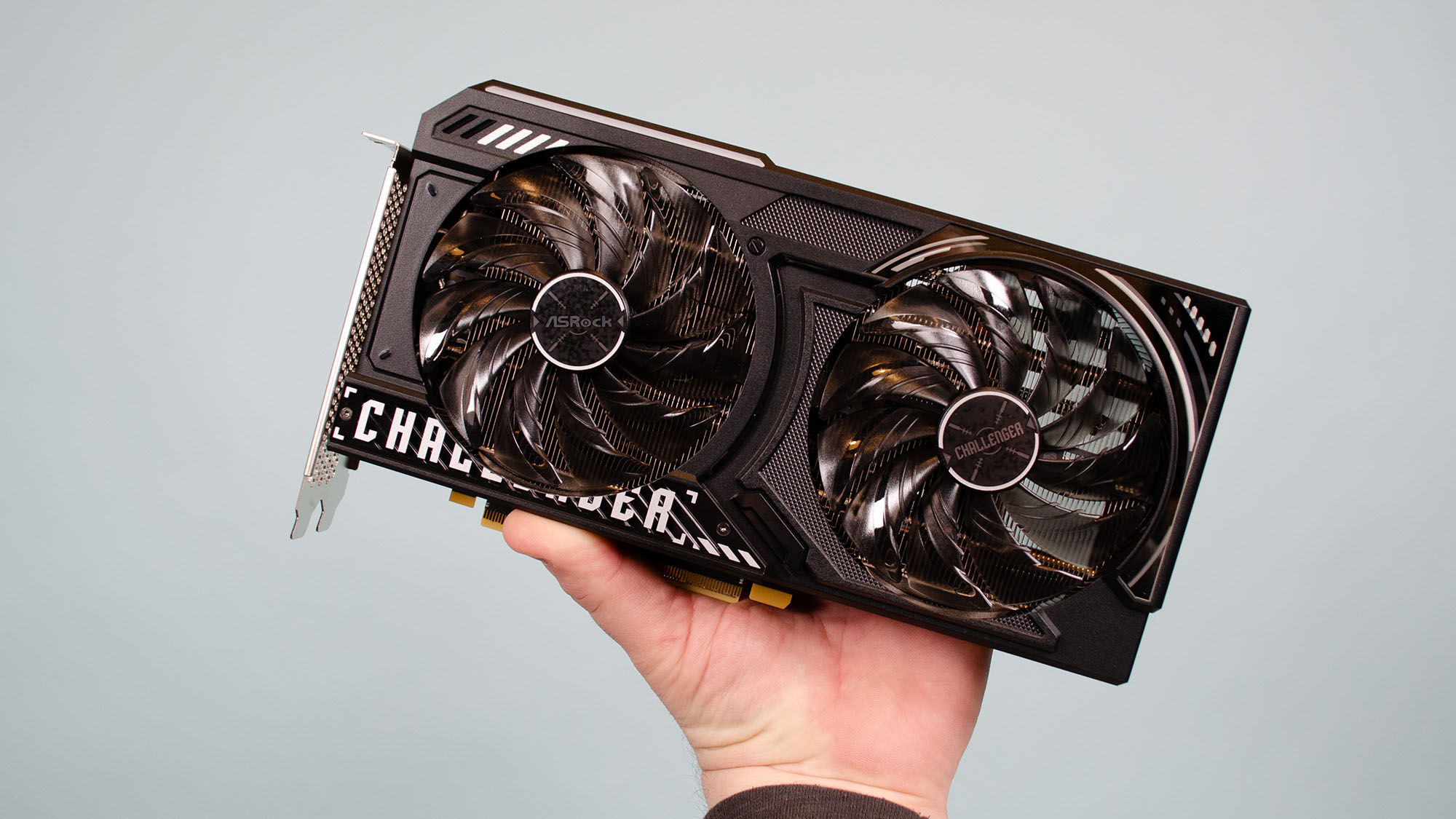
There's no easy way to say this: Intel Arc isn't worth the inflated asking prices. While the two main Battlemage graphics cards initially won favor with us and the general gaming public, the value proposition simply isn't justifiable this late in 2026. As touched upon above, both entry-level GPUs have doubled in price, and it's really hard to see the justification against a considerably stronger graphics card like the RTX 5060 and RX 9060 XT.
The average Arc B580 GPU nowadays costs around $330 / £340 for the 12GB variant from Intel's board partners such as ASRock and Sparkle. That gets you the current top-end Battlemage card with a 192-bit memory bus, 12GB of GDDR6 memory, and a total of 2,560 GPU cores.
However, for around the same price, you can also opt for an RTX 5060 8GB, or bump your budget up to around $400 / £400 for the far more capable RTX 5060 Ti instead. The former has a smaller 128-bit memory bus, although it benefits from 8GB of GDDR7 memory and 3,840 CUDA cores, whereas the latter comes with the same bus width but with up to 16GB of GDDR7 VRAM and 4,608 CUDA cores. Which one would you pick when weighing up a cheap gaming PC build?
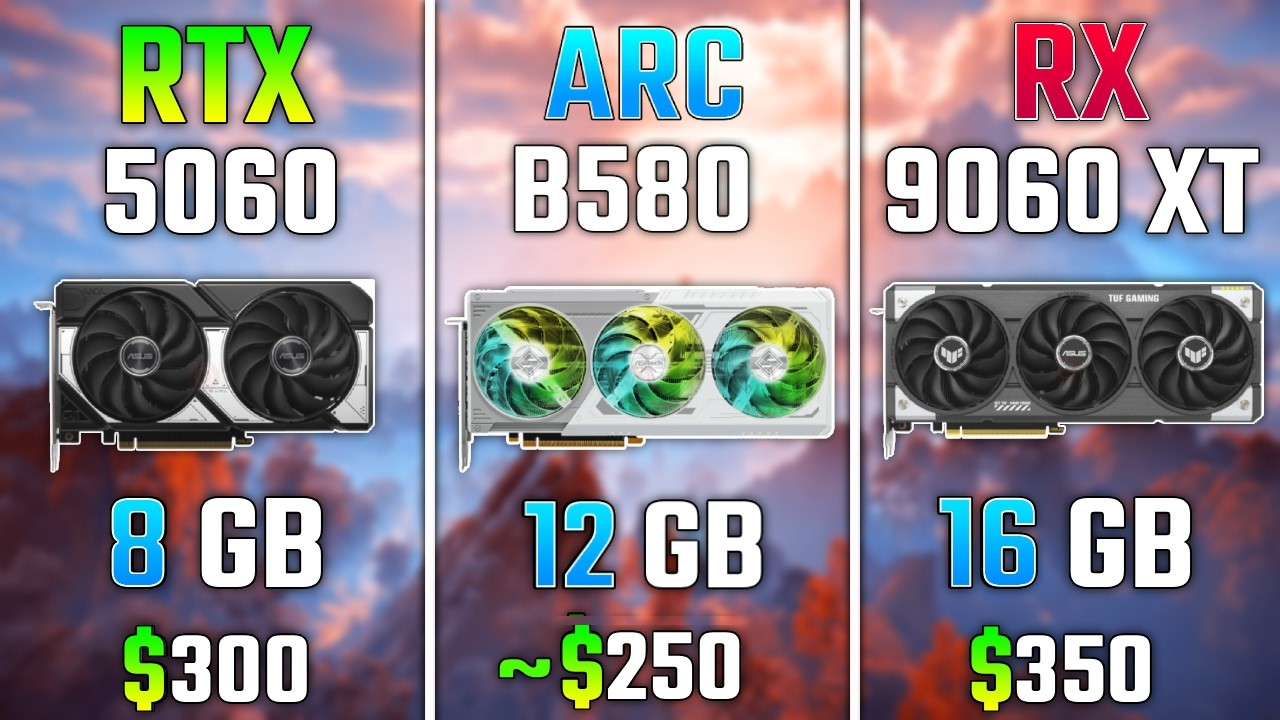
Let's forget the tech specs and instead look at the performance numbers laofcct. According to testing conducted by Mark PC, both the similarly priced RTX 5060 and RX 9060 XT. We see this in countless examples with the demanding PC games tested, such as The Last of Us Part 1, , , and ; all of these games had superior average framerates from the AMD and Nvidia GPUs when benched in 1080p at max settings.
This is consistent with the testing conducted by Hardware Unboxed as well, as the three entry-level graphics cards were benched in 1080p with Medium to High settings, depending on the game. It's the same story with the likes of Ratchet & Clank: Rift Apart, , , The Last of Us Part 2; you get the idea. If buying a graphics card from a processor company wasn't already a hard sell, then the price-to-performance of Arc circa 2026 certainly is.
Druid is Intel's last chance at remaining in the gaming GPU market

If Celestial is truly canceled (or relegated to an obscure APU), as has been claimed, then all hopes hinge on Druid and its Xe4 architecture, which is slated to be released in 2027. "Up in the air" really is an understatement with Team Blue's plans for its proposed fourth Arc generation; there's nothing circulating about this tech at all, which is rare considering the usual slate of rumors and speculation that usually whir up a year or so out from release.
The only real sliver of information that points to Team Blue still being in the GPU race at all comes from Alex Katouzian, Intel EVP and GM of Client Computing, who spoke to Dutch tech site Tweakers during Computex 2026. Katouzian is quoted as saying: "GPUs are a super important part of our PC product range" and "the traction of our GPU cores is really very good". It's a non-answer to a tough question that doesn't really give any indication as to what the company is planning; typical corporate speak to cover up the fact that it may have no idea where (or if) Druid has a future at all.
Worst-case scenario, then. Let's say Celestial is properly canned, but that Intel gives Druid a shot as a last-ditch effort to save the fledgling Arc graphics division in its dedicated form. Following the same blueprint as its last two GPU generations, a prospective launch of the D570 and D580 would need to be 12 to 16GB GDDR6X at a minimum, be built with XeSS 3's MFG in mind for 1080p to 1440p gaming, and still retail new for $250 to $350, respectively. Is this really something that can happen in 2027 with the price of graphics cards continuing to rise? I remain unconvinced.
There's a pathway for Intel to win back favor and consumer trust with a line of affordable graphics cards that deliver playable results for today's games. However, given the dire state of the industry and some truly puzzling top-level decision-making over the last two years, it just doesn't seem like things can be salvaged here. I would love to be wrong; more competition and consumer choice are always good for business, particularly if it means showing Nvidia the true meaning of budget and mid-range, but is Intel really the company to do that in 2027 and beyond? It's unlikely.

Formerly TechRadar Gaming's Hardware Editor, Aleksha McLoughlin is now a freelancer specializing in computing tech, gaming, and Ecommerce. She's the author of The Hardest Video Games Ever Made, the Editor-in-Chief of Kyusai, and is experienced in gaming/tech PR. As well as TechRadar, you can find her work on GamesRadar, PC Gamer, Dexerto, PC Guide, Esports Insider, Club386, Trusted Reviews, Play Magazine, The Escapist, and dozens of other outlets.