$11M competition showed wildfire detection is still easier than stopping fires.
Wildfire detection from space and firefighting drones featured among the finalists honored in the $11 million XPRIZE Wildfire competition. Although no team walked away with either of the two grand prizes, such technologies could prove helpful as the world grapples with the growing costs of worsening wildfire disasters.
The competition’s First Prize track for space-based wildfire detection challenged teams to accurately detect all fires across a large swath of Australia within 10 minutes. A second Autonomous Response Prize track challenged teams to autonomously detect and put out a high-risk fire located somewhere within rural Alaska while ignoring decoy fires—all within 10 minutes of the fire igniting.
“We want to be able to prepare and provide tools for firefighters to really allow them to do the best job,” said Andrea Santy, program director of XPRIZE Wildfire, in an interview with Ars. “They’re great at what they do, but it’s unfair to continue to put them in harm’s way when there’s technology coming online that can help keep them safe, keep communities safe, and protect ecosystems.”
The competition saw 45 qualified technical submissions in the space-based detection track and initially drew more than 300 teams from around the world in the Autonomous Response track. The latter challenge in particular attracted a diverse array of proposed technological solutions in the early stages.
“At the very beginning, we saw things like sound being able to put out a fire, lasers and all sorts of robotics like robotic dogs,” Santy told Ars. “We had ground systems and aerial systems.”
But as the XPRIZE Wildfire judges focused on the most practical solutions for finding and suppressing a fire in 10 minutes, they weeded out technologies that would have a harder time meeting the time and geography requirements.
“We want to be able to have technologies that can detect a fire before it’s detected by anyone else,” Santy said. “A 911 call is still the most typical way that we find out about wildfires, and on average, that’s going to be at least 15 minutes.”
A full list of winners can be found in the XPRIZE Wildfire press release posted on September 23. Ars spoke with Santy about the technologies behind the winning approaches and why ongoing wildfire disasters have only made the competition more relevant in recent years.
Space-based fire spotters
Space-based detection of wildfires can make use of multiple existing satellite constellations, but satellites designed specifically for spotting wildfires have just begun to come online. The German aerospace company OroraTech first launched a dedicated wildfire detection constellation of satellites in March 2025, while the Google-backed FireSat program launched its first microsatellites in July 2026.
“Current satellites are not built for wildfire detection—they’re built for a lot of other environmental monitoring and weather monitoring,” Santy explained. “So we’re always trying to look at how we take that data that’s not wildfire-specific and use it for a wildfire context.”
That is why teams in the space-based detection track focused on offering AI and software systems that harness existing satellite imagery and other data to provide wildfire detection capabilities across large areas.
“Our teams were challenged with being able to detect a fire essentially instantly and then transmit the data in a usable way so that it is intelligence to firefighters on the ground, reducing as many false positives as possible,” Santy told Ars.
The real-world test for finalists took place at the New South Wales Rural Fire Service in Australia in April 2026. None of the teams fully met the challenge requirements to win the $3.5 million grand prize offered by the Australian-based Minderoo Foundation, a competition sponsor and co-designer, but several were still recognized for their accomplishments.
The first-place winner of $500,000 was the UK-based SIRIUS Wildfire Alliance. That organization offered a system capable of identifying and modeling the potential spread of wildfires, drawing upon both optical and radar data from satellites.
A prize of $250,000 went to second-place winner Team Snuffed based in Arizona. The competition’s press release credited Team Snuffed with providing “transparent, auditable and uncertainty-aware wildfire detection,” and highlighted the solution as being especially user-friendly for firefighters.
Special recognition prizes of $100,000 each went to MyRadar based in Florida, DeepFire based in Louisiana, and the German company Mayday.AI that adapted an algorithm originally designed for detecting volcanic ash to help detect wildfire smoke through cloud cover.
Send in the drones
Rapid detection of wildfires is one challenge, but getting firefighting resources to the scene fast enough to stop the spread is another. Teams competing in the autonomous wildfire response track put their technologies to the final test in the sparsely developed rural landscape of Nenana, Alaska, near Fairbanks in June 2026.
The finalists typically deployed ground-based sensors and sometimes drones to help detect wildfires across a 386-square-mile area of Alaska, approximately the size of the San Francisco Bay Area in California or San Antonio in Texas. Once a high-risk fire was detected, they launched their own versions of firefighting drones that flew to the scene and attempted to suppress the fire.
All three finalists successfully detected the high-risk fire in under 10 minutes, while two of the three also deployed drones that attempted to put the main fire out. But none quite managed to fully extinguish the blaze, which is why the grand prize ultimately remained out of reach in this track as well.
“The really exciting part was, we did have a team that was able to do all of the actions within the 10 minutes and very accurately hit the fire,” Santy said. “But they weren’t able to put enough suppressant on it to knock it down entirely.”
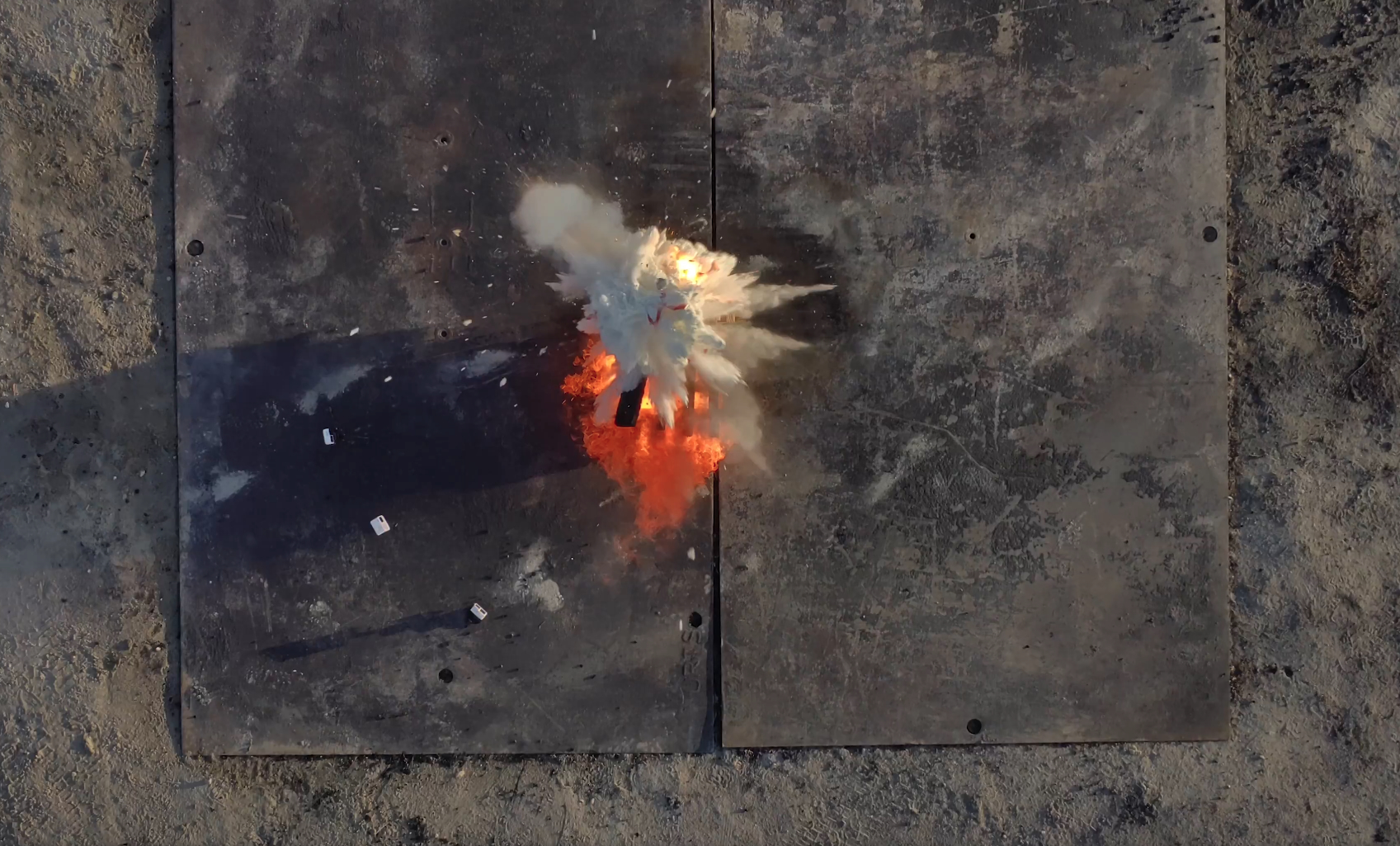
A first-place prize worth $1.2 million went to Anduril Industries, a US company that has multiple contracts with the US military and Department of Homeland Security. The company installed a Sentry Tower equipped with thermal imaging sensors along with AI-driven computer vision to detect possible fire ignitions. It then deployed a small swarm of drones to provide aerial surveillance before sending out a Ghost-X autonomous drone to drop “fire retardant balls” on the target fire.
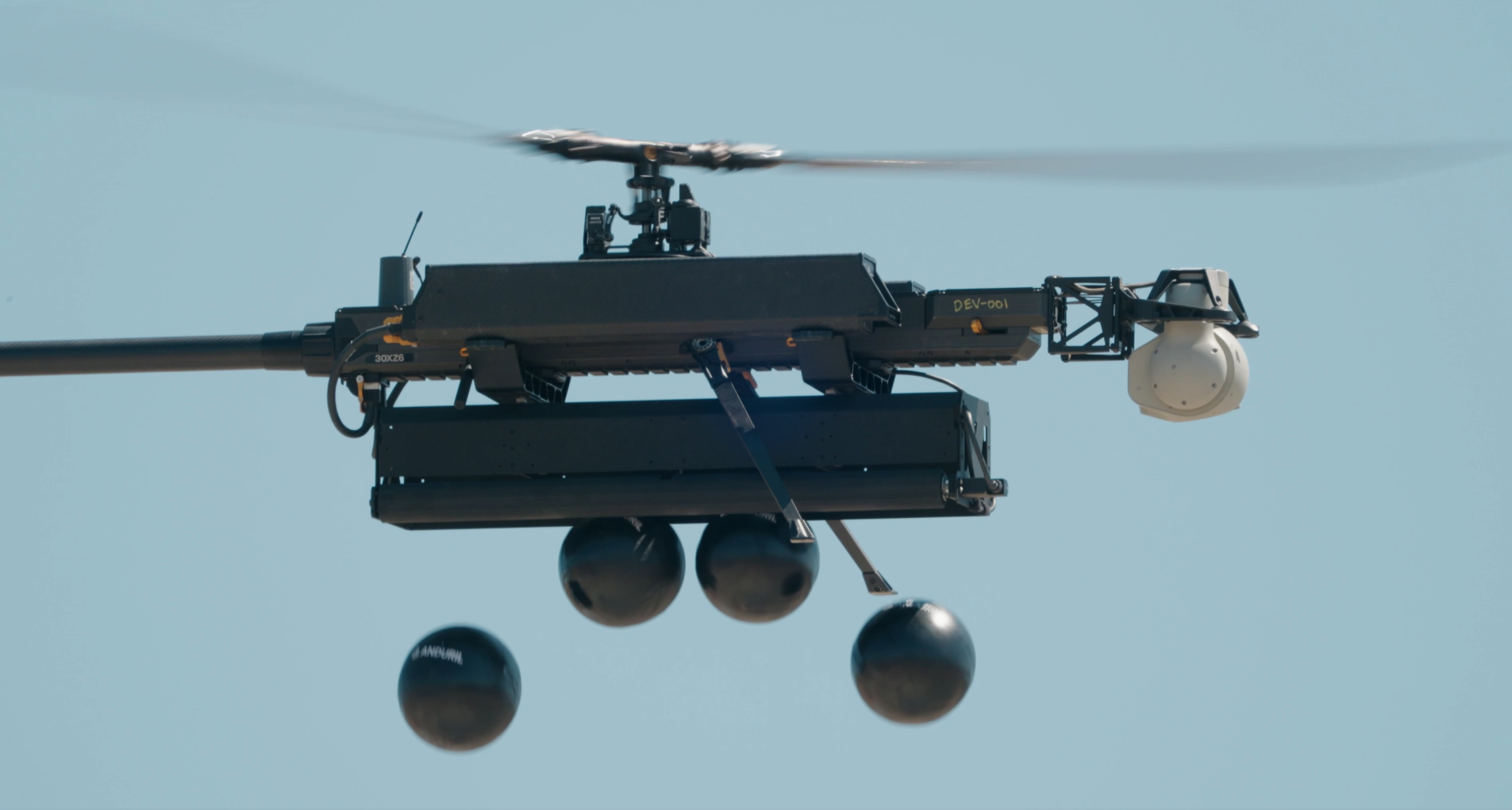
Anduril also won an additional $1 million prize from Lockheed Martin for providing the fastest wildfire detection capability.
The second-place prize of $800,000 went to the Germany-based company Dryad Networks. Dryad deployed a network of 170 solar-based ground sensors to sniff for gases emitted by smoldering fires, before putting an observation drone into the air to geolocate the fire and finally sending in a Silvaguard Suppression Drone to attack the fire.
Two teams from the UK and Australia joined forces under the name AURA Foresight to nab the third-place prize of $500,000. AURA Foresight combined AI-powered software with cheap off-the-shelf hardware in what team co-lead Rob Vernon described as the “Home Depot approach,” sending out a swarm of DJI drones for attempted fire suppression.
“They had just weeks to pull things together,” Santy said. “They met for the first time in Alaska.”
The costs of wildfire disasters
The relevance of the XPRIZE Wildfire competition has been repeatedly underscored by real-world events. When the competition first launched in April 2023, a wind-fueled wildfire razed the historic Hawaiian town of Lahaina on the island of Maui and killed at least 102 people in August of the same year.
The summer of 2023 also saw Canada’s most destructive wildfire season send huge plumes of toxic smoke drifting across much of the United States, turning city skies into something out of or and creating hazardous health conditions for millions of people.
Then came the costliest wildfire disaster in history, which destroyed almost 12,000 homes and killed 31 people in Los Angeles in January 2025. That event alone cost an estimated $140 billion in losses and ranks among the top-five costliest natural disasters, according to an analysis published by the journal Nature Reviews Earth & Environment.
Another wind-driven wildfire combined with extreme heat to create South Korea’s largest wildfire on record in March 2025. Drought and heatwaves have also fueled wildfires across many European countries amid heatwaves in recent years, with the 2026 wildfire season threatening NASA’s Deep Space Communications Complex near Madrid and forcing more than 320,000 people to evacuate their homes in Spain and France alone.
Extreme wildfires have still been regularly burning through Canada’s boreal forests, destroying towns and forcing thousands of First Nations people to flee their homes. Such widespread wildfire smoke events have impacted US cities nearly every summer for four years, often leading to air quality alerts for more than 100 million people each time.
“We know that wildfires are becoming more intense, more frequent,” Santy said. “They’re even happening in places where it’s not a natural part of the landscape, like in the Amazon or up in tundra regions.”
There have been discussions about a possible follow-up XPRIZE competition focused on wildfires. But for now, the competition organizers are focused on supporting potential deployments of the most promising technologies with firefighting agencies.
“You want to be able to provide as many tools as you can, but also the right tools for the right environment,” Santy said. “And one of the things that we really focus on is ensuring that anything XPRIZE puts forth has been tested.”