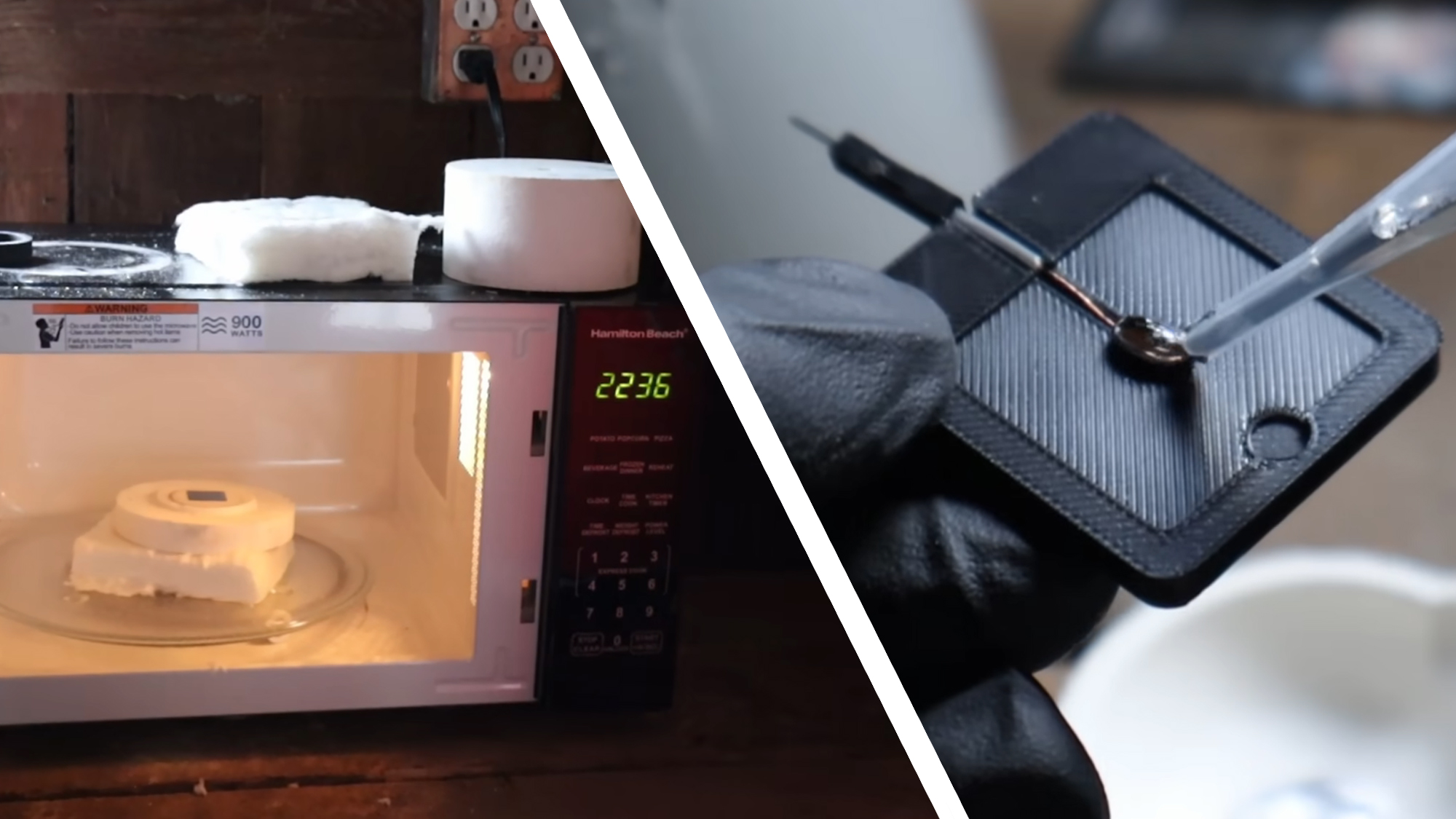
- A new YouTube video shows the process of making a solar cell
- Low-cost, household items and tools are used throughout
- The solar cell works and get reach up to 5% efficiency for conversion
We've heard of DIY solar before, but this is next-level: YouTuber Dr. Semiconductor has been able to create fully functional solar cells, using low-cost household materials and items, which can reach up to 5% efficiency.
That's a long way short of professional solar panels of course, but if you check out the video (via Interesting Engineering), you'll see it's all done without the industrial-scale facilities and instruments usually involved. In fact, you too could do this at home.
Everything included in the video has been sourced from retailers such as Amazon, Walmart, and eBay, and with fairly standard tools — including sandpaper, household solvents, a repurposed PC cooling fan, and a 3D printer.
There's a full guide online if you do want to try this yourself, and while some technical capabilities are definitely needed, it's a fascinating science experiment to try out (even if you're not going to be saving on your electricity bill anytime soon).
Microwave manufacturing

Standard solar panels use silicon semiconductors doped with phosphorus to create the electrical boundary that converts light into energy, and Dr. Semiconductor followed the same principles here, starting with a p-type silicon wafer sourced from Amazon.
The YouTuber then turned to a microwave kiln, widely available at retailers but more typically used for arts and crafts projects. It sits inside a standard microwave and converts microwave energy into heat.
That heat was used to diffuse phosphorus into the silicon wafer, but temperature control was crucial: too much and the silicon melted completely. Around 1,000C (1,832F) was necessary to get the silicon and phosphorus fused together.
With some further refining and the addition of soft metal contacts, the solar cell was complete, and tested via a multimeter. What's more, Dr. Semiconductor says there's lots of room to improve on the process — so expect future follow-ups.